



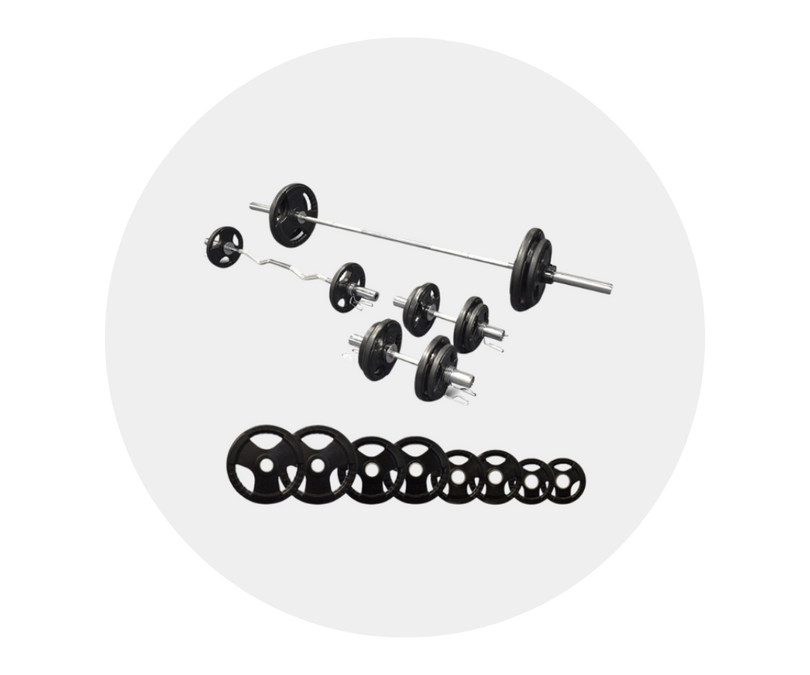
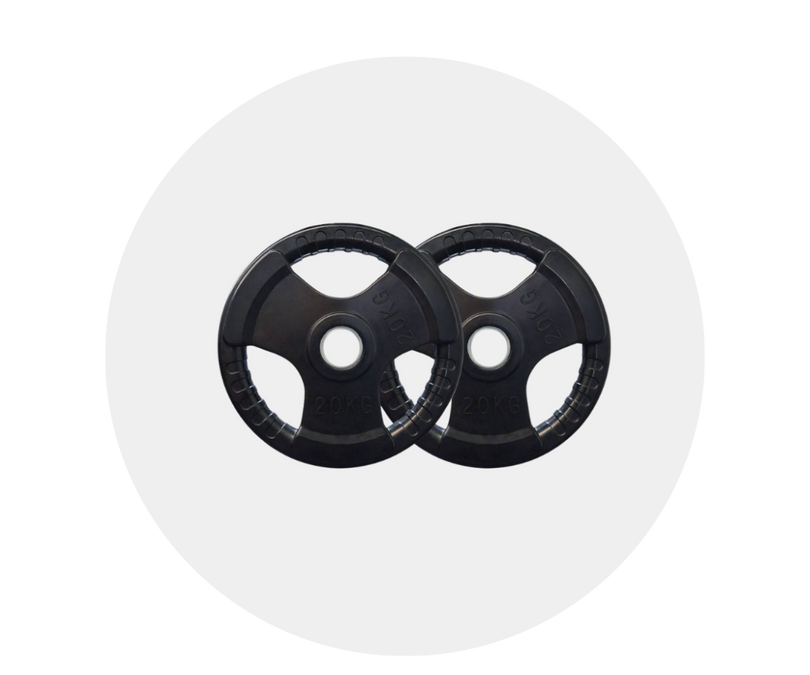
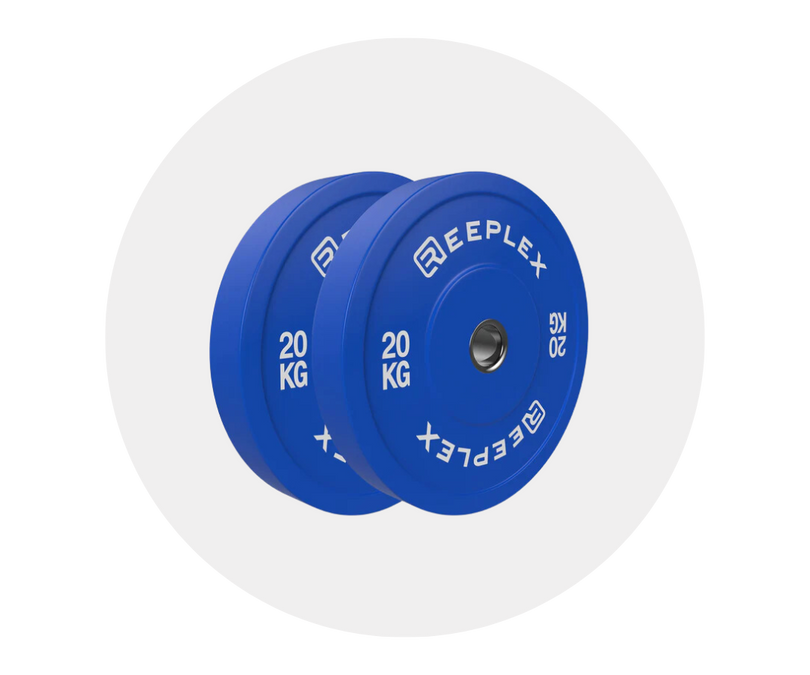
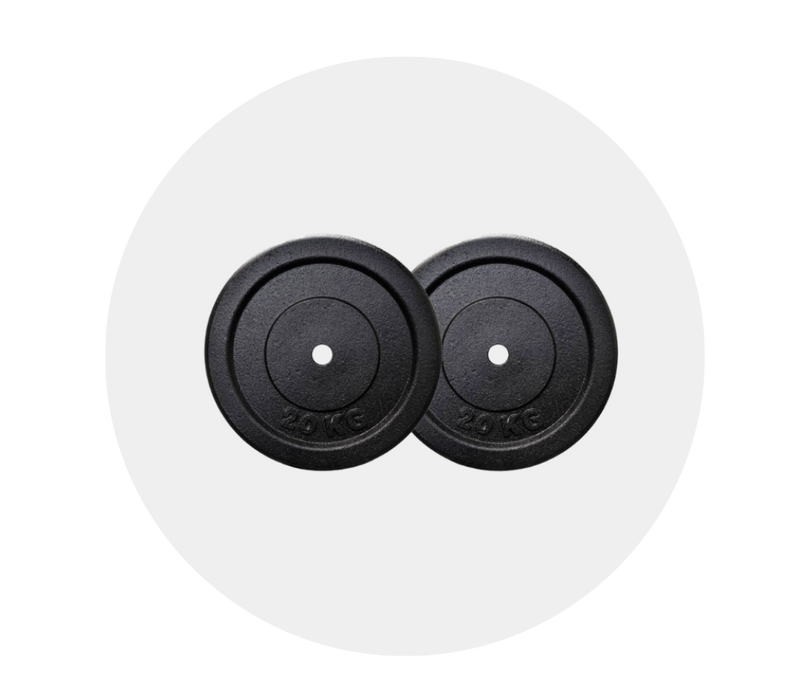

Shop Olympic Weight Plates for Your Home Gym
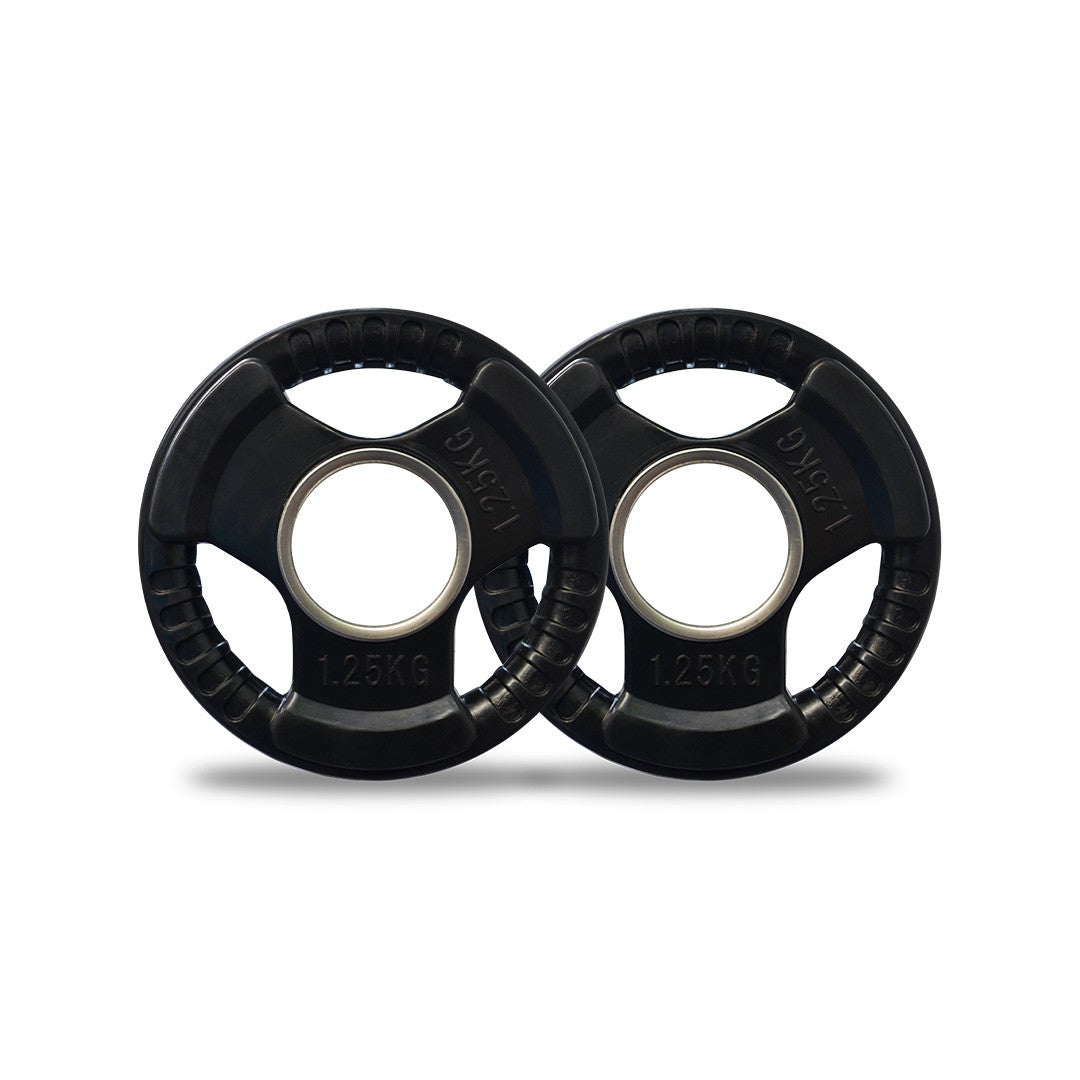
Olympic weight plates have a 50mm center hole designed to fit Olympic barbells. That larger hole diameter is what separates them from standard plates, which use a 25mm hole and aren't compatible with Olympic bars. Olympic plates come in several materials including cast iron, rubber-coated, bumper (solid rubber), and calibrated steel, each suited to different training styles. They're available in weights from 1.25kg up to 25kg per plate, and most home gym setups are built around a combination of types depending on the exercises being performed.
Key facts:
- Center hole: 50mm (vs 25mm for standard plates)
- Compatible with: all Olympic barbells with 50mm sleeves
- Types: cast iron, rubber-coated, bumper (solid rubber), calibrated steel, grip plates, technique plates
- Weight range: 1.25kg to 25kg per individual plate
- Bumper plates can be dropped from height; cast iron and steel plates cannot
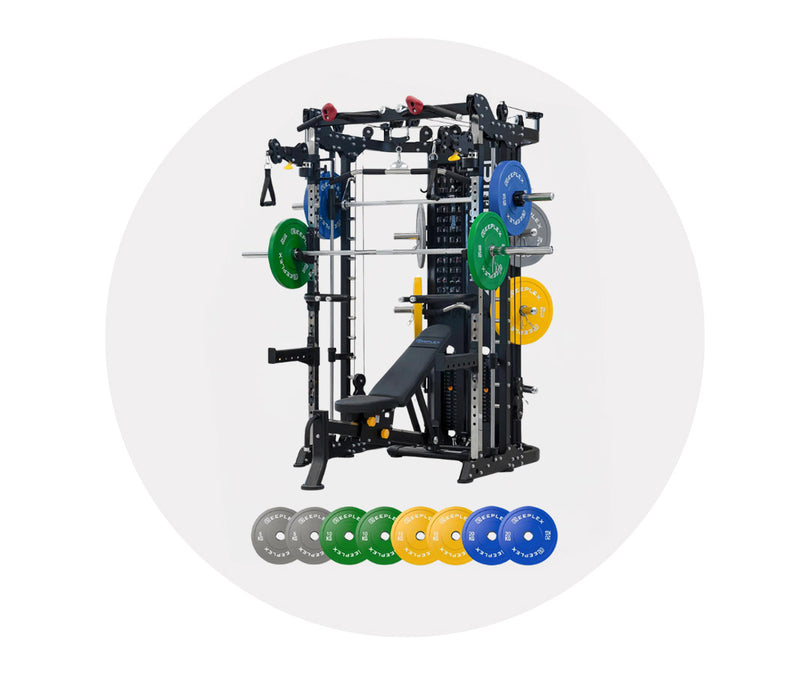
- Color coding: IWF standard uses red (25kg), blue (20kg), yellow (15kg), green (10kg), white (5kg)
- Sets available: starter sets through to full competition-spec loading packages
- Price range: from around $2 to $4 per kg for cast iron; $5 to $10+ per kg for quality bumper plates
Olympic Weight Plates: The Right Plates for Every Strength Training Goal
If you train with a barbell, the plates you put on it matter more than most people realize. The right plates for your home gym setup depend on what you're training for, whether you're dropping from height, what your floor can handle, and how much weight you need to load. Getting this right from the start saves you from buying twice.
At Dynamo Fitness, our Olympic weight plate range covers cast iron plates for traditional strength training, rubber-coated plates for home gyms where floor protection matters, bumper plates for Olympic lifting and CrossFit-style training, and calibrated plates for those who need precision in every lift. We stock individual plates and complete sets across a full range of weights, so you can build a collection that fits your training exactly.
What Are Olympic Weight Plates?
Olympic weight plates are weighted discs designed to load onto an Olympic barbell. The defining feature is the center hole: Olympic plates have a 50mm diameter hole to fit the 50mm sleeve of an Olympic bar. Standard (non-Olympic) plates use a smaller 25mm hole and are not compatible with Olympic barbells, which is an important distinction when building your plate collection.
Beyond the hole diameter, Olympic plates are manufactured to stricter weight tolerances than standard plates. The materials, construction methods, and quality control standards are designed for repeated heavy use, which is why they're the choice of competitive lifters, commercial gyms, and serious home gym users rather than casual fitness equipment.
Olympic plates are used across almost every form of barbell training: powerlifting, Olympic weightlifting, CrossFit, general strength training, and bodybuilding. They're not specific to one discipline. What differs between plate types is whether they can be dropped, how much floor protection they provide, how precisely they're calibrated, and how much weight they can represent in a compact form.
What makes a plate 'Olympic':
- 50mm center hole fitting the standard Olympic barbell sleeve diameter
- Manufactured to tighter weight tolerances than standard plates
- Designed to work with collars and locking mechanisms on Olympic bars
- Available in the standard disc diameter regardless of weight (bumper plates) or proportional sizing (iron plates)
Olympic vs Standard Plates: What's the Difference?
If you're new to barbell training, you may come across both Olympic and standard plate options. Here's the practical difference.
| Feature | Olympic Plates | Standard Plates |
|---|---|---|
| Center hole | 50mm | 25mm (1 inch) |
| Compatible bars | Olympic barbells (50mm sleeve) | Standard bars (25mm shaft) |
| Weight tolerance | Tighter (1% to 3% on quality plates) | Looser (can vary significantly) |
| Types available | Cast iron, rubber, bumper, calibrated | Mainly cast iron |
| Max load available | Up to 25kg per plate (and above) | Typically lighter max weights |
| Best for | All serious barbell training | Light home use with basic bars |
For any serious training setup, Olympic plates and an Olympic barbell are the right choice. Standard plates are cheaper but limited: the smaller hole doesn't seat properly on an Olympic bar, they wobble during lifts, and the range of available types and weights is significantly narrower.
Types of Olympic Weight Plates Compared
Each plate type is built for a different purpose. Understanding the differences makes it much easier to choose the right plates for your training style and your space.
| Feature | Cast Iron | Rubber-Coated | Bumper Plates | Calibrated Steel |
|---|---|---|---|---|
| Material | Solid cast iron | Cast iron + rubber coating | Solid rubber or rubber composite | Precision steel |
| Can be dropped | No | No | Yes | No |
| Floor protection | None | Good | Excellent | None |
| Noise on contact | High | Moderate | Low (deadens on drop) | High |
| Size vs weight | Smaller at same weight | Slightly larger than iron | Same diameter regardless of weight | Smaller at same weight |
| Weight tolerance | Moderate (+/-2%) | Moderate (+/-2%) | Moderate (+/-1% to 3%) | Tight (+/-10g to 30g) |
| Best for | Heavy lifting, powerlifting | Home gyms, floor-sensitive spaces | Olympic lifting, CrossFit, drops | Competition, precision tracking |
| Price per kg | Low ($2 to $4/kg) | Medium ($3 to $6/kg) | Medium-high ($5 to $10+/kg) | High ($8 to $20+/kg) |
Cast Iron Plates
Cast iron plates are the classic choice and the most affordable way to load an Olympic barbell. They're made from a single solid piece of iron, which gives them a compact profile that lets you load more weight onto a standard bar sleeve. The slim design is useful for powerlifters and strength athletes who regularly work at near-maximum loads where sleeve space is a genuine constraint.
Best for:
- Powerlifting, heavy squats, deadlifts, and bench press where high loads are the priority
- Home gym users who train on concrete or rubber flooring where dropping isn't an issue
- Budget-conscious setups where maximum weight for minimum cost is the goal
- Experienced lifters who are past the stage of dropping the bar and focused on controlled lifts
Rubber-Coated Plates
Rubber-coated plates have a cast iron core with a thick rubber outer layer. The coating protects your gym flooring from contact damage when plates are set down, reduces noise compared to bare iron, and gives the plate a more forgiving grip surface. They're slightly larger in diameter than equivalent iron plates due to the coating, which is worth factoring in when loading a full bar.
Best for:
- Home gyms on timber, vinyl, or tiled floors where bare iron would cause damage
- Shared spaces or apartments where noise reduction from plate handling matters
- Users who want the economics of iron with some floor and equipment protection built in
Bumper Plates
Bumper plates are made from solid rubber or a high-density rubber composite, and they're the only type of plate designed to be dropped from height. The uniform diameter across all weights means the bar always lands at the same height when dropped, which is critical for the controlled failure of Olympic lifts like the snatch and clean and jerk. Bumpers are also significantly quieter on impact than iron plates, which makes them practical for home gym use even in noise-sensitive environments.
The trade-off is size: because all bumper plates have the same outer diameter regardless of weight, a 5kg bumper is the same diameter as a 25kg bumper. This means you can't load as much weight onto a bar as you could with compact iron plates, which matters for very heavy lifting.
Best for:
- Olympic weightlifting: snatch, clean and jerk, and any lift where dropping the bar is normal
- CrossFit-style training: high-rep deadlifts, hang cleans, and power cleans
- Home gyms: floor protection and noise control are top priorities
- Beginners: earning Olympic lifting technique will inevitably drop the bar during development
Calibrated Steel Plates
Calibrated steel plates are manufactured to extremely tight weight tolerances, typically within 10 to 30 grams of the stated weight. They're the plates used in powerlifting and weightlifting competitions where accurate load tracking is essential and the margin for error in a max lift is razor thin. Calibrated plates are thinner and denser than iron or rubber plates, which means you can fit more weight on a bar sleeve.
Best for:
- Competitive powerlifters and Olympic lifters who need IWF or IPF-accurate weights
- Serious athletes tracking precise loading progressions where a 200g discrepancy matters
- Well-established home gym setups where floor protection is handled by rubber matting under the bar
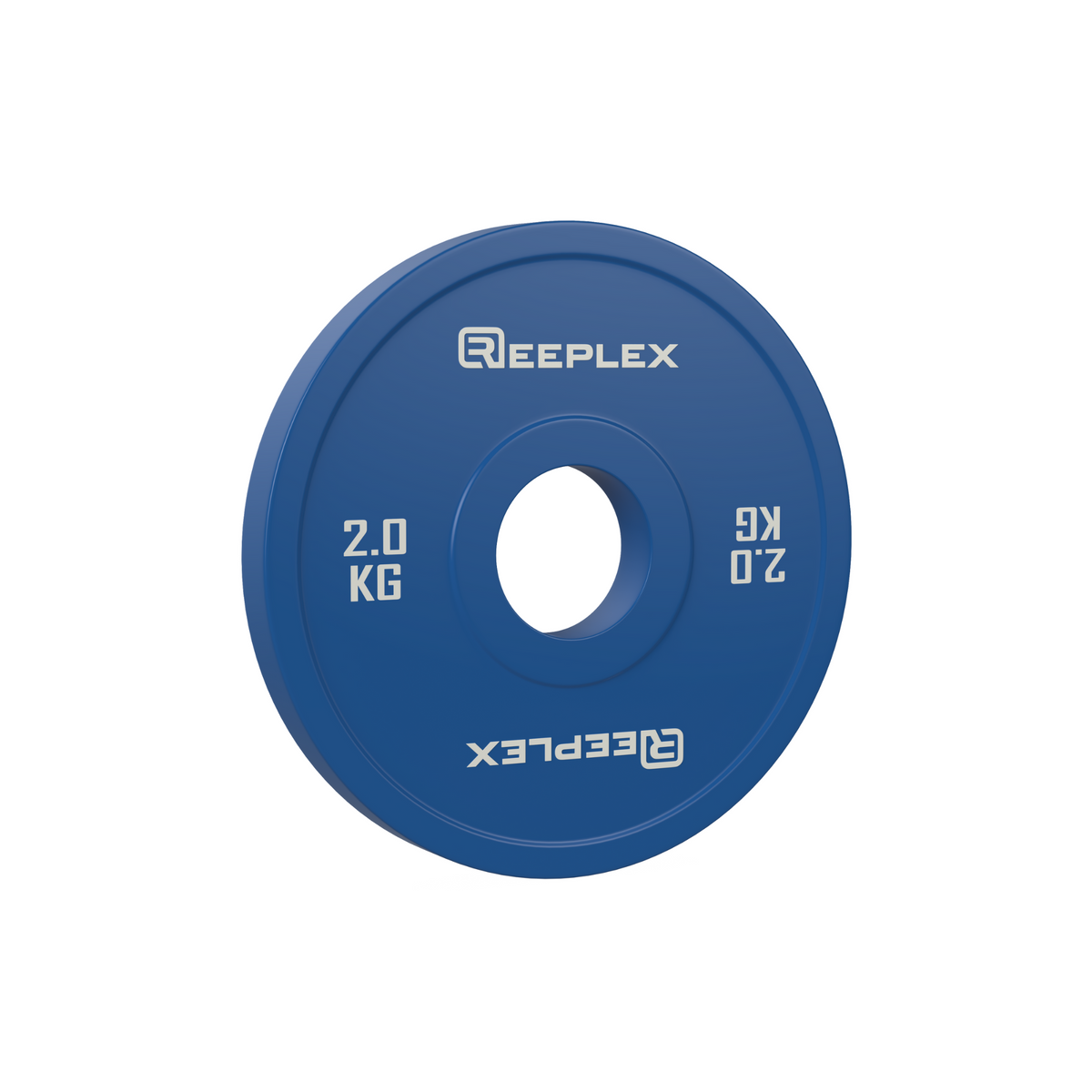
Grip + Technique Plates
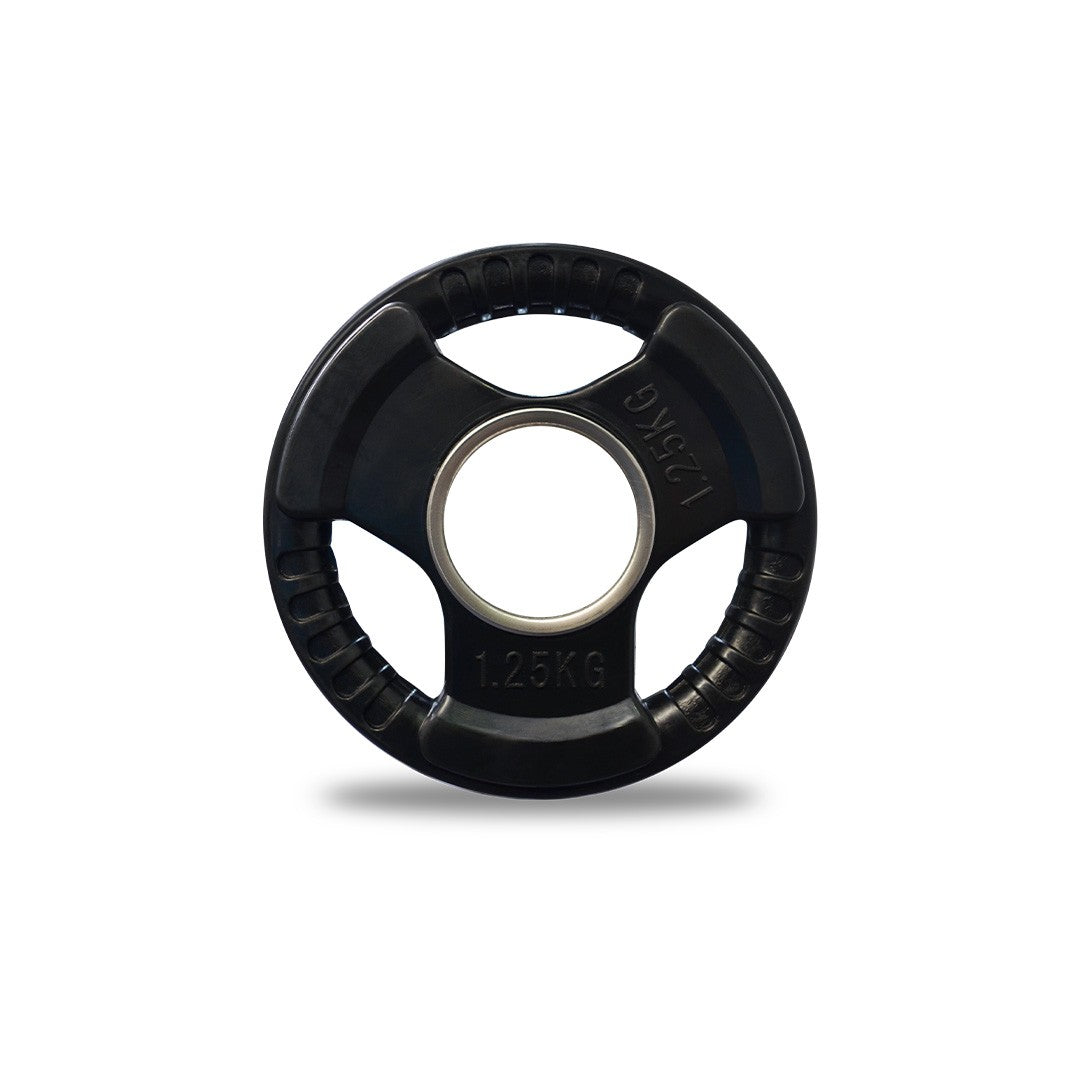
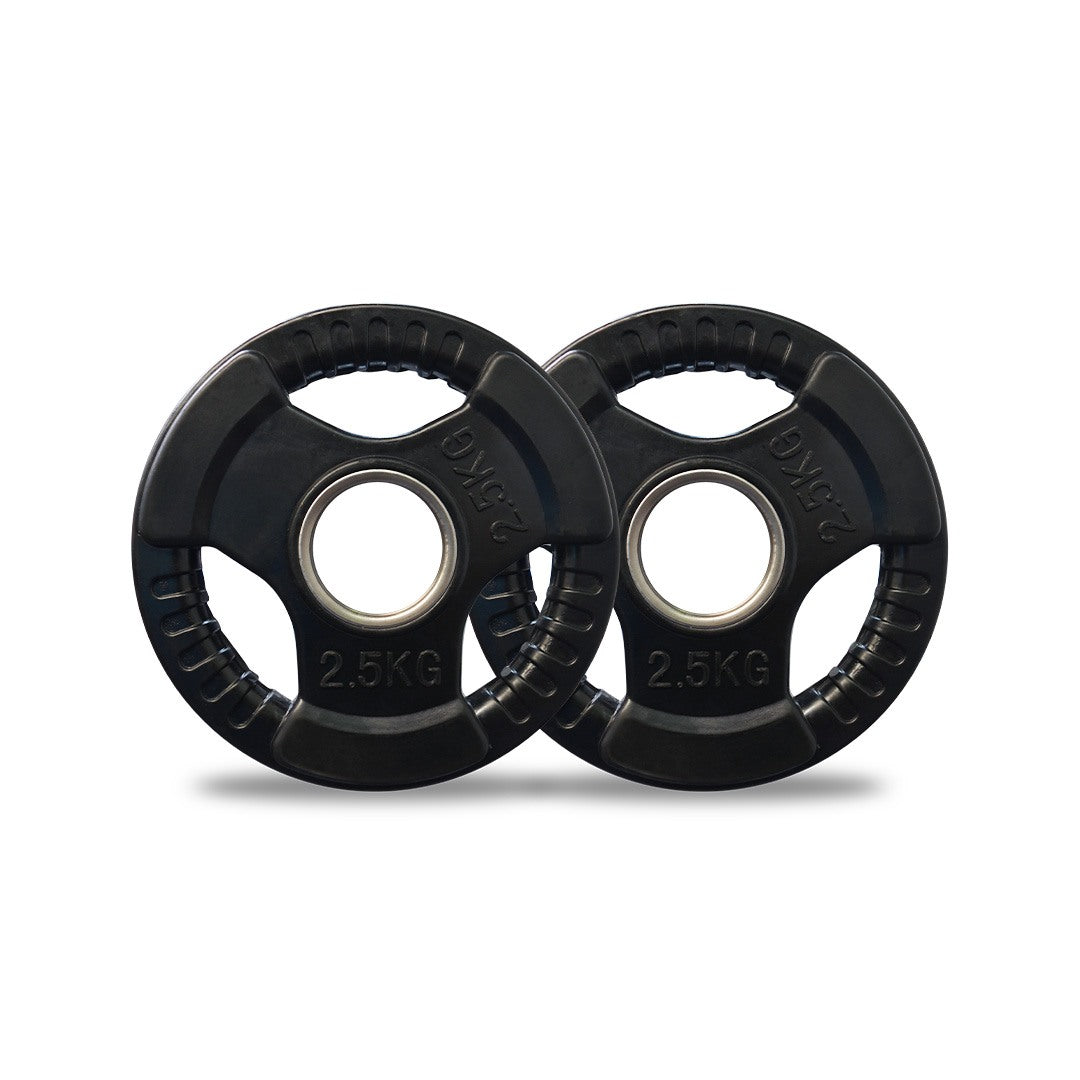
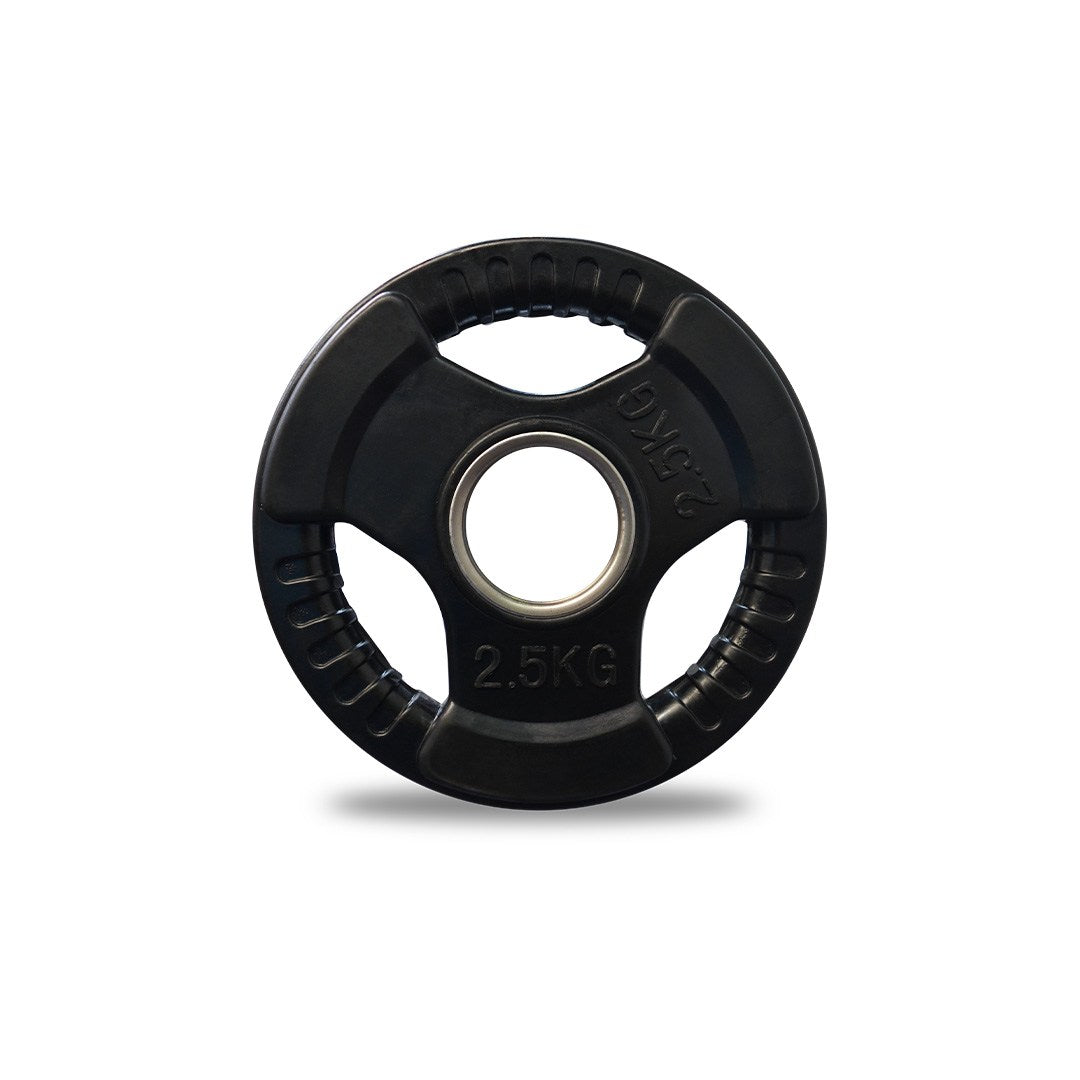
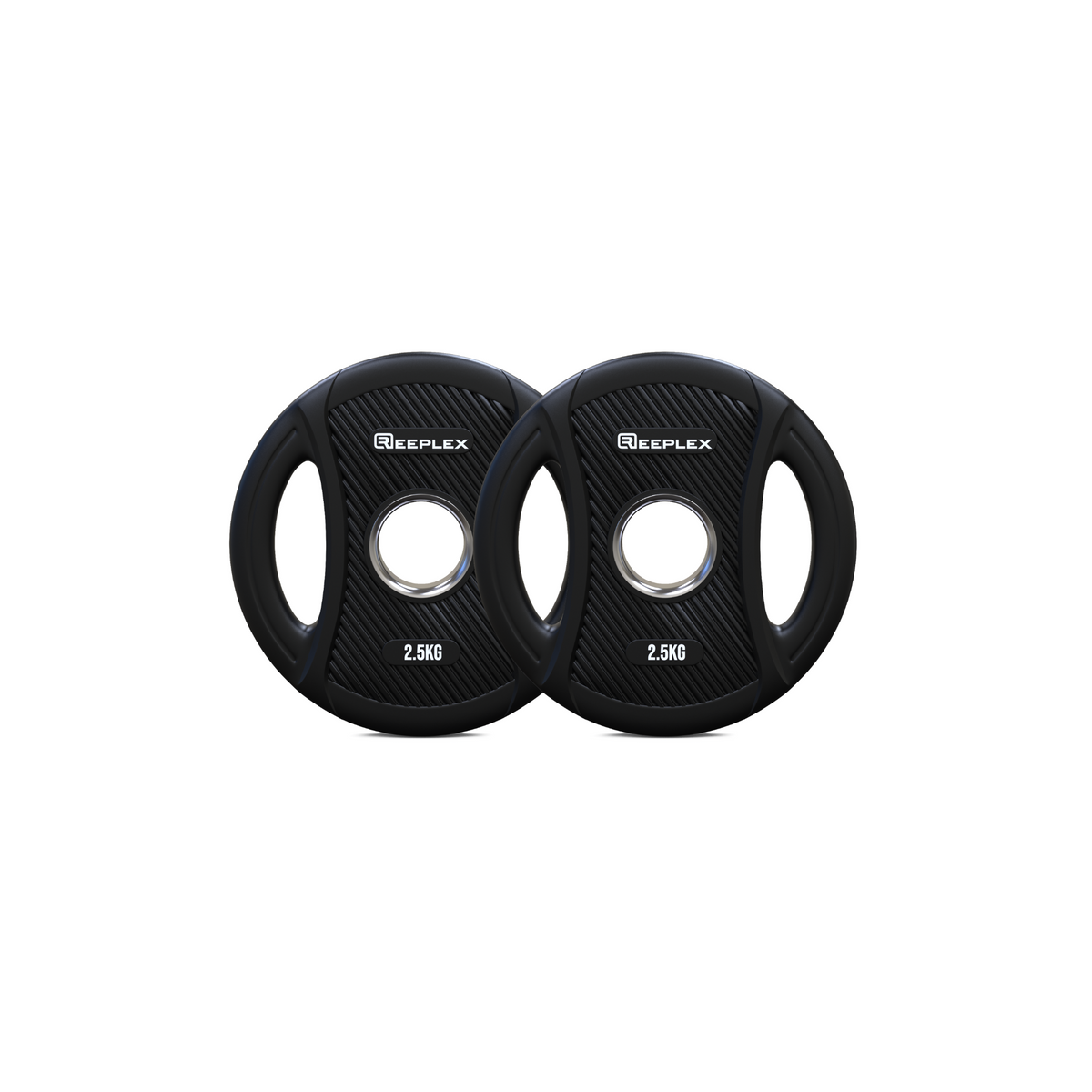
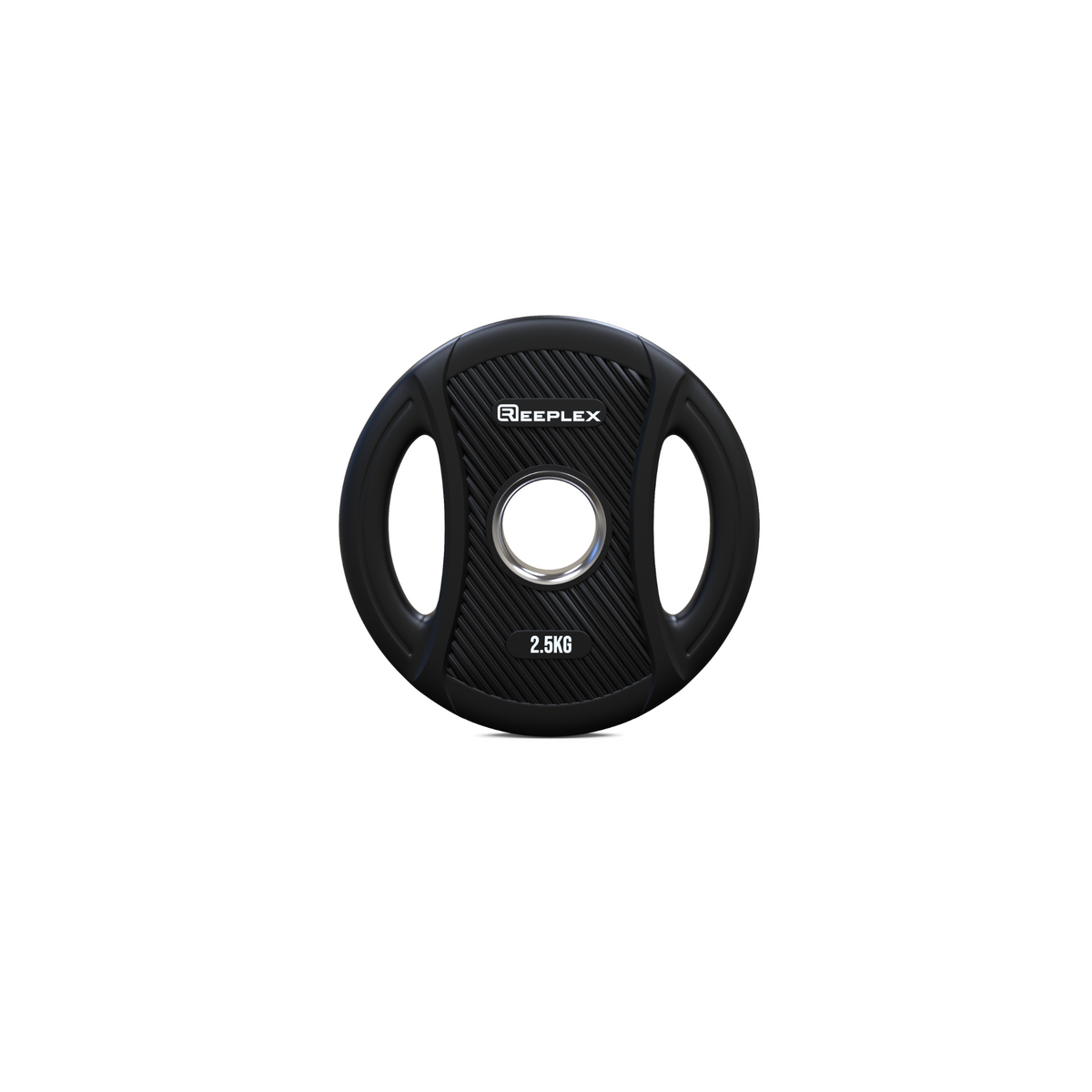
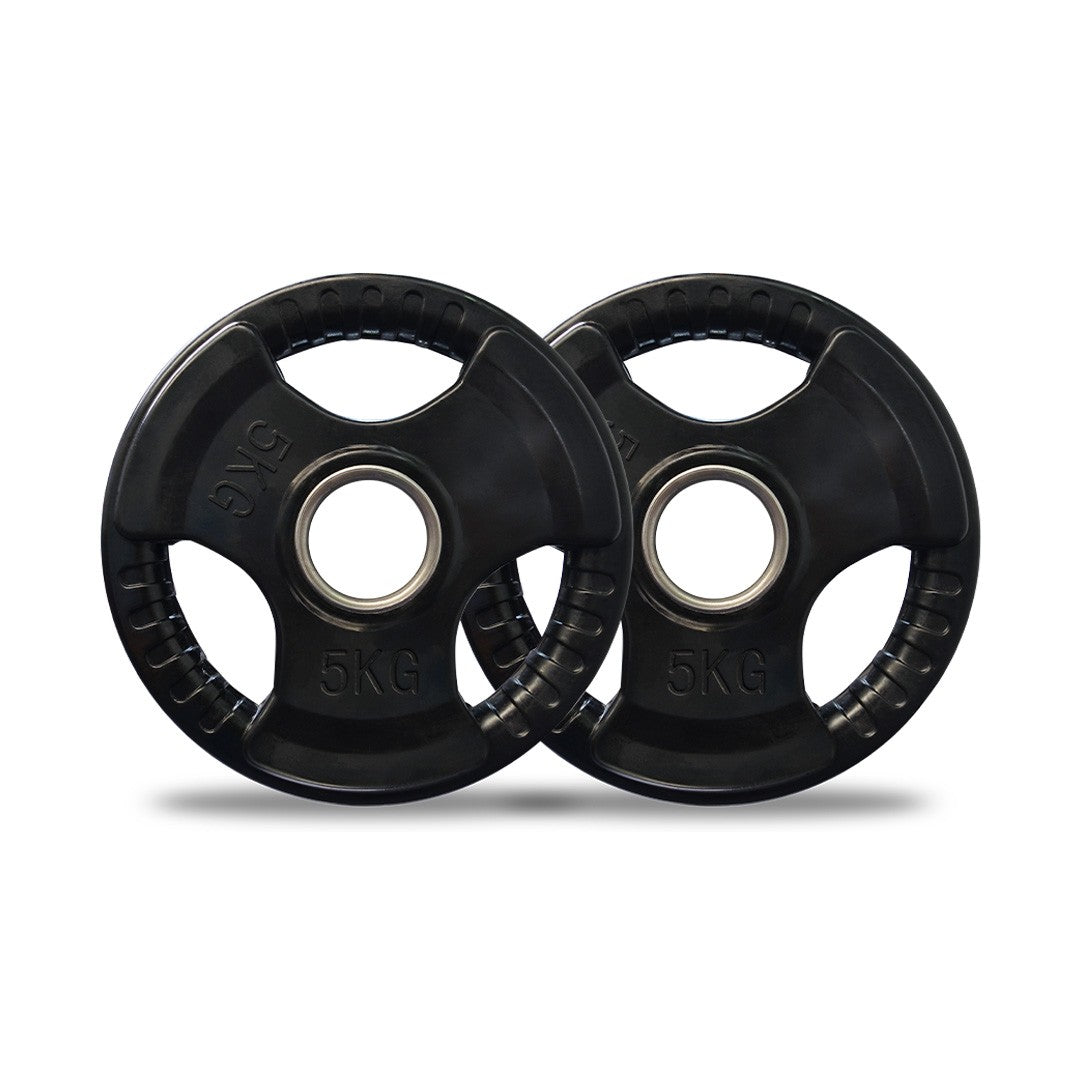
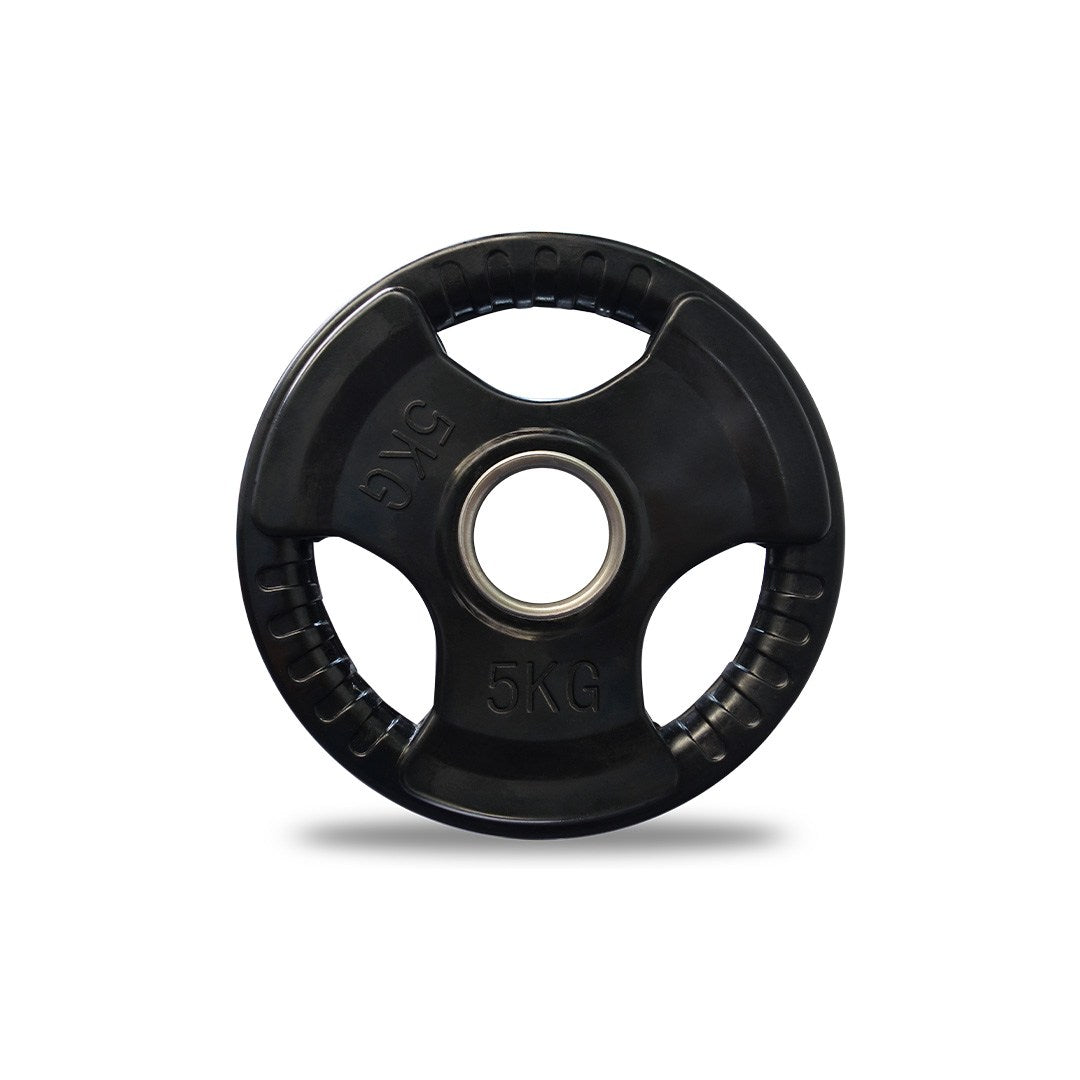
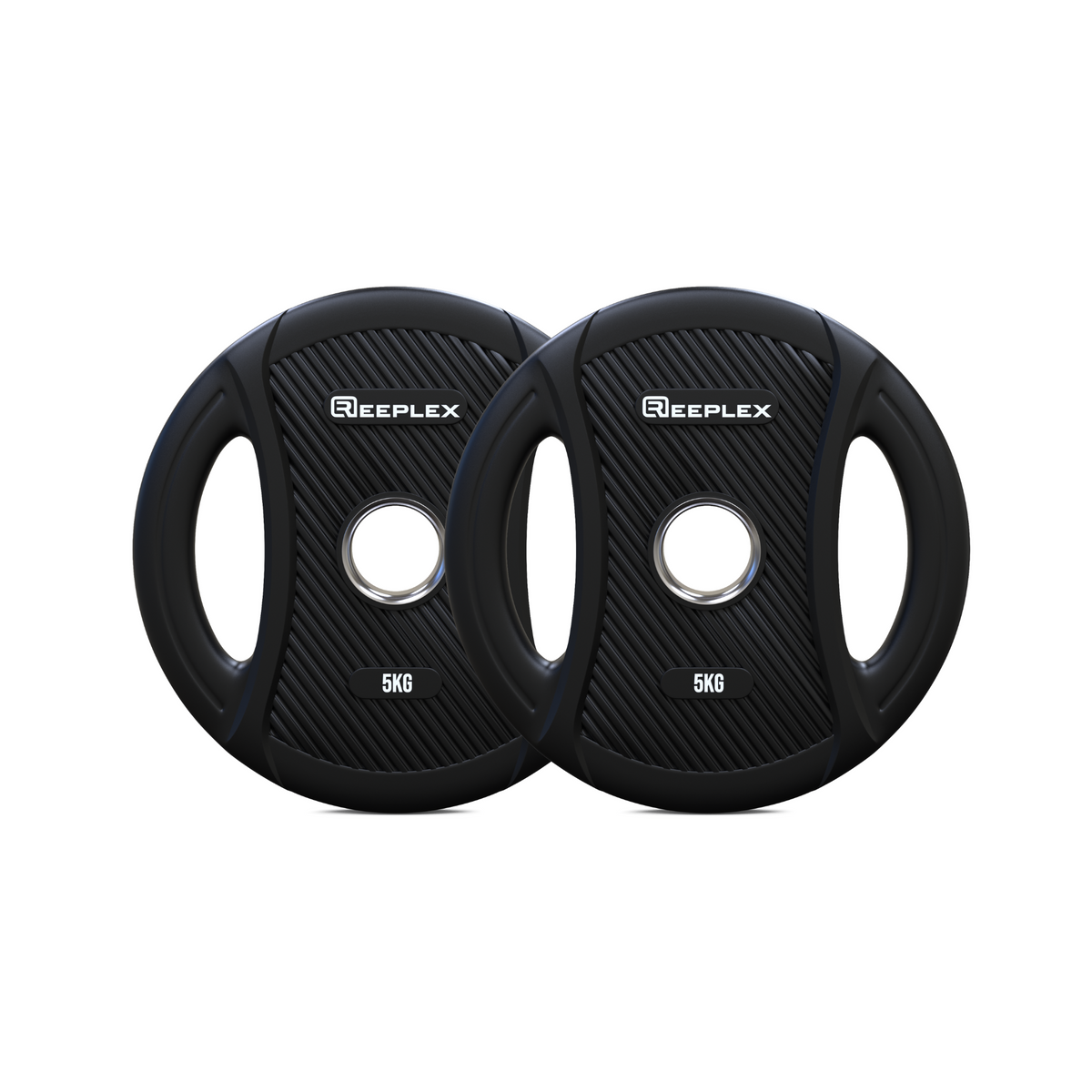
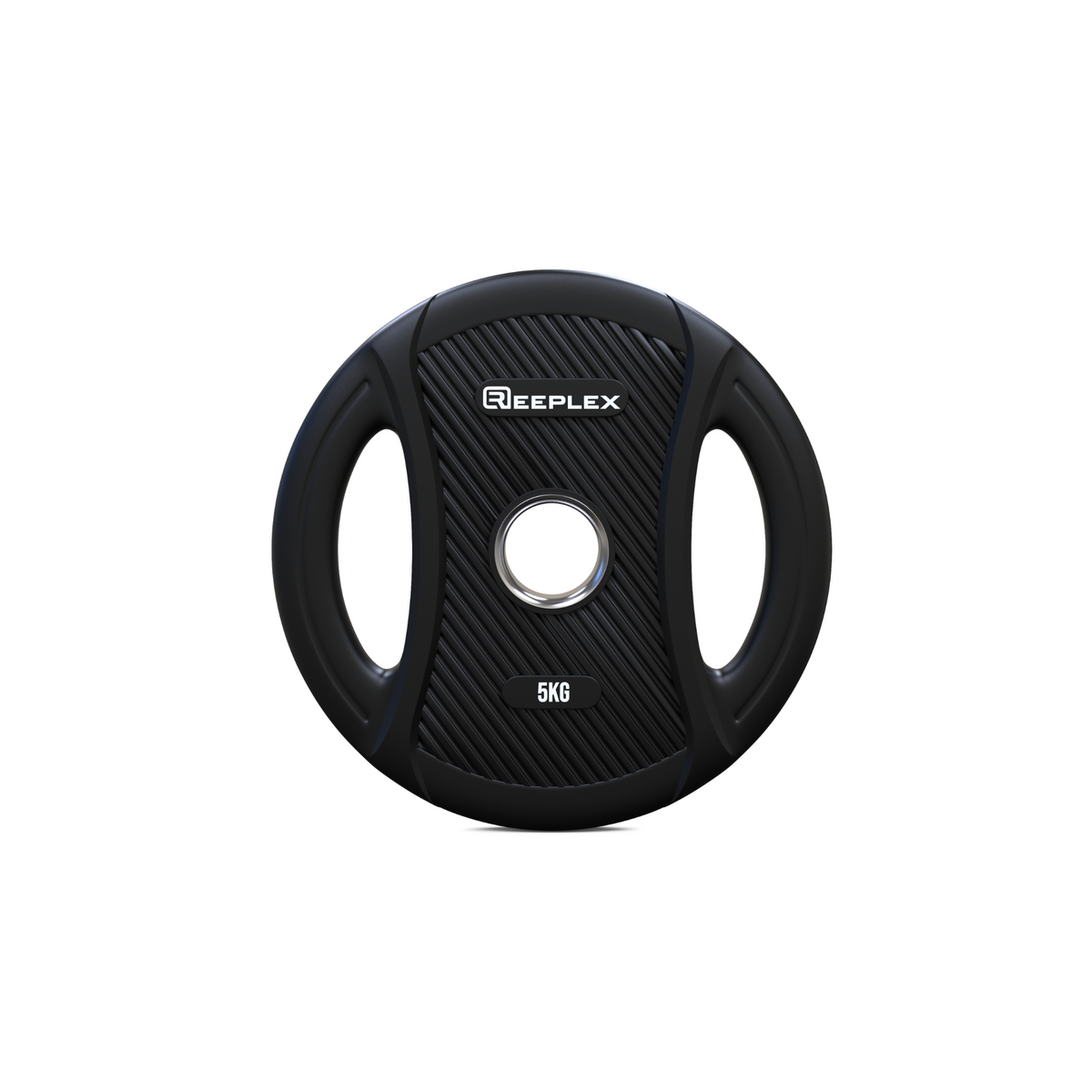
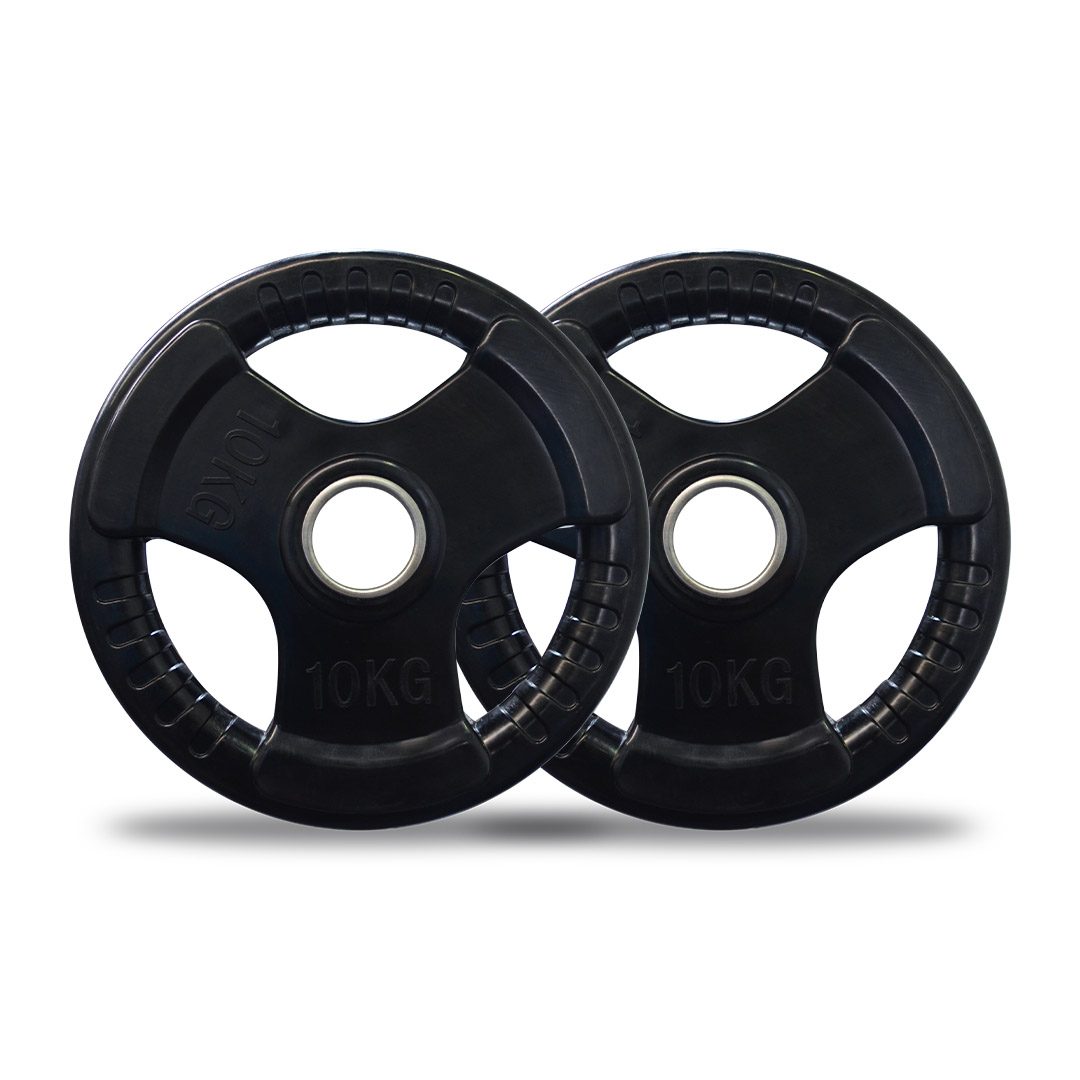
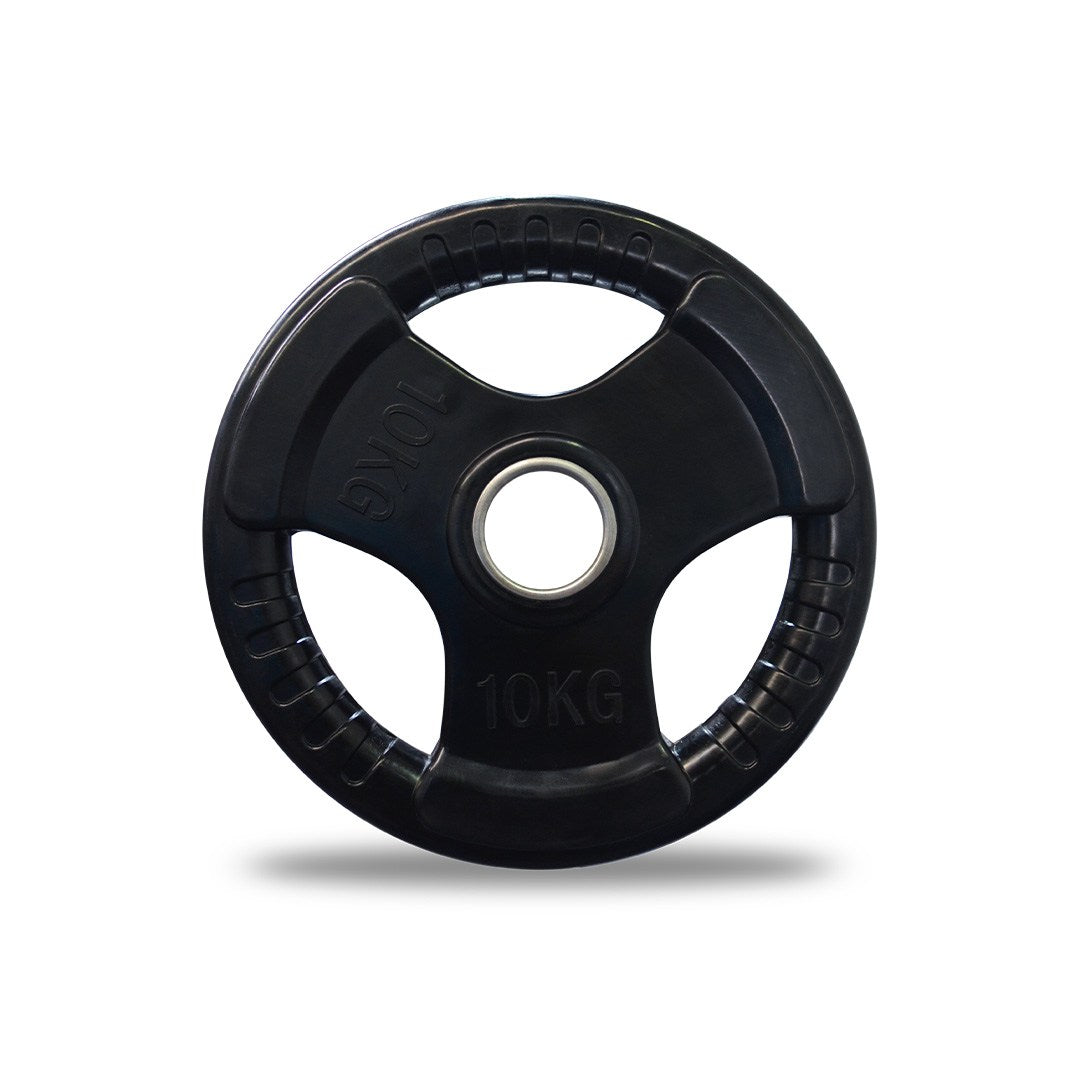
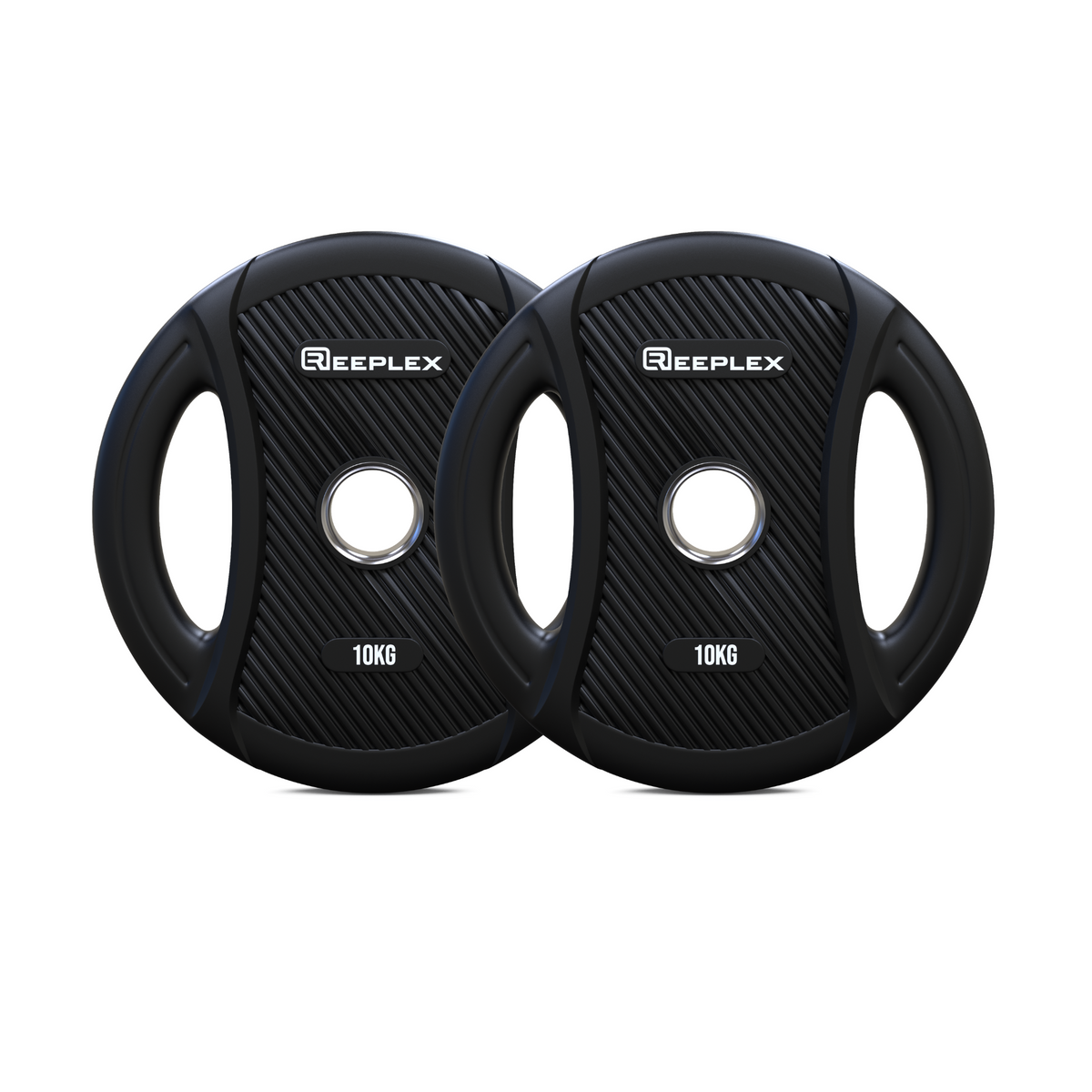
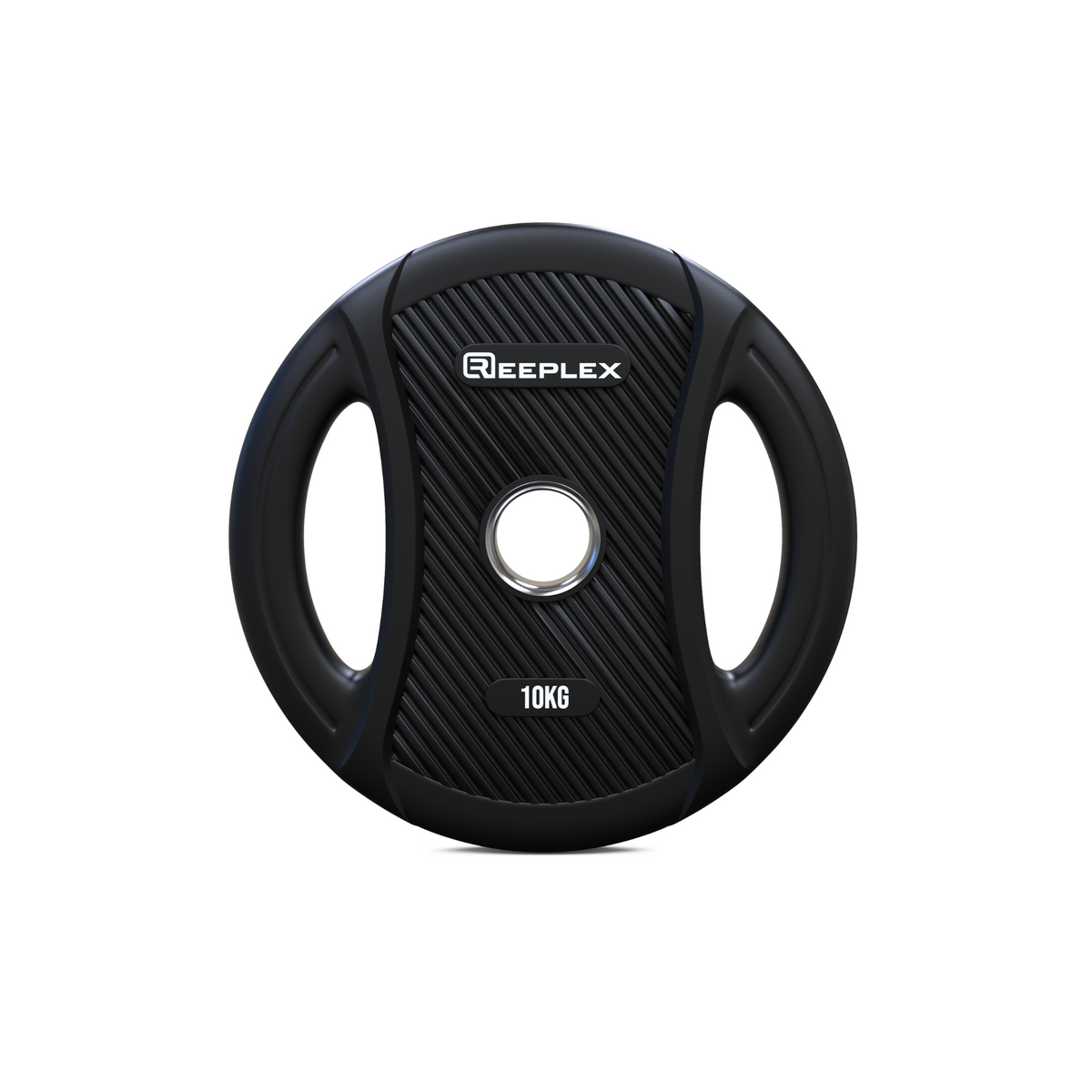
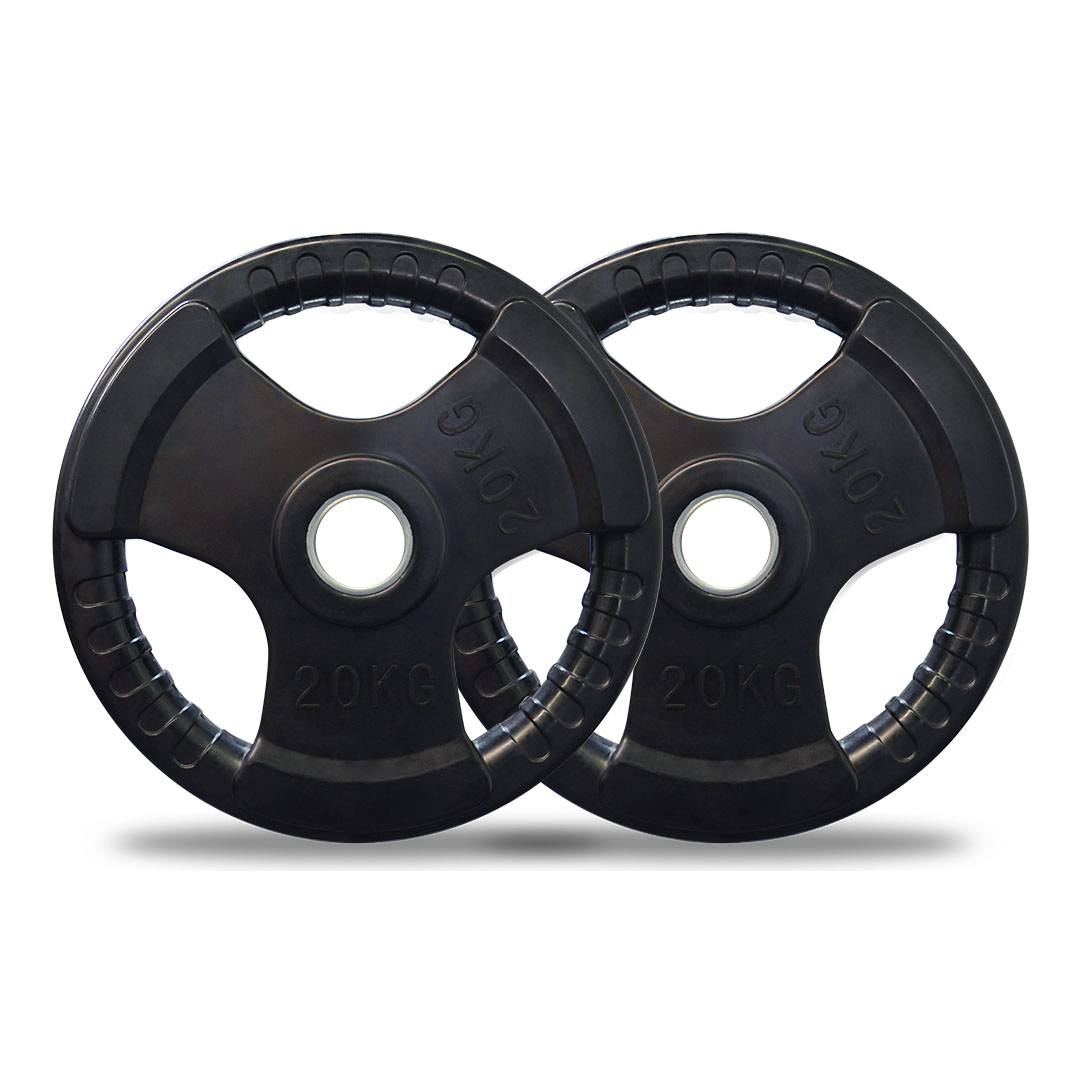
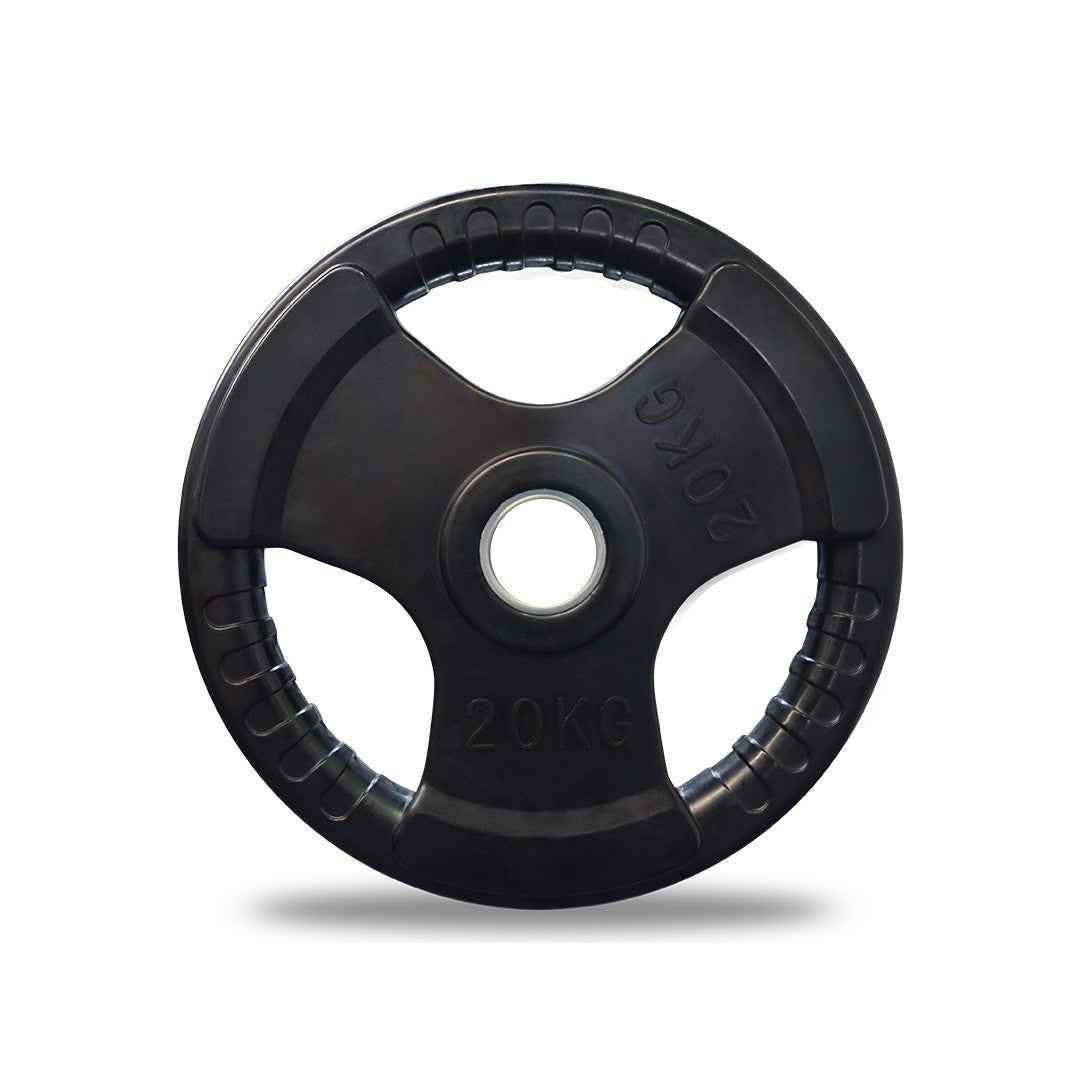
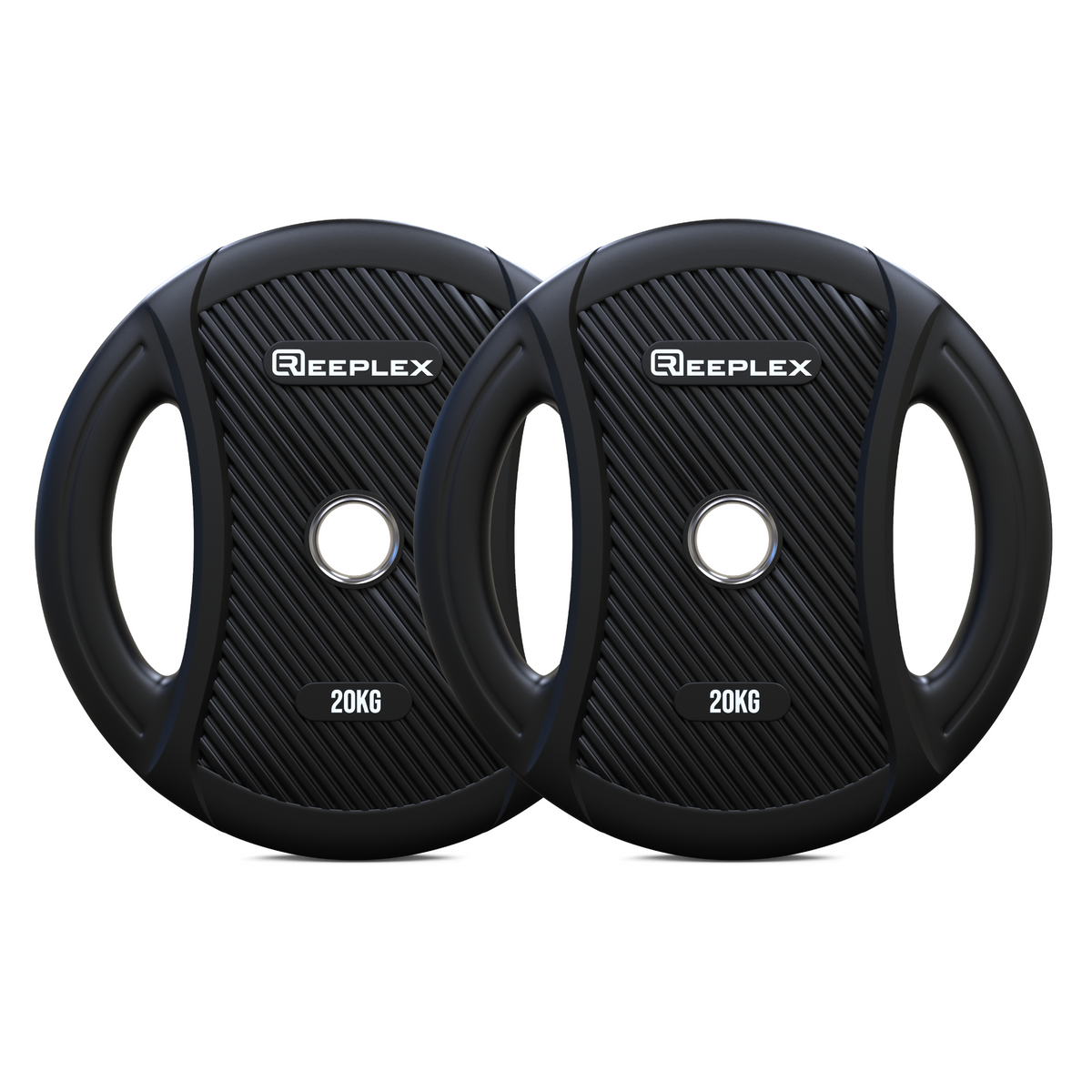
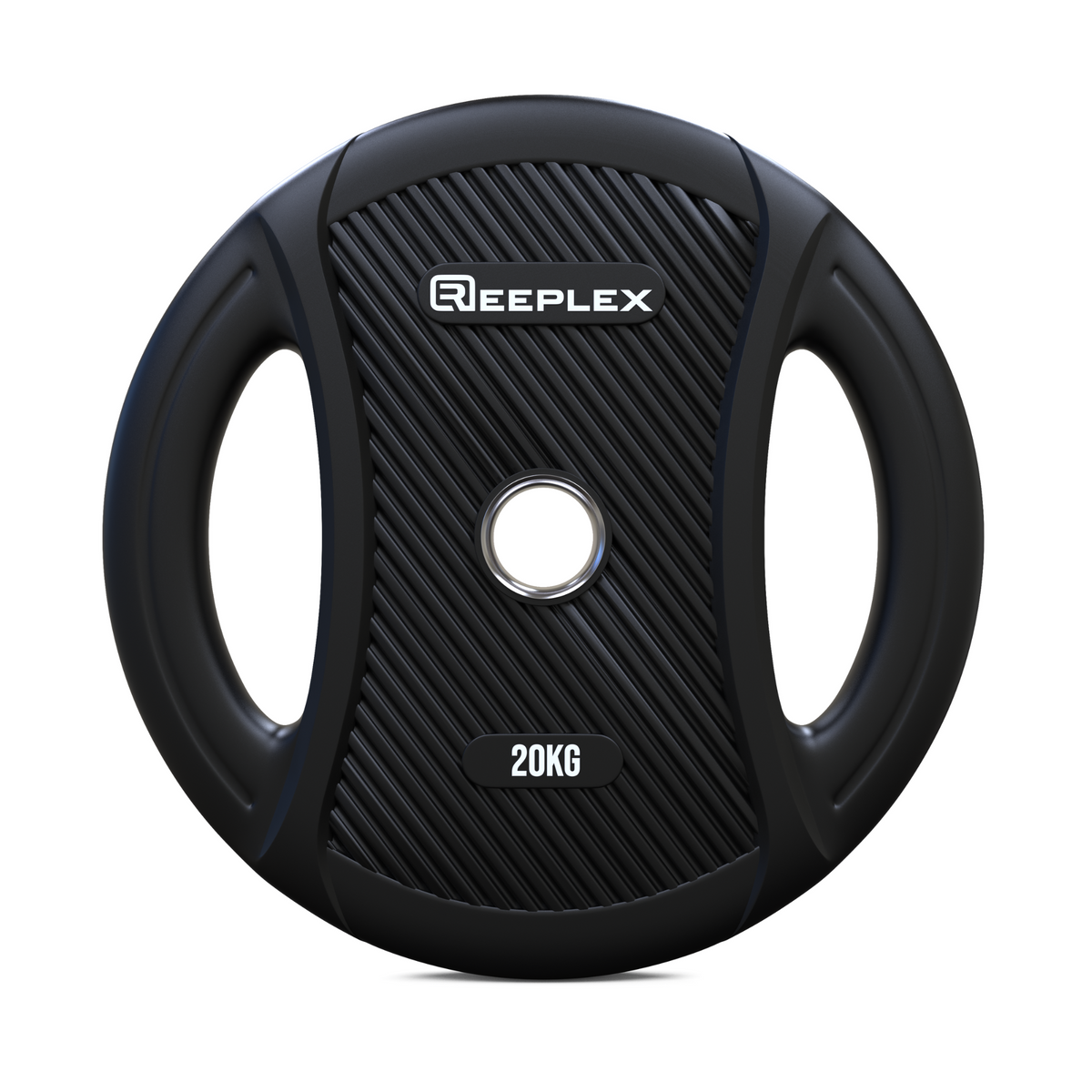
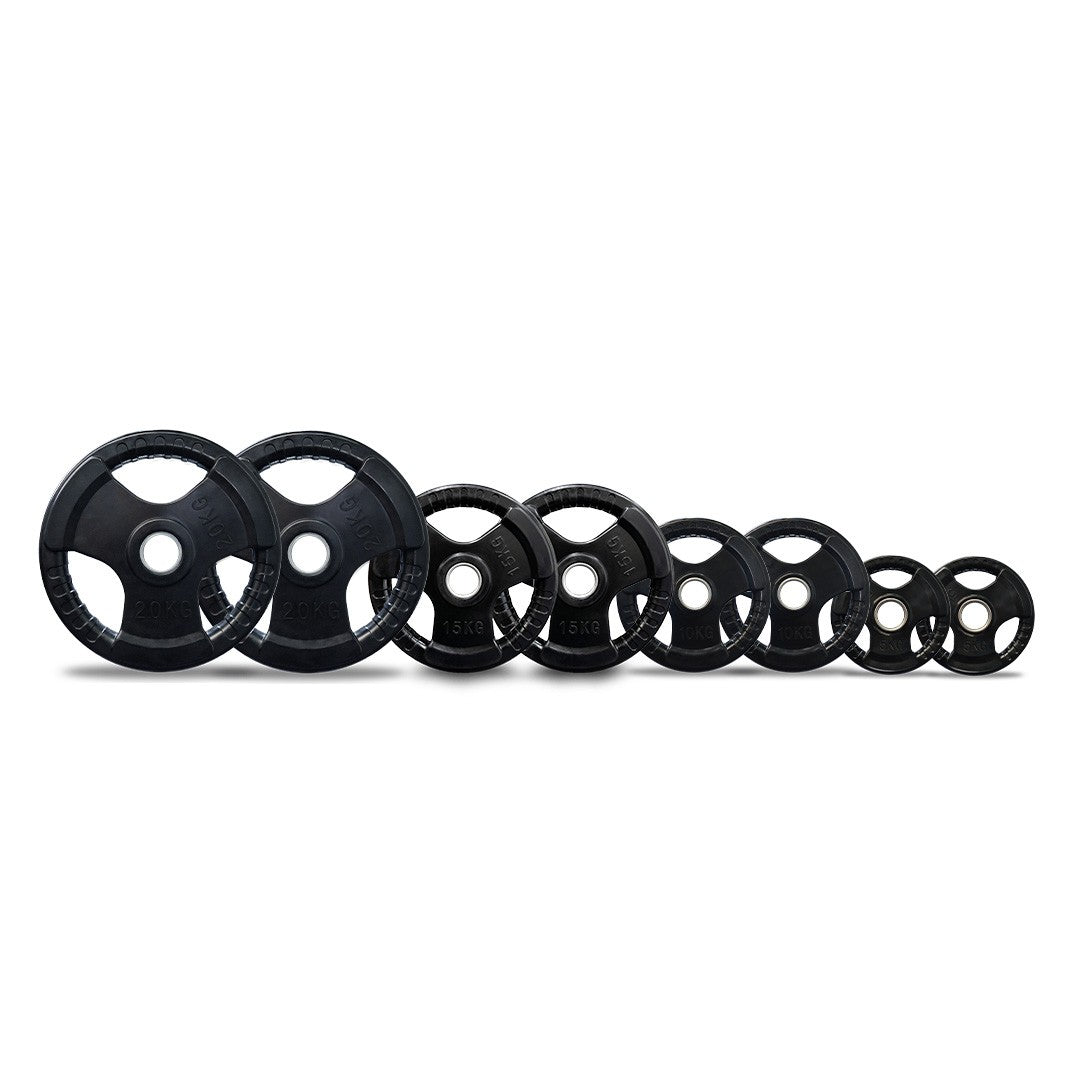
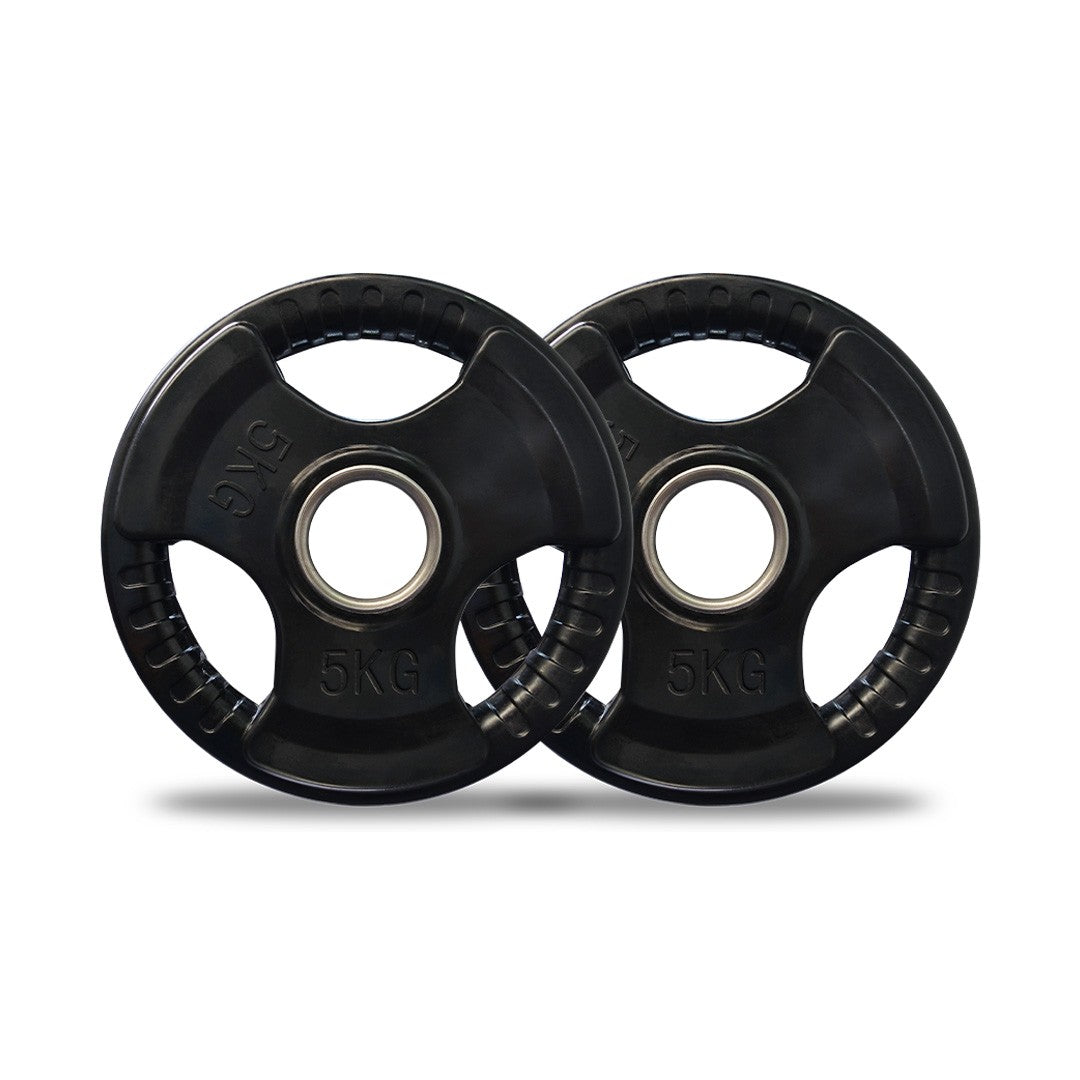
Grip plates have integrated handholds cut into the plate, making them easier to carry, load onto the bar, and move around the gym. They're available in both iron and rubber-coated versions and are a practical choice for home gym users who handle their own plates without gym staff assistance.
Technique plates are lightweight discs designed to help beginners practice Olympic lift mechanics with near-zero load. They match the diameter of full-sized bumper plates so the bar sits at the correct height during pulls and drops, which means you can drill the exact same movement pattern you'll use with a loaded bar once your technique is ready for weight.
Which Plate Type Suits Your Training Goal?
Use this guide to match your primary training style to the right plate type. Most home gym setups end up with a mix: cast iron or rubber-coated plates for heavy strength work, and bumper plates for any Olympic-style lifting.
| Training Goal | Cast Iron | Rubber-Coated | Bumper Plates | Calibrated Steel |
|---|---|---|---|---|
| Powerlifting | Best: compact, loads more weight | Good: adds floor protection | Workable: bulkier per kg | Best: precise load tracking |
| Olympic Lifting | Not suitable: cannot drop | Not suitable: cannot drop | Best: drop-safe, consistent diameter | Not suitable: cannot drop |
| CrossFit / HIIT | Not suitable: no dropping | Not suitable: no dropping | Best: built for drops and pace | Not suitable |
| General Strength | Best: affordable and reliable | Good: quieter, floor-safe | Good: versatile if budget allows | Overkill for general training |
| Bodybuilding | Good: compact, load more on bar | Good: home gym friendly | Good: noise reduction a bonus | Not necessary |
| Beginner / First Setup | Best: affordable entry point | Good: floor protection from day one | Good option if budget allows | Not recommended yet |
There's no wrong choice at any goal level, but choosing the right plate type upfront avoids the frustration of buying twice. If your training might ever include Olympic lifts or you plan to deadlift with a free drop, bumper plates from the start make the most sense.
How to Build Your Plate Collection
One of the most common questions from gym equipment buyers is what plates to buy and in what quantities. The answer depends on your current strength level, the exercises you're prioritizing, and your budget. Here's a practical framework.
Starting Out: The Minimum Useful Set
If you're new to barbell training or building your first home gym, a starter set covering light to moderate loads is all you need to begin. A typical starter configuration for general strength training looks like this.
Recommended starter plate set:
- 2 x 20kg plates: your primary heavy loading plates for squats, deadlifts, and bench press
- 2 x 10kg plates: second-tier loading for warm-up weights and sub-maximal sets
- 2 x 5kg plates: fine-tuning the load between major increments
- 2 x 2.5kg plates: small jumps when progressing toward a new max
- 2 x 1.25kg plates: the smallest increment, useful for progressive overload when bigger jumps stall
This set gives you a loading range from a bare 20kg bar up to 90kg+ with plates (2 x 20 + 2 x 10 + 2 x 5 = 70kg in plates plus the bar). That covers the majority of beginner to intermediate strength training needs.
Intermediate Setup: Adding Range + Variety
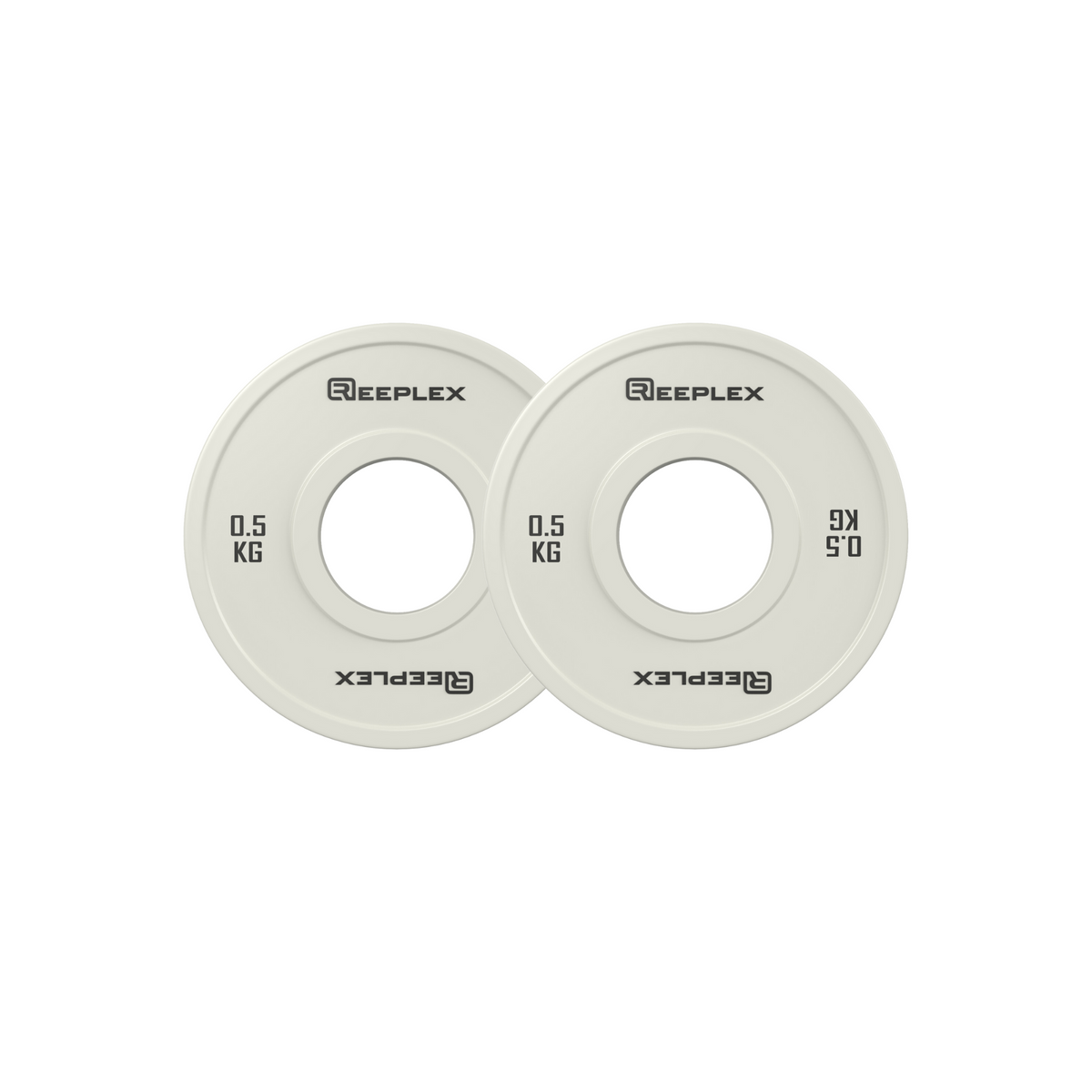
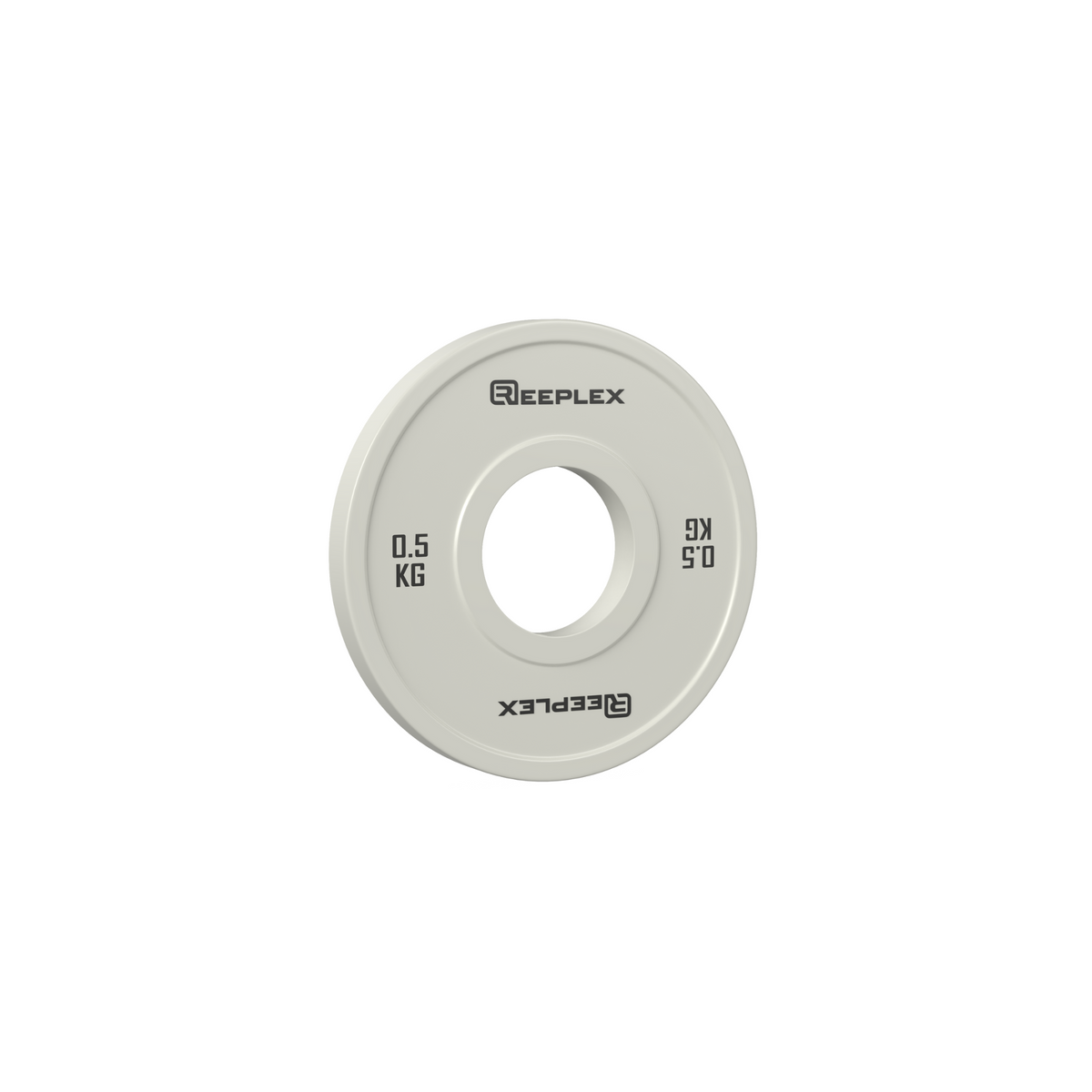
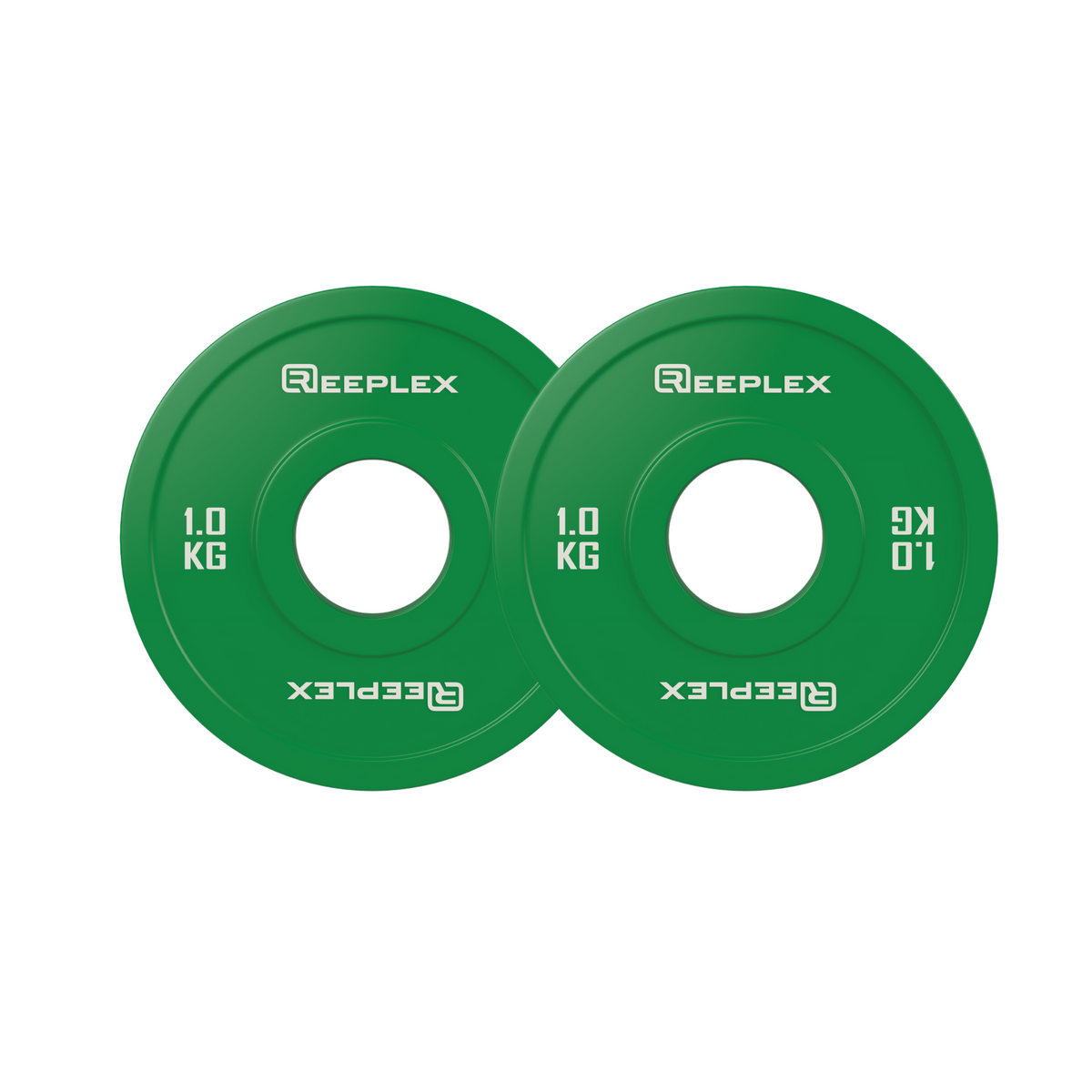
Once you're regularly loading 80 to 100kg on the bar, you'll want additional 20kg pairs to extend your range, and you may want to add bumper plates if you're incorporating any Olympic lifting or CrossFit-style workouts. Fractional plates (0.5kg and 0.25kg) become useful at this stage for precise progressive overload when you're working near your limits.
Common intermediate additions:
- Additional 20kg pair for heavier loading
- Full set of bumper plates (5kg to 20kg per side) if adding Olympic lift
- Fractional plates (0.5kg and 0.25kg) for micro-progression
- Additional 2.5kg and 5kg pairs for complete increment coverage
Barbell Loading Guide by Lift + Experience Level
Not sure how much weight to start with? These benchmarks show approximate plate configurations for the five most common barbell lifts across three experience levels. They're reference points, not strict targets. Individual progress varies based on training history, bodyweight, and programming.
| Lift | Beginner (0 to 6 months) | Intermediate (6 to 24 months) | Advanced (2 years+) |
|---|---|---|---|
| Back Squat | 20kg bar + 2x5kg to 2x20kg per side | 20kg bar + 2x20kg to 2x40kg per side | 20kg bar + 2x40kg to 2x60kg+ per side |
| Deadlift | 20kg bar + 2x10kg to 2x20kg per side | 20kg bar + 2x20kg to 2x40kg per side | 20kg bar + 2x40kg to 2x80kg+ per side |
| Bench Press | 20kg bar + 2x5kg to 2x10kg per side | 20kg bar + 2x10kg to 2x30kg per side | 20kg bar + 2x30kg to 2x50kg+ per side |
| Overhead Press | 20kg bar + 2x2.5kg to 2x10kg per side | 20kg bar + 2x10kg to 2x20kg per side | 20kg bar + 2x20kg to 2x35kg+ per side |
| Clean and Jerk | Technique plates or 2x5kg to 2x10kg (bumpers) | 2x10kg to 2x25kg per side (bumper plates) | 2x25kg to 2x40kg+ per side (bumper plates) |
For cleans, snatches, and any overhead movement where you might drop the bar, use bumper plates. For squats, deadlifts, bench, and pressing movements, cast iron or rubber-coated plates work at any level. Beginners on the lighter end of these ranges can get started with a standard entry set and expand as their strength develops.
Color Coding: What the Colors Mean
If you've seen color-coded plates in a commercial gym or competition setting, the colors follow an international standard set by the IWF (International Weightlifting Federation). Understanding the color system makes loading faster and reduces the chance of loading incorrectly at a glance.
IWF standard plate colors:
- Red: 25kg
- Blue: 20kg
- Yellow: 15kg
- Green: 10kg
- White: 5kg
- Red (small): 2.5kg
- Change plates (1.25kg and below) vary by manufacturer
Not all plates follow IWF coloring, particularly cast iron and rubber-coated options aimed at home gym use. But if you're buying bumper plates or calibrated plates, color consistency across your set makes loading significantly faster, especially during timed sets or competition warm-ups.
Olympic Weight Plate Starter Kits: What to Buy at Every Budget
If you're building a plate collection from scratch, here's a practical breakdown of what you get at three budget levels. All configurations assume a standard 20kg Olympic barbell.
| Entry Level | Mid-Range | Performance | |
|---|---|---|---|
| Plate type | Cast iron | Rubber-coated or mixed iron and bumper | Full bumper set or calibrated steel |
| Configuration | 2x20kg, 2x10kg, 2x5kg, 2x2.5kg, 2x1.25kg | 2x20kg, 2x15kg, 2x10kg, 2x5kg, 2x2.5kg, 2x1.25kg plus change plates | Full bumper set 2x5kg to 2x25kg plus fractional plates from 0.25kg |
| Total plate weight | Approx 77kg in plates | Approx 105kg to 130kg in plates | Approx 80kg to 150kg depending on set |
| Max bar load | Approx 97kg total (bar plus plates) | Approx 145kg to 170kg total | Varies: typically 100kg to 170kg in bumpers |
| Best for | Beginners and first home gym builds | Intermediate lifters with mixed training needs | Olympic lifting, CrossFit, and serious home gym athletes |
| Approx cost | $200 to $400 | $400 to $800 | $600 to $1,500+ |
Entry-level cast iron sets are the most cost-effective way to start. Once you're regularly loading 100kg-plus and want to add Olympic lifts, adding a bumper plate set alongside your iron plates gives you the best of both: compact iron for heavy squats and deadlifts, and drop-safe bumpers for cleans and overhead work.
What Equipment Do You Need with Olympic Plates?
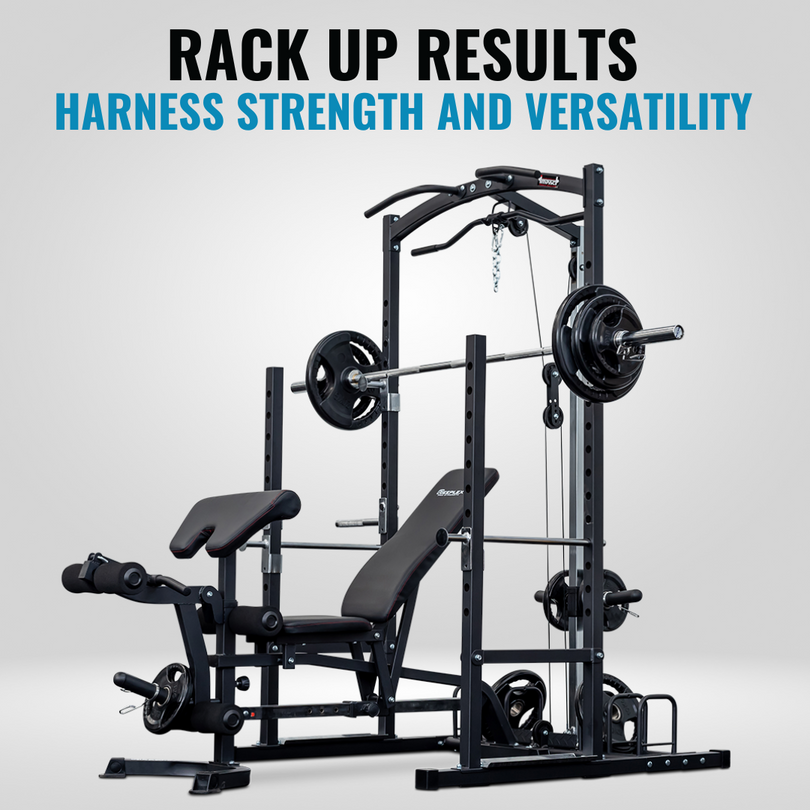
Olympic plates are designed to be used with an Olympic barbell and a rack or platform. For the majority of barbell exercises, you'll need at minimum a barbell and a safety system of some kind. A power rack gives you the most complete and safest setup for squats, bench press, overhead press, and rack pulls, with adjustable safety arms to catch the bar on a failed rep.
For a more compact footprint, a squat rack covers the essential barbell exercises with a smaller floor depth than a full power rack cage. If you're primarily squatting and pressing at moderate loads and want to save space, a squat rack paired with your Olympic plates covers the core of a strength training program.
For dedicated bench pressing, bench press sets that include a bench and barbell rack give you an optimized pressing station where the bar height and safety catches are positioned specifically for chest pressing movements.
Olympic plates are also used with:
- Landmine attachments: plates load one end of the barbell for rotational and pressing exercises
- Plate-loaded machines: leg press, hack squat, and T-bar rows use Olympic plates directly
- Plate-loaded functional trainers: use your existing plates rather than a fixed weight stack
- Dip belts: plates suspended from a belt for weighted dips and pull-ups
- Storage racks: keep plates organized and accessible without stacking on the floor
Plate Standards + Certifications
For most home gym users, certifications aren't a deciding factor. But if you're training for competition or tracking loads with precision, the standard the plates are built to matters.
Key standards:
- IWF (International Weightlifting Federation): governs plate color coding, diameter, and weight tolerances for Olympic weightlifting competition
- IPF (International Powerlifting Federation): sets standards for plates used in powerlifting competition, including weight tolerance requirements
- IPF approved plates: typically calibrated to within 10g to 30g of stated weight, competition tested
- Non-certified plates: manufactured to looser tolerances and suitable for general training but not competition use
Certified competition plates are also typically more expensive and heavier to manufacture, which is why they're priced at a premium compared to standard cast iron or rubber-coated options. Unless you're competing or programming very precisely around your exact load, high-quality non-certified plates are more than adequate for home gym training.
Safety + Best Practices: Top Tips
1. Always check plates are fully seated before lifting
Plates should sit flush against the collar and the adjoining plate with no gap. An improperly seated plate can shift mid-lift or come off the bar entirely under load.
2. Use collars on every set
Spring collars are the minimum. For heavy work, locking collars that clamp to the sleeve provide better security and prevent any plate movement. Never lift without collars at working weights.
3. Only drop bumper plates
Cast iron, rubber-coated, and steel plates are not designed to be dropped and can crack, chip, or bounce dangerously when they hit the floor. Only bumper plates should contact the floor from overhead.
4. Inspect plates before use
Look for cracks in iron plates, delamination in rubber-coated plates, and collar hole deformation in all types. A compromised plate under a heavy load is a significant safety risk.
5. Use appropriate gym flooring
Lifting on bare concrete damages plates, cracks floor surfaces, and creates dangerous rebound if a plate drops. Rubber gym mats under your lifting area protect both your floor and your equipment.
6. Load + unload plates carefully
Grip plates make handling easier. For heavier plates, tilt the bar slightly before removing to avoid the plate catching and swinging the bar.
Caring for Your Olympic Weight Plates
Cast Iron Plates
Wipe down cast iron plates after each session with a dry cloth to remove sweat and chalk. If surface rust develops, remove it with fine steel wool or sandpaper and apply a thin coat of machine oil to the cleaned surface. Store in a dry area away from moisture. Cast iron plates stored in unheated garages in humid climates can develop surface rust quickly, so a periodic oil coat helps prevent this.
Rubber-Coated + Bumper Plates
Clean rubber and rubber-coated plates with a mild soap and water solution. Avoid harsh chemicals or solvent-based cleaners, which degrade rubber compounds and accelerate cracking. Don't store rubber plates in direct sunlight or extreme heat, both of which cause the rubber to break down over time. Store bumper plates vertically on a peg or rack rather than stacking flat, which can cause the rubber to deform under sustained pressure.
Calibrated Steel Plates
Keep calibrated plates clean and dry. Even a small amount of corrosion changes the weight of a calibrated plate and undermines the precision you paid for. Store with a light oil coating if they're in a moisture-prone environment, and keep them away from bare concrete floors where condensation can transfer to the plate surface.
The Right Plates for Every Lift
Whether you're buying your first set of plates to get started with a barbell or filling gaps in an established home gym setup, getting the right combination of types and weights makes a genuine difference to how you train. The wrong plates for your space or your style is a frustration every session. The right ones you stop thinking about entirely.
At Dynamo Fitness, we stock Olympic weight plates across all types and weight increments, from individual plates through to complete loading sets. Our range is built for home gym use and backed by a team who can help you work out exactly what you need.
Building a complete free weight setup? Pair your Olympic plate collection with a set of dumbbells for the exercises where a fixed-weight dumbbell beats a barbell, and you've got a genuinely complete free weight foundation.
- Fast, Australia-wide shipping available on qualifying orders across Australia.
- Buy Now, Pay Later options at checkout.
- Expert team available in-store and online seven days a week to help you choose the right plates and quantities.
- Showrooms in Perth, Sydney, Melbourne, Brisbane, Adelaide and Gold Coast where you can see and handle plates before you buy.
- Individual plates and complete olympic weight sets available so you can buy exactly what you need.
Shop our full range of Olympic weight plates or visit your nearest Dynamo Fitness showroom today.
Olympic Weight Plates - FAQs
The main difference is the center hole diameter. Olympic plates have a 50mm hole to fit the 50mm sleeve on an Olympic barbell. Standard plates have a 25mm hole for standard bars. The two are not interchangeable: an Olympic plate won't sit properly on a standard bar's thin shaft, and a standard plate won't fit an Olympic bar sleeve without an adapter. Beyond the hole size, Olympic plates are generally manufactured to tighter weight tolerances, are available in more types (including bumper plates), and come in higher maximum weights, making them the better long-term investment for any serious training setup.
Only bumper plates are designed to be dropped. Bumper plates are made from solid rubber or a high-density rubber composite specifically to absorb the impact of being dropped from overhead. Cast iron, rubber-coated, and calibrated steel plates should never be dropped: they can crack, chip, or deform on impact, damage the floor, and create a serious safety hazard from bouncing or fragmenting. If your training involves any Olympic lifts (snatch, clean and jerk) or high-rep deadlifts where you release the bar at the top, bumper plates are the correct choice.
It depends on your current strength level and the exercises you're training. A practical starting set for general strength training is two 20kg plates, two 10kg plates, two 5kg plates, two 2.5kg plates, and two 1.25kg plates. This gives you a loading range from a bare bar up to approximately 90kg with plates, which covers beginner to solid intermediate strength training. As you get stronger, add pairs of 20kg plates to extend your maximum load. If you add Olympic lifting to your training, a set of bumper plates covering 5kg to 20kg per side gives you the droppable plates you need.
Yes, if you plan to do any Olympic lifting, CrossFit-style training, or high-rep deadlifts where releasing the bar is part of the movement. Bumper plates also make general deadlift training more practical in a home gym because you don't need to control the bar all the way to the floor on every rep. The noise reduction on impact is a real bonus for apartment or shared-wall setups. The trade-off is cost (bumpers are more expensive per kg than iron) and size (all bumper plates have the same outer diameter, which limits how much you can load on a bar compared to compact iron plates).
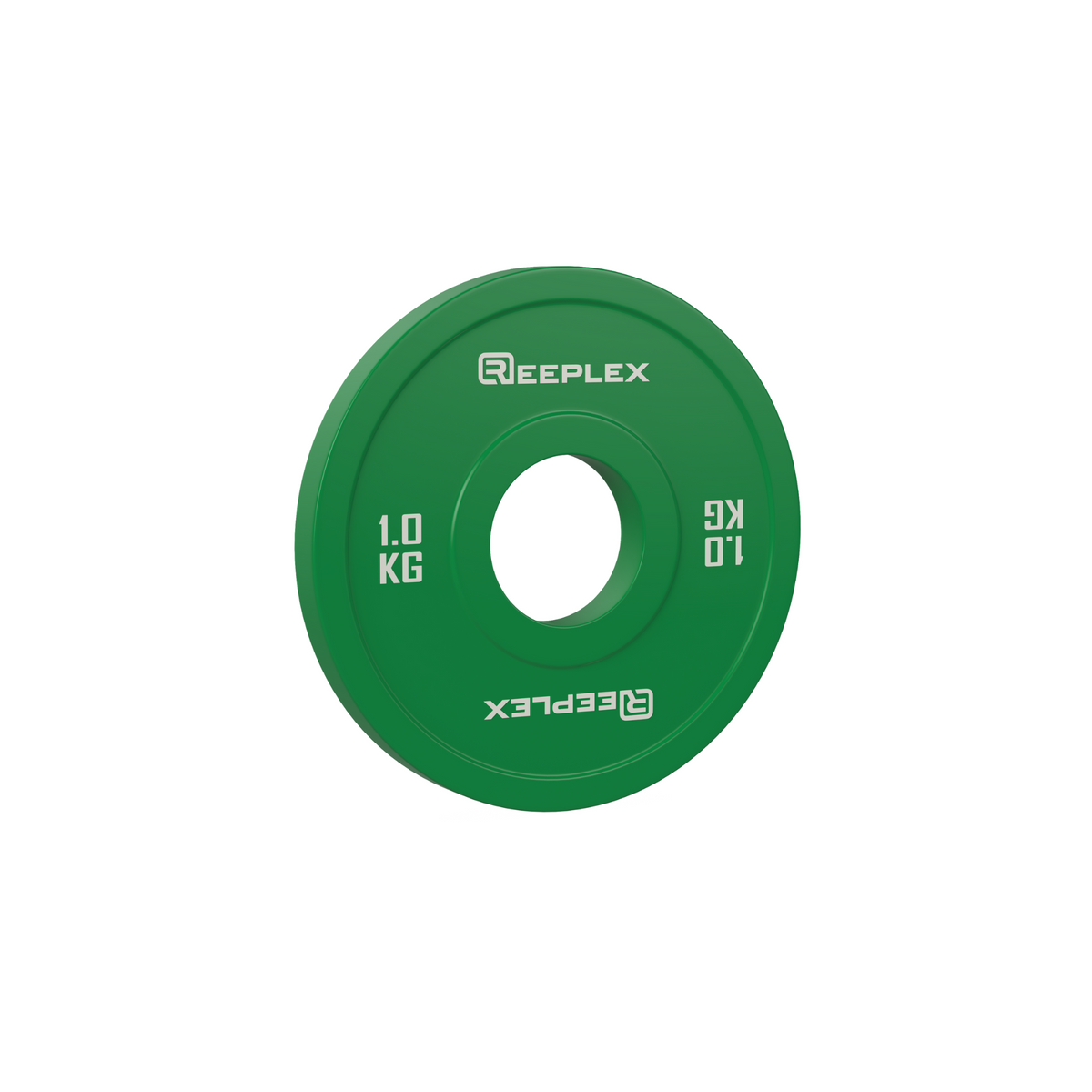
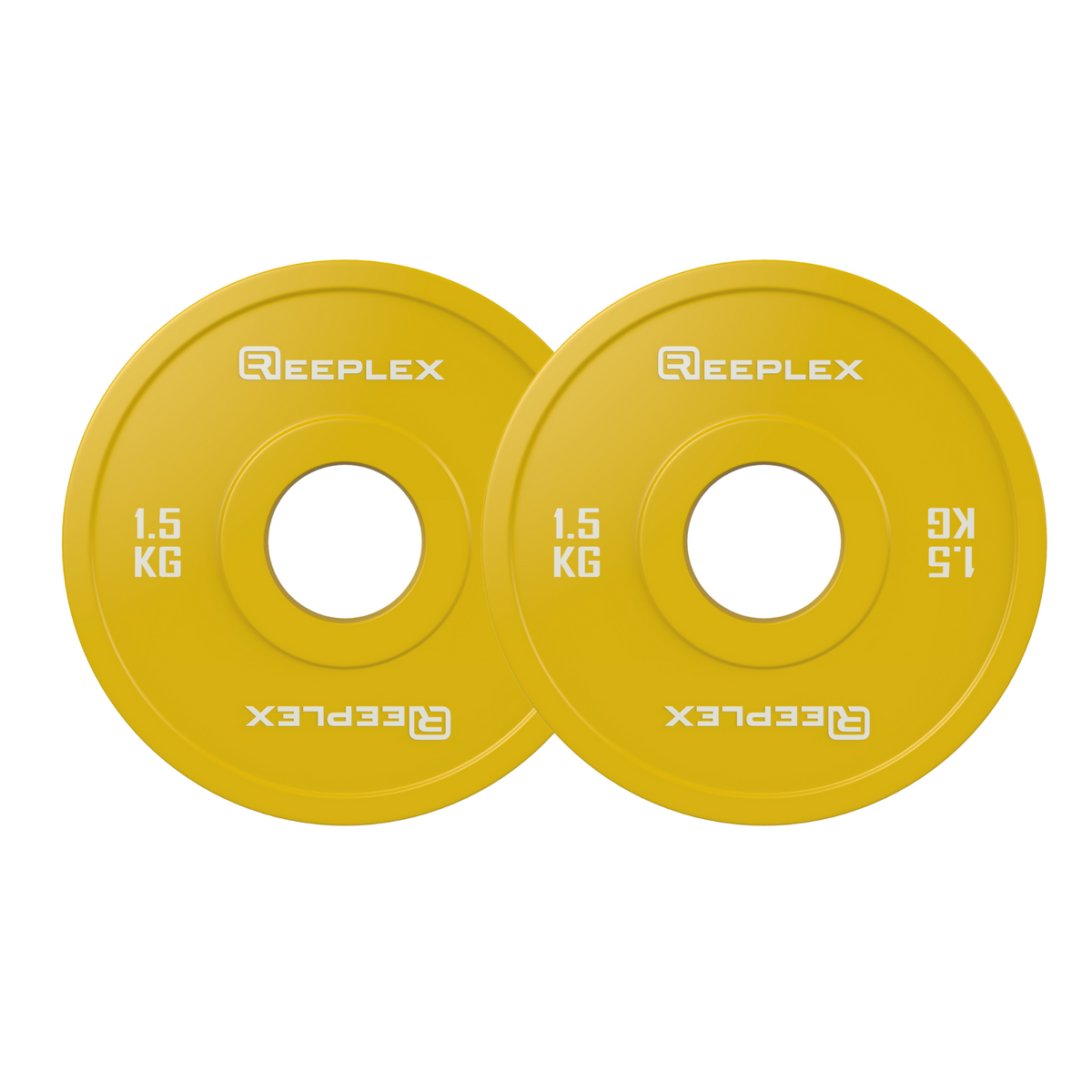
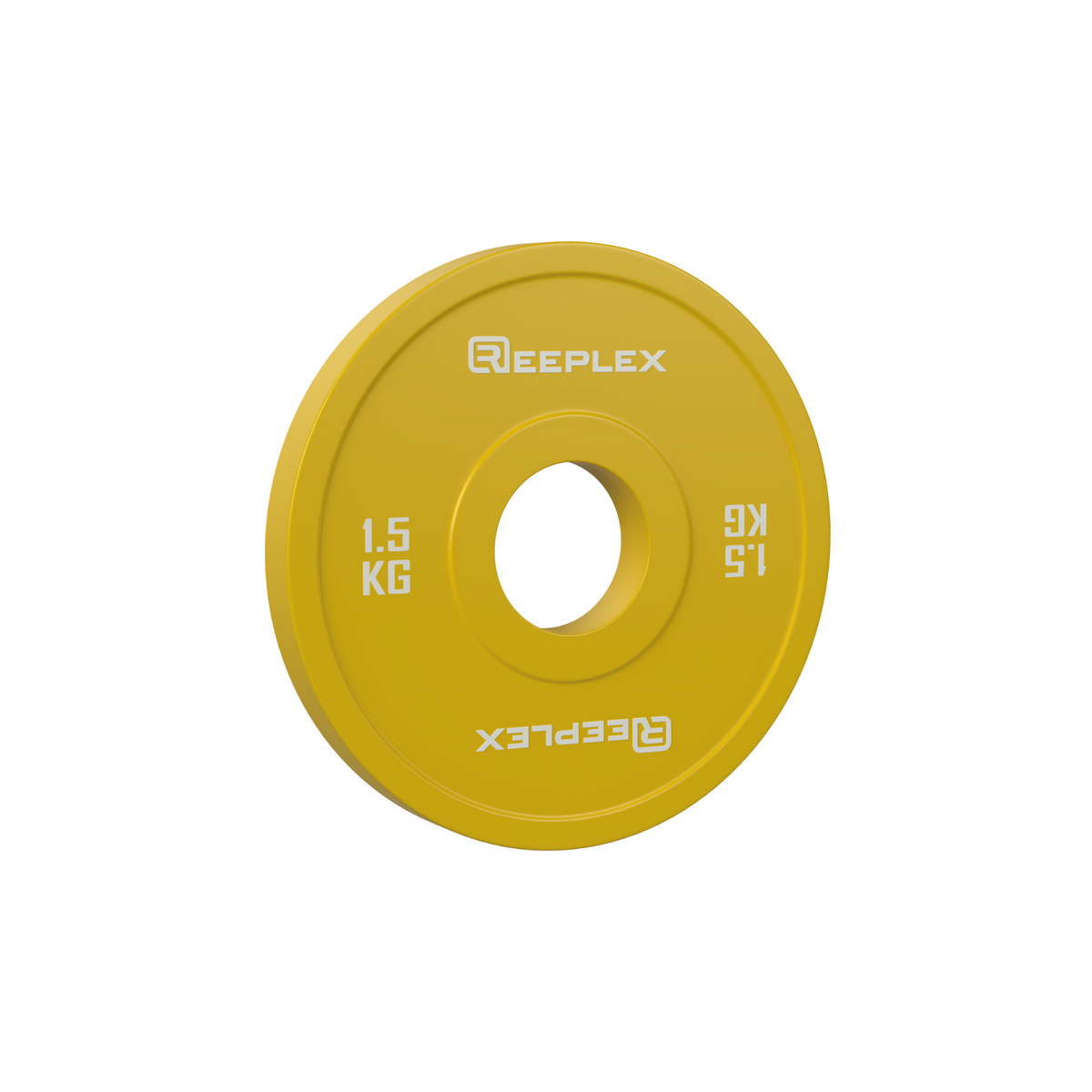
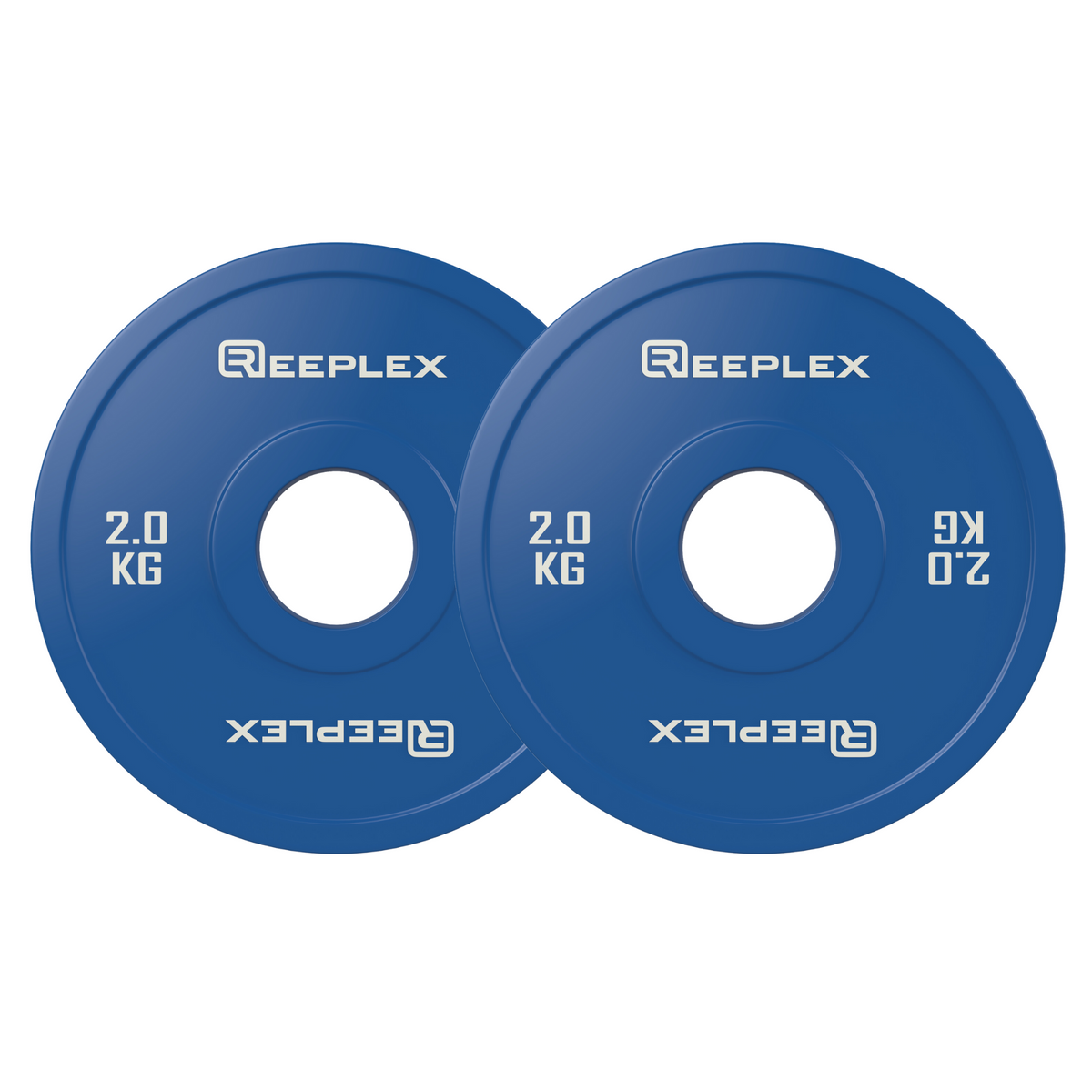
Fractional plates are small weight plates, typically 0.25kg, 0.5kg, or 1kg per plate, used to make very small load increases. They become useful when you're an intermediate or advanced lifter and the standard 2.5kg jump per side (5kg total increase) is too large to add in a single session. By adding fractional plates instead, you can increase the load by 0.5kg to 1kg per side at a time, which allows more consistent progressive overload without stalling. Beginners generally don't need fractional plates because 2.5kg jumps are manageable at lighter loads, but they're a worthwhile addition as you approach your near-maximum strength levels.
The best storage option is a dedicated plate storage rack with pegs, which keeps plates upright and off the floor. Storing plates flat in stacks puts sustained pressure on rubber and bumper plates that can cause deformation over time. For cast iron and steel plates, a dry storage environment is important to prevent rust. Keep plates away from concrete floors where condensation can transfer moisture to the plate surface. Most quality plate storage racks include pegs in sizes that accommodate both standard and bumper plate thicknesses, so you can store mixed collections on the same rack.
For squats, deadlifts, and bench press, any Olympic plate type works: cast iron, rubber-coated, or calibrated steel are all appropriate. For Olympic lifting (snatch, clean and jerk) or any movement where you might drop the bar, bumper plates are required. Dropping iron or steel plates from overhead is dangerous and will damage both the plates and the floor. If you train both styles, a practical solution is to use iron or rubber-coated plates for your strength work and bumper plates for Olympic lifting, keeping the bumpers as the ones that contact the floor.
You need an Olympic barbell with 50mm sleeves to use Olympic weight plates. Standard Olympic barbells are 20kg for men and 15kg for women, both measuring 2.2m in length. Shorter technique bars are also available for beginners. If you're using a smith machine, check whether it uses Olympic sleeves (50mm) or a proprietary sleeve diameter before buying plates, as some smith machines use non-standard sleeve sizes. Quality Olympic bars are rated for 200kg to 700kg+ total load depending on the bar, so the bar's load rating should always exceed your heaviest planned lift.
Yes. Plate-loaded cable machines and leg press machines are designed to use standard Olympic plates (50mm hole). This is one of the practical advantages of building a plate collection: the same plates you use on your barbell work directly on your plate-loaded machines, so you're not buying separate weight stacks or proprietary plates for different pieces of equipment. The total weight you need is shared across all your plate-loaded equipment.
Yes. Olympic plates are standardized to a 50mm center hole, so any brand of Olympic plate can be loaded on the same bar. The practical consideration when mixing brands is weight accuracy. Budget cast iron plates can vary by 1% to 3% from their stated weight, which means a 20kg plate from one brand might differ slightly from a 20kg plate from another. For general training this has no meaningful impact. For competition training or very precise load programming, use matched calibrated plates from the same manufacturer to guarantee accuracy on both sides of the bar.
Bumper plates are the best choice if you plan to drop the bar at any point. Concrete has no give, and the impact forces on dropped iron or steel plates can crack the plates, chip the concrete, and create a dangerous rebound. If you're not dropping the bar, rubber-coated plates on concrete work well provided you have rubber matting under your lifting area. Bare cast iron on bare concrete is the worst combination: it chips the plates, scratches the concrete, and creates a slip hazard from chalk and sweat. Regardless of your plate choice, a rubber mat under your barbell zone is a worthwhile investment on any concrete floor.
In Australia, Olympic weight plates are almost universally sold in kilograms. The standard increments you'll see are 1.25kg, 2.5kg, 5kg, 10kg, 15kg, 20kg, and 25kg per plate. Some imported or second-hand American equipment uses pound denominations (2.5lb, 5lb, 10lb, 25lb, 35lb, 45lb). These are not directly interchangeable in load planning: 45lb is approximately 20.4kg, not 20kg. When buying new from an Australian retailer you'll be working in kilograms, and the standard competition denominations (IWF and IPF) are all kg-based.
Olympic weight plates are sold separately from barbells as standard. You can buy individual plates, pairs, or complete plate sets, but the barbell is a separate purchase. At Dynamo Fitness, we stock complete barbell and plate packages as well as individual components. If you're building a setup from scratch, you can bundle a barbell, plates, and a squat rack or power rack together. Buying as a bundle is typically more cost-effective than sourcing each piece separately, and our team can help you work out the right combination for your space and training goals.