



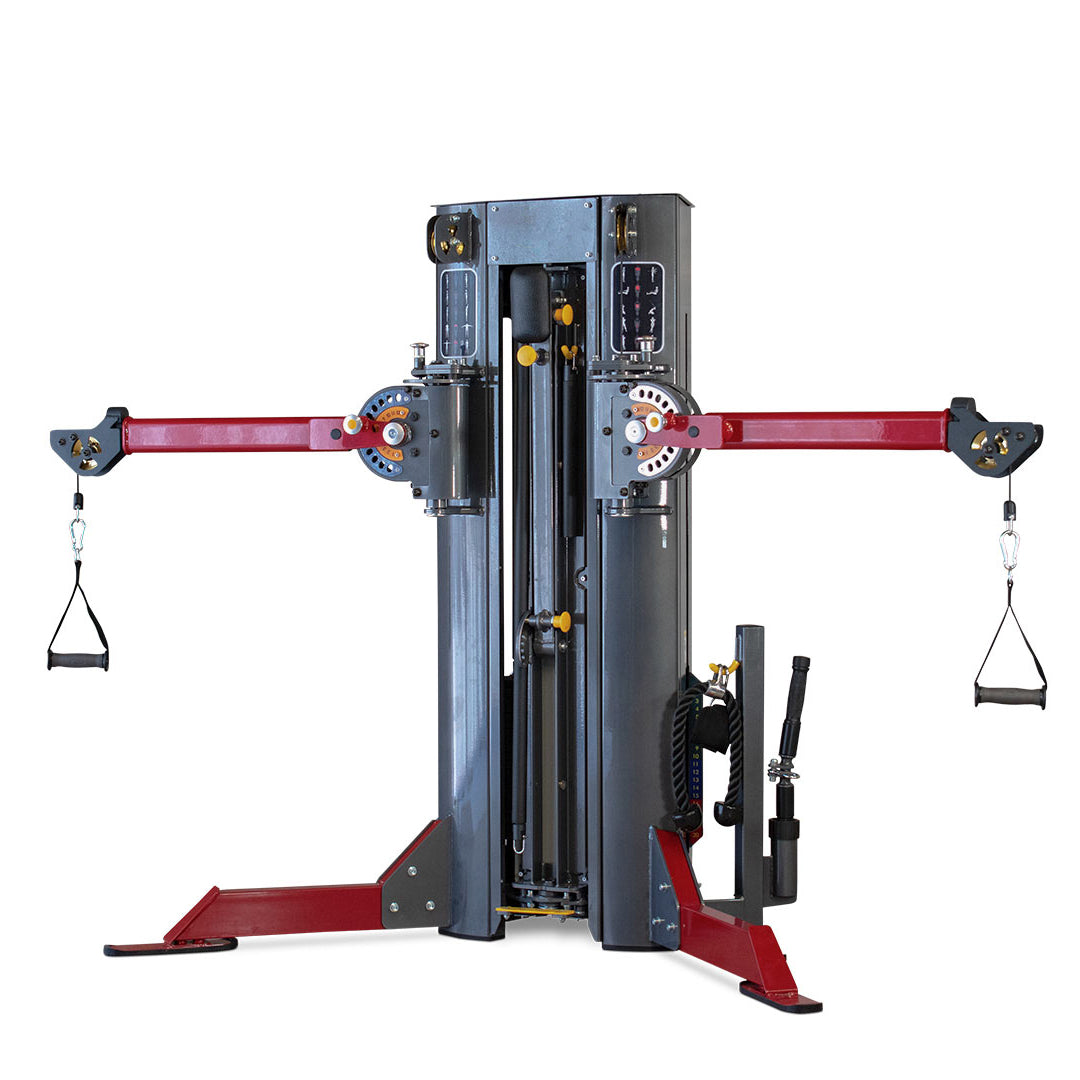
Functional Trainers: Versatile Machine for Home Gyms
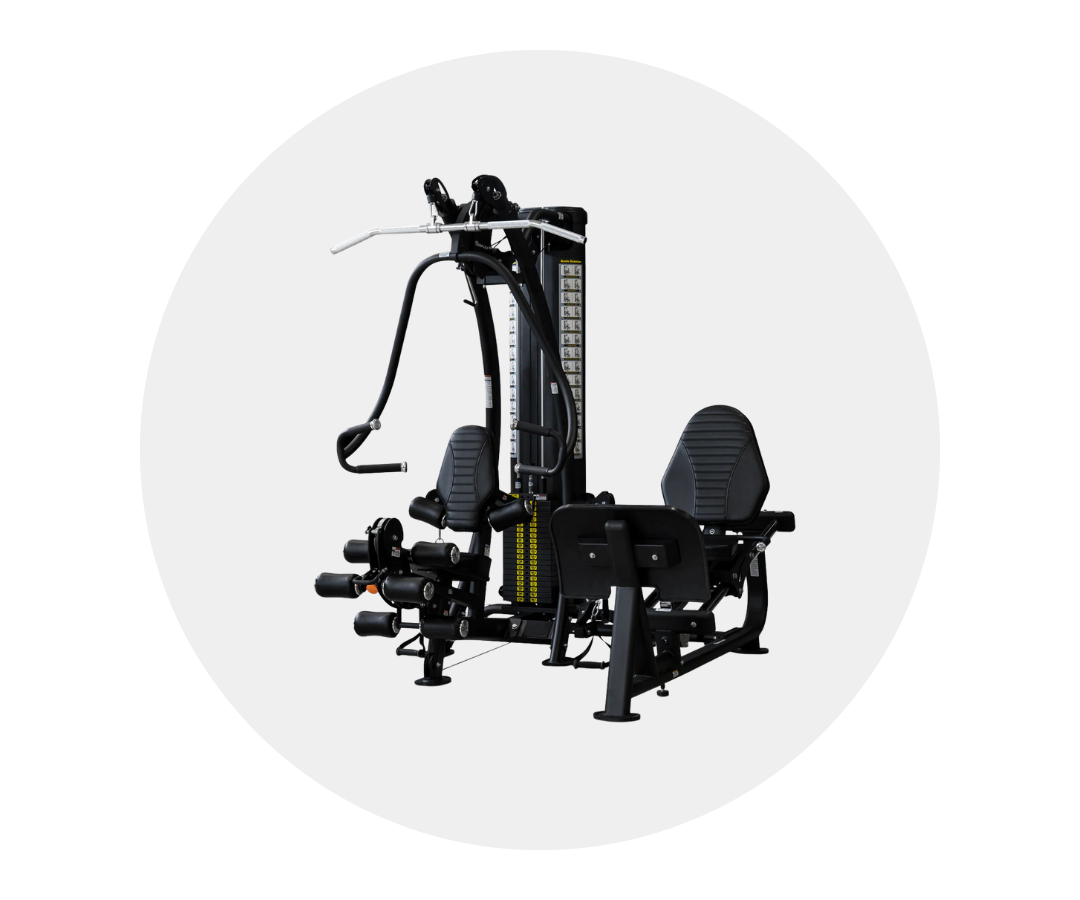
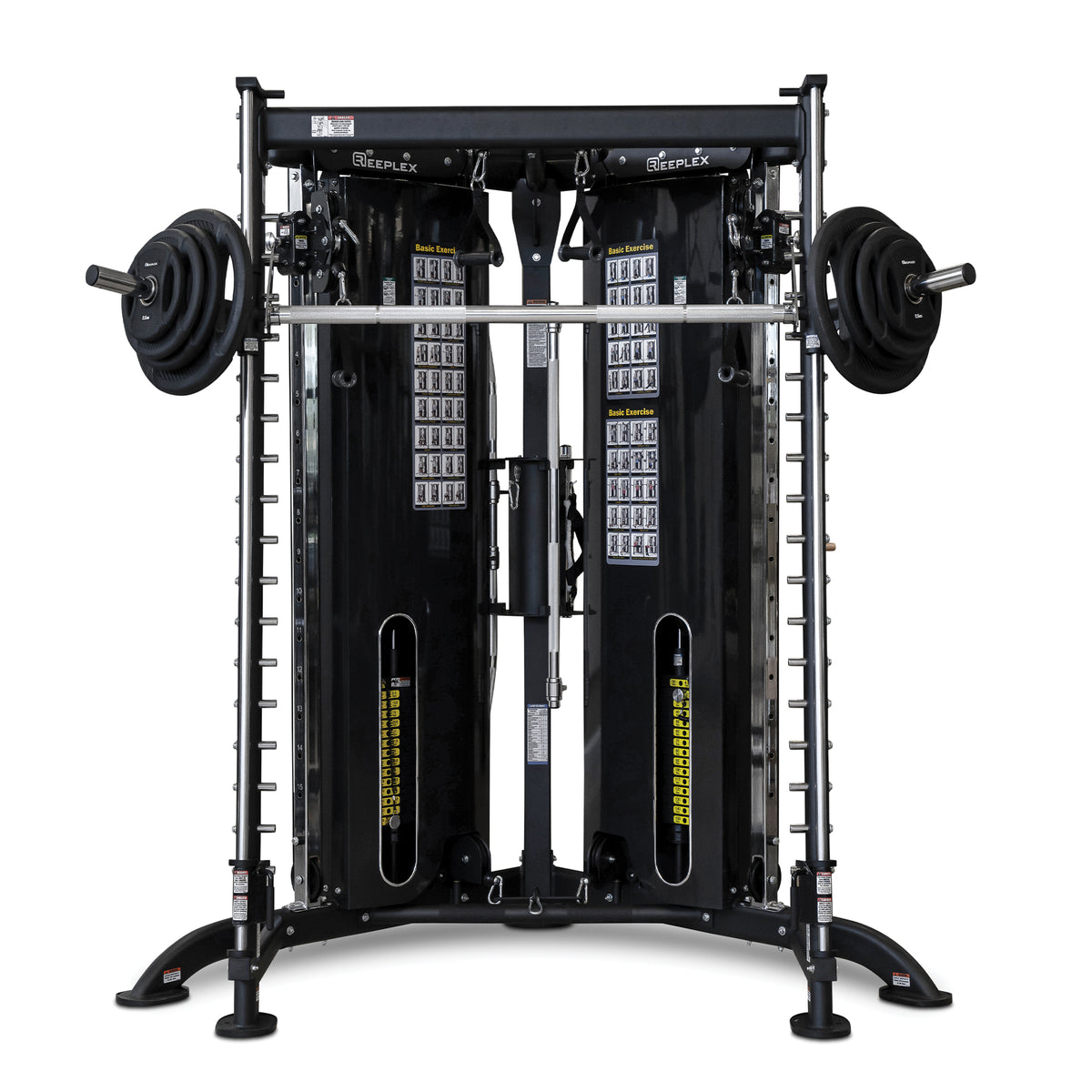
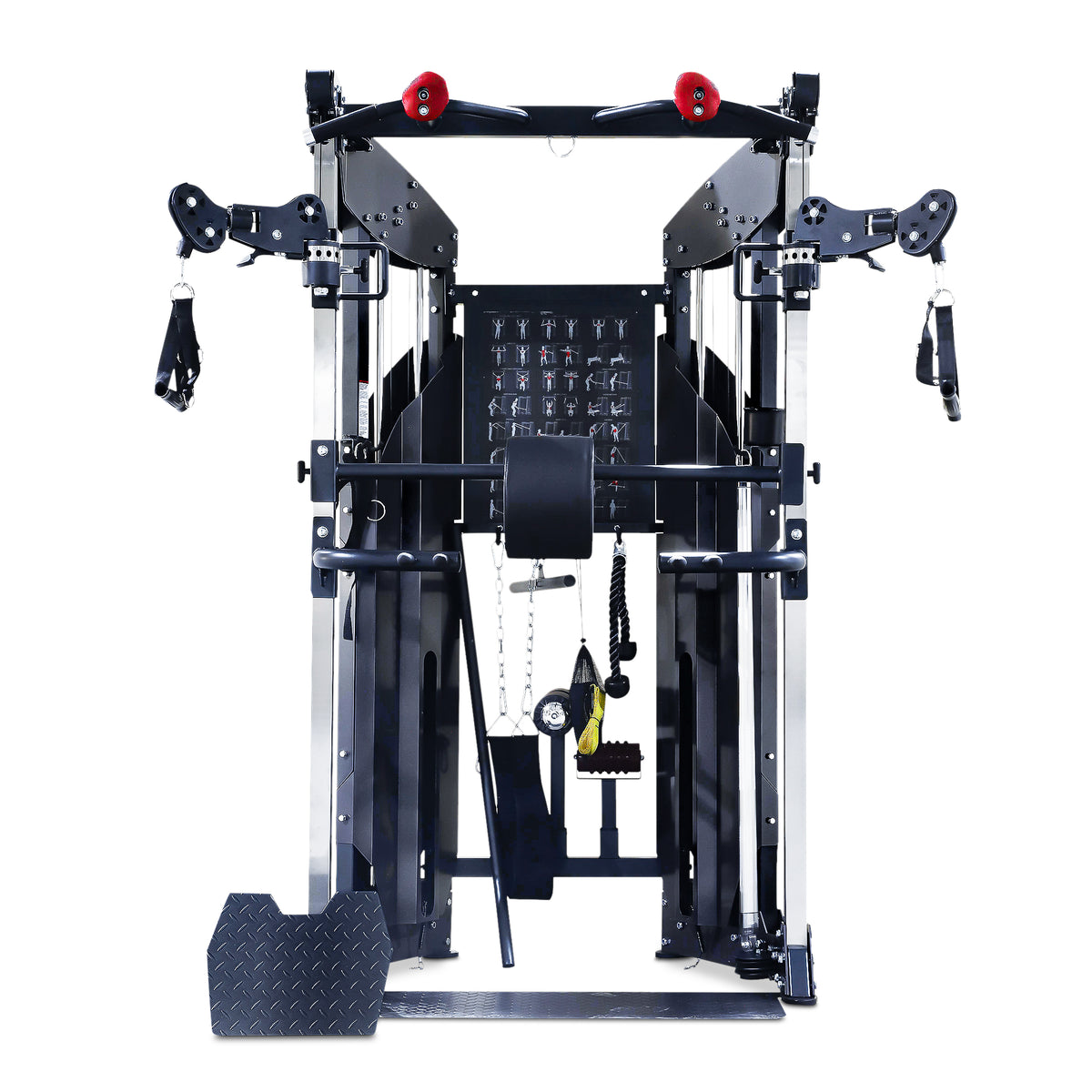
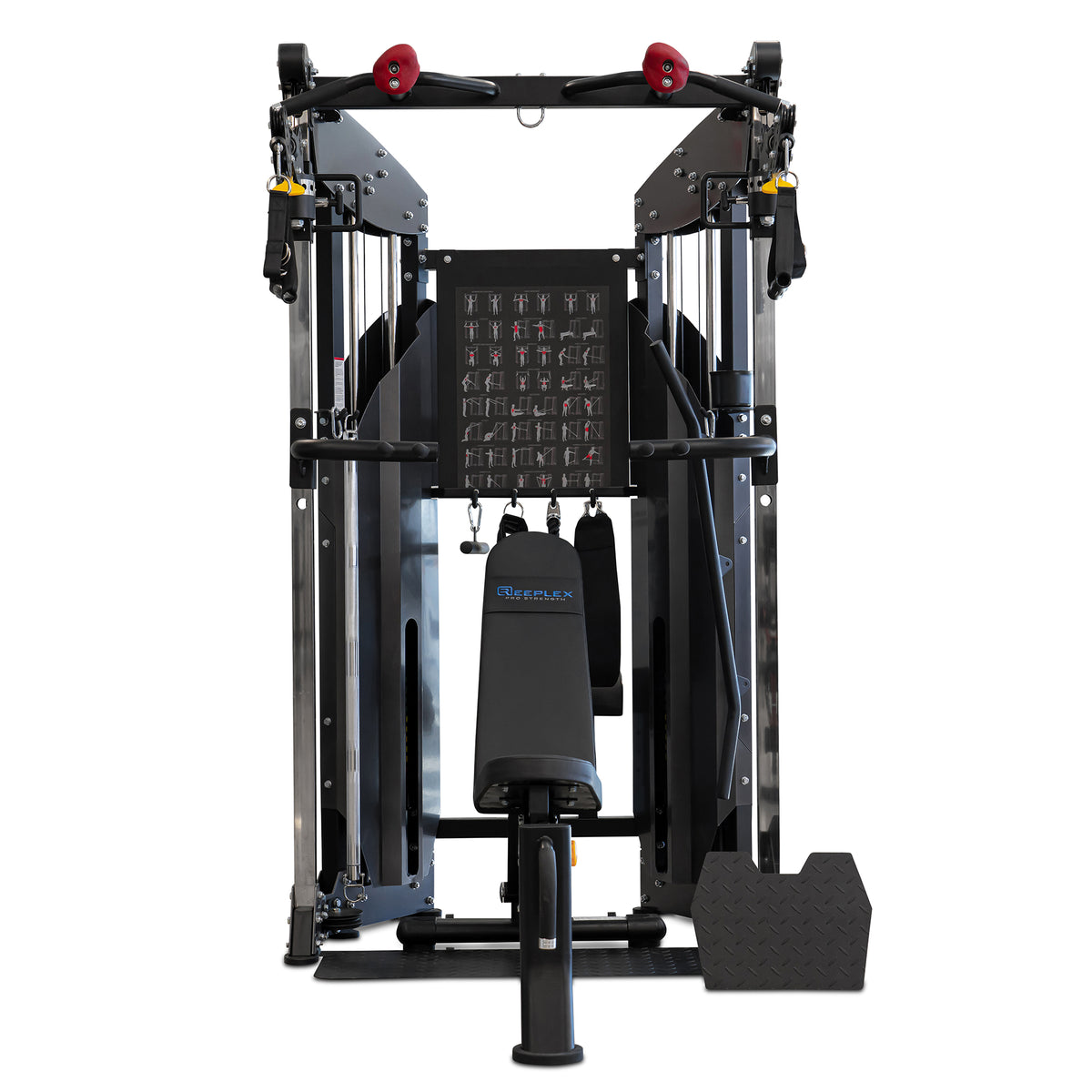
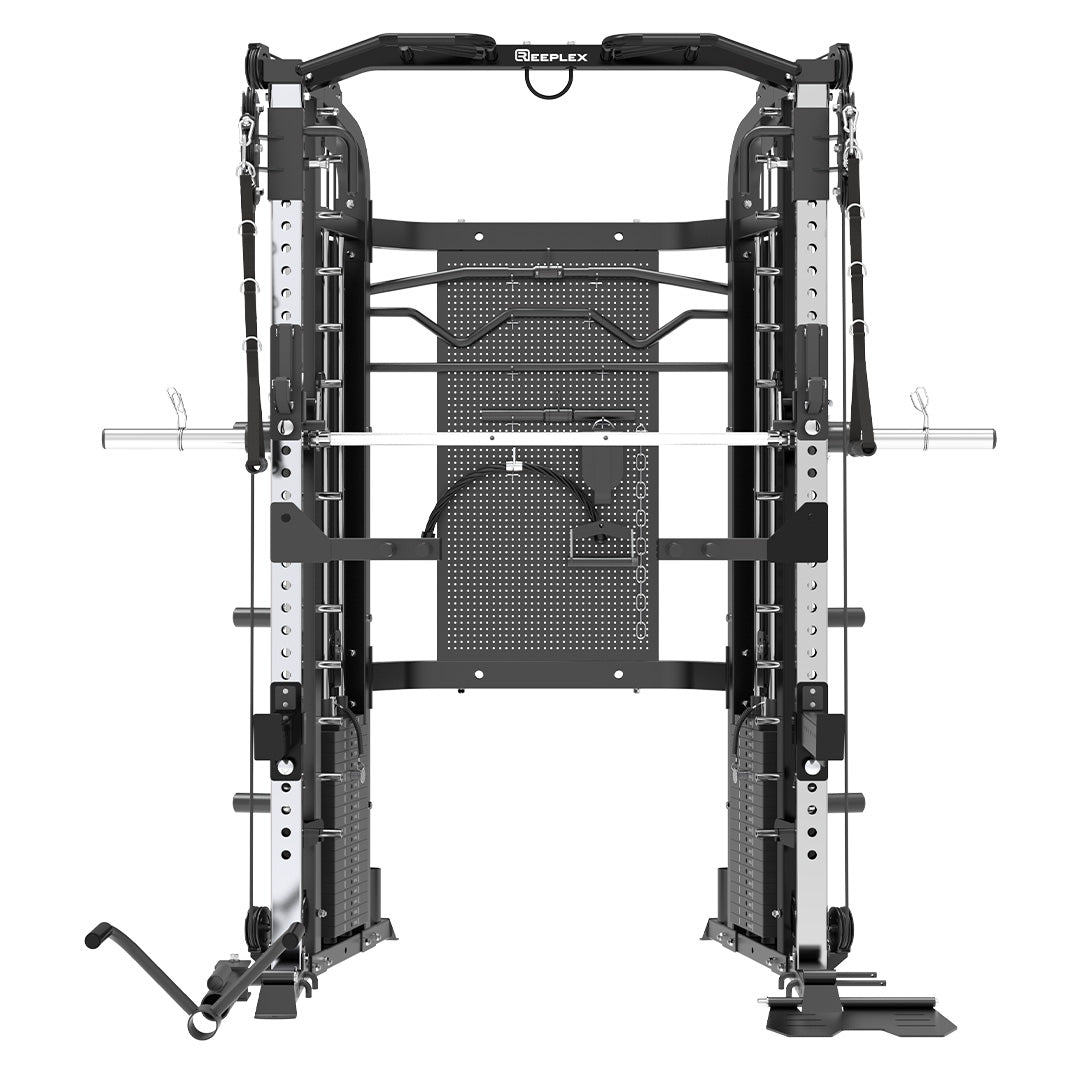
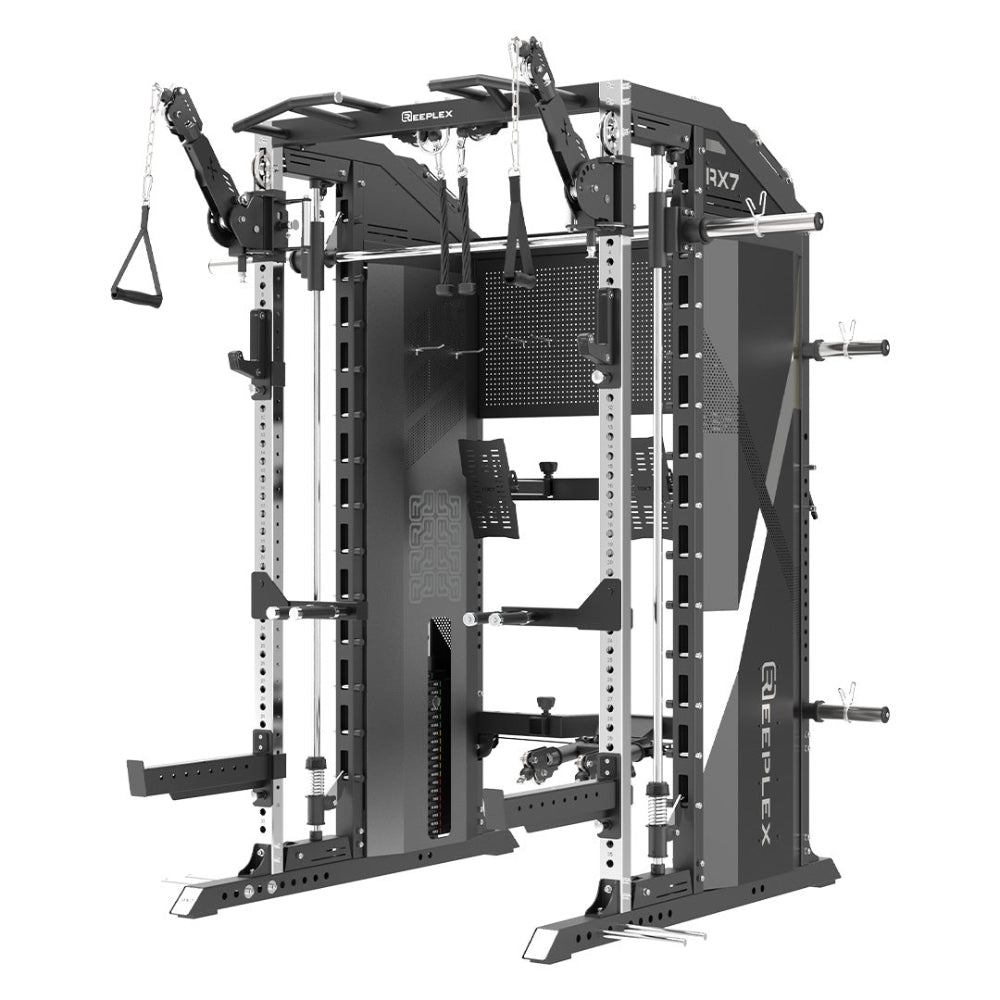
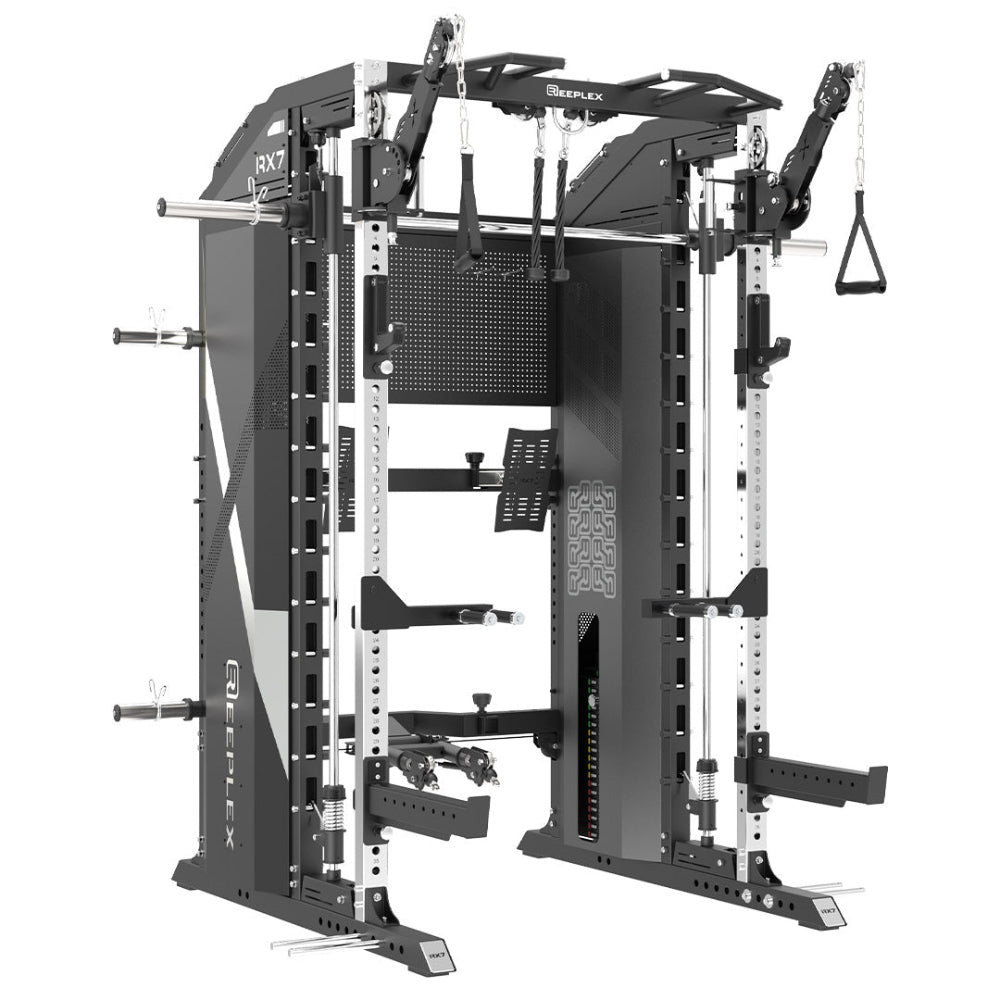
A functional trainer is an adjustable cable machine with one or two independent weight stacks and a pulley system that lets you set the cable at any height. Unlike fixed machines that lock you into a single movement path, a functional trainer lets you pull, push, rotate, and hinge through a full three-dimensional range of motion.
One machine covers chest, back, shoulders, arms, core, and legs through hundreds of exercise variations. They're the single most versatile piece of strength equipment you can put in a home gym.
Key facts:
- Types: dual cable (independent stacks), single cable, plate-loaded, and combo units with bench included
- Weight stacks: typically 70kg to 100kg per side on dual cable models
- Cable ratio: 2:1 is standard (you feel half the weight stack); 1:1 gives you the full load
- Adjustment points: 16 to 24 positions on quality models, covering floor to overhead height
- Attachments: rope, straight bar, lat bar, single handles, ankle strap, and more
- Footprint: approximately 120 to 160cm wide by 100 to 140cm deep
- Ceiling height needed: minimum 220cm; 240cm+ recommended for overhead cable work
- Price range: $1,500 for entry-level single cable to $5,000+ for commercial-grade dual stack
Functional Trainers: The Most Versatile Machine in Your Home Gym
If you're serious about training at home and you want one machine that can genuinely replace the majority of what a commercial gym offers, a functional trainer is it. Add one to your home gym and you've got cable flys, lat pulldowns, tricep pushdowns, face pulls, cable rows, woodchops, hip abduction, and hundreds more exercises all from a single footprint.
What makes functional trainers different from other gym equipment isn't just the variety of exercises. It's the quality of resistance they provide. Because the cable stays under constant tension throughout the full range of motion, every phase of every rep is working the muscle. That's different from free weights, where the mechanical advantage changes through the movement and tension often drops at the top or bottom.
At Dynamo Fitness, our functional trainer range covers home gym setups through to heavier-duty dual-stack systems. We've got standalone units, plate-loaded options, and complete packages with everything you need to start training from day one.
What Is a Functional Trainer?
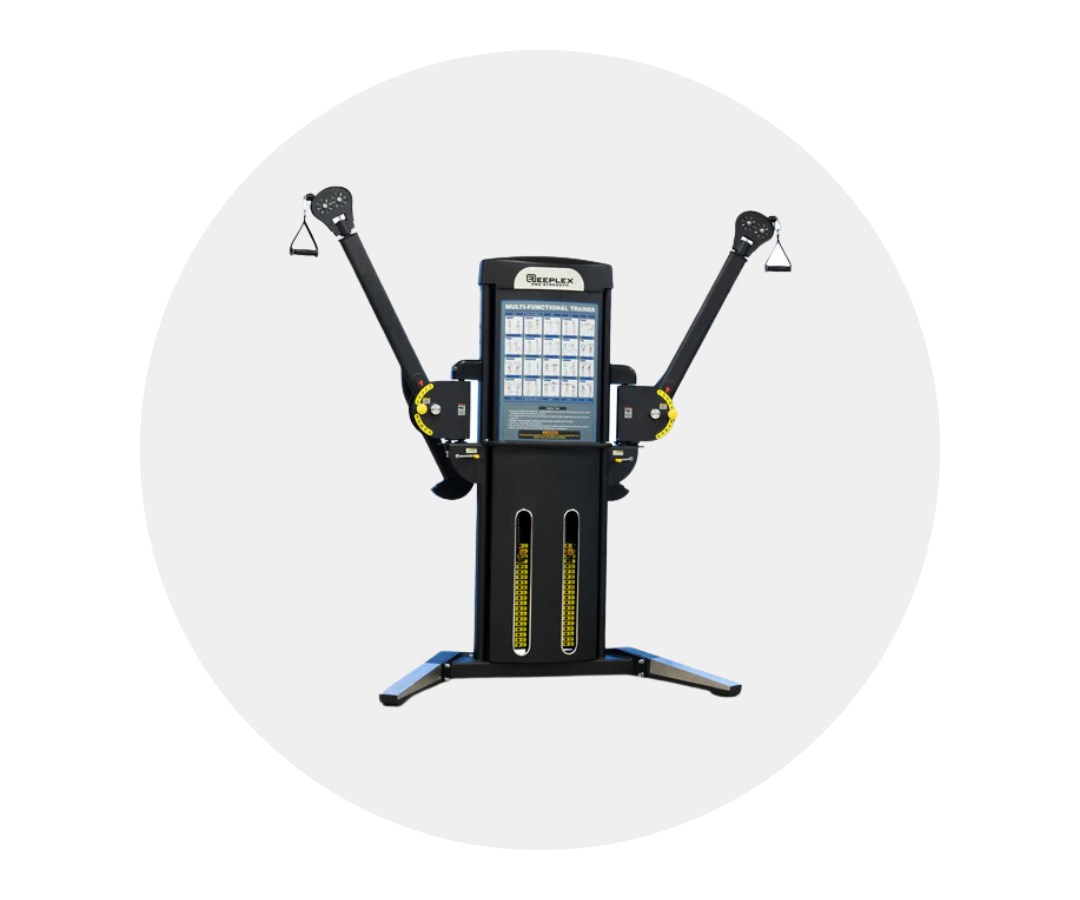
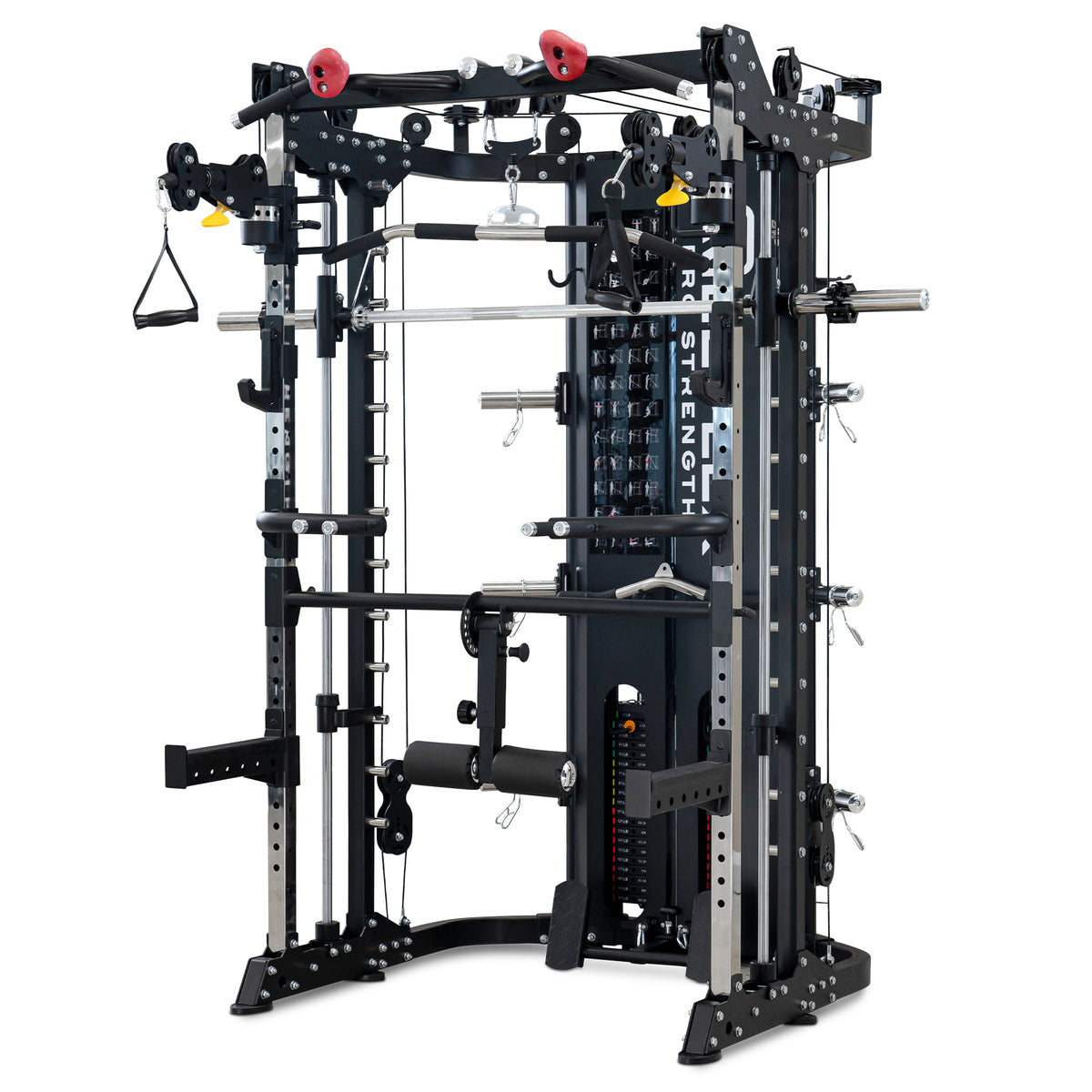
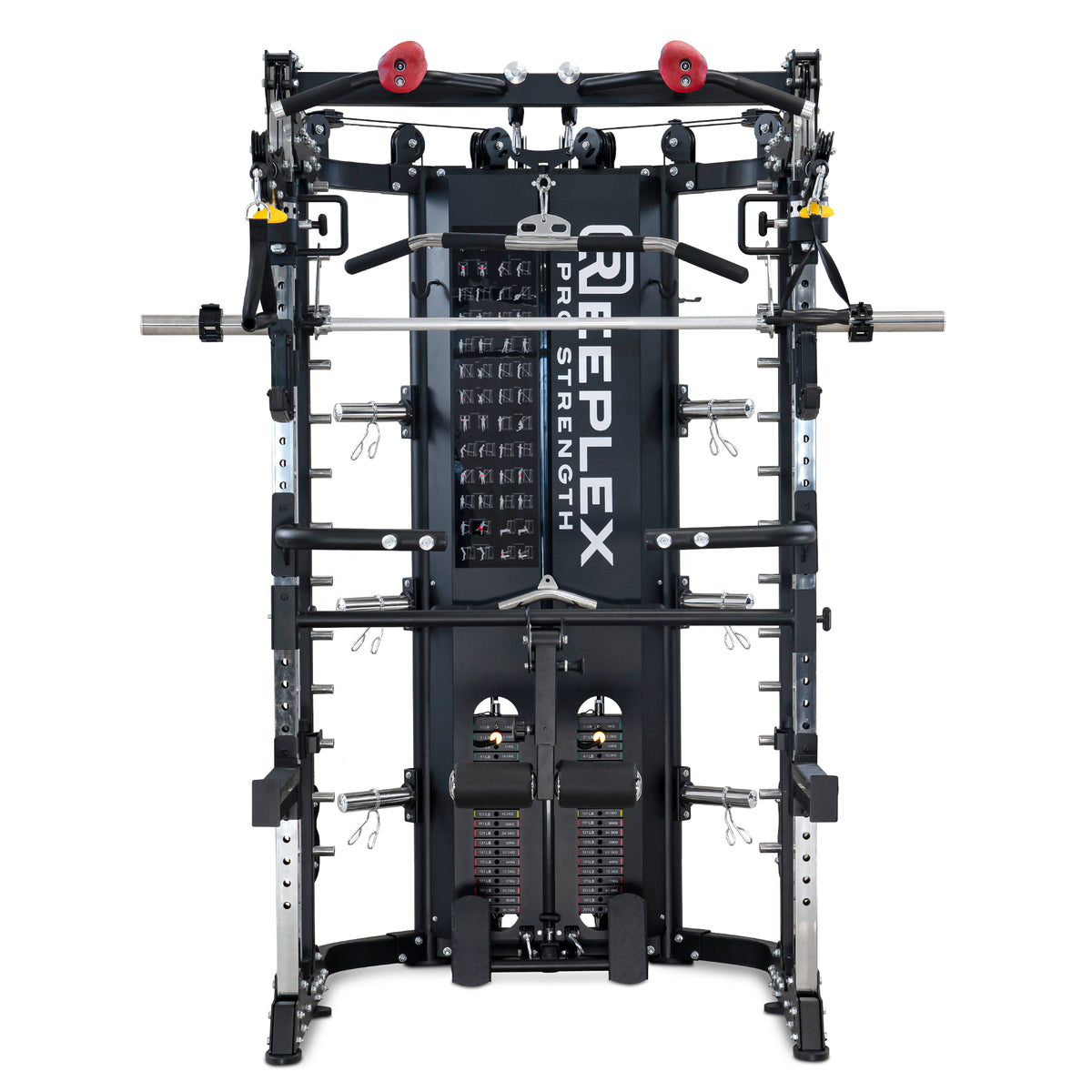
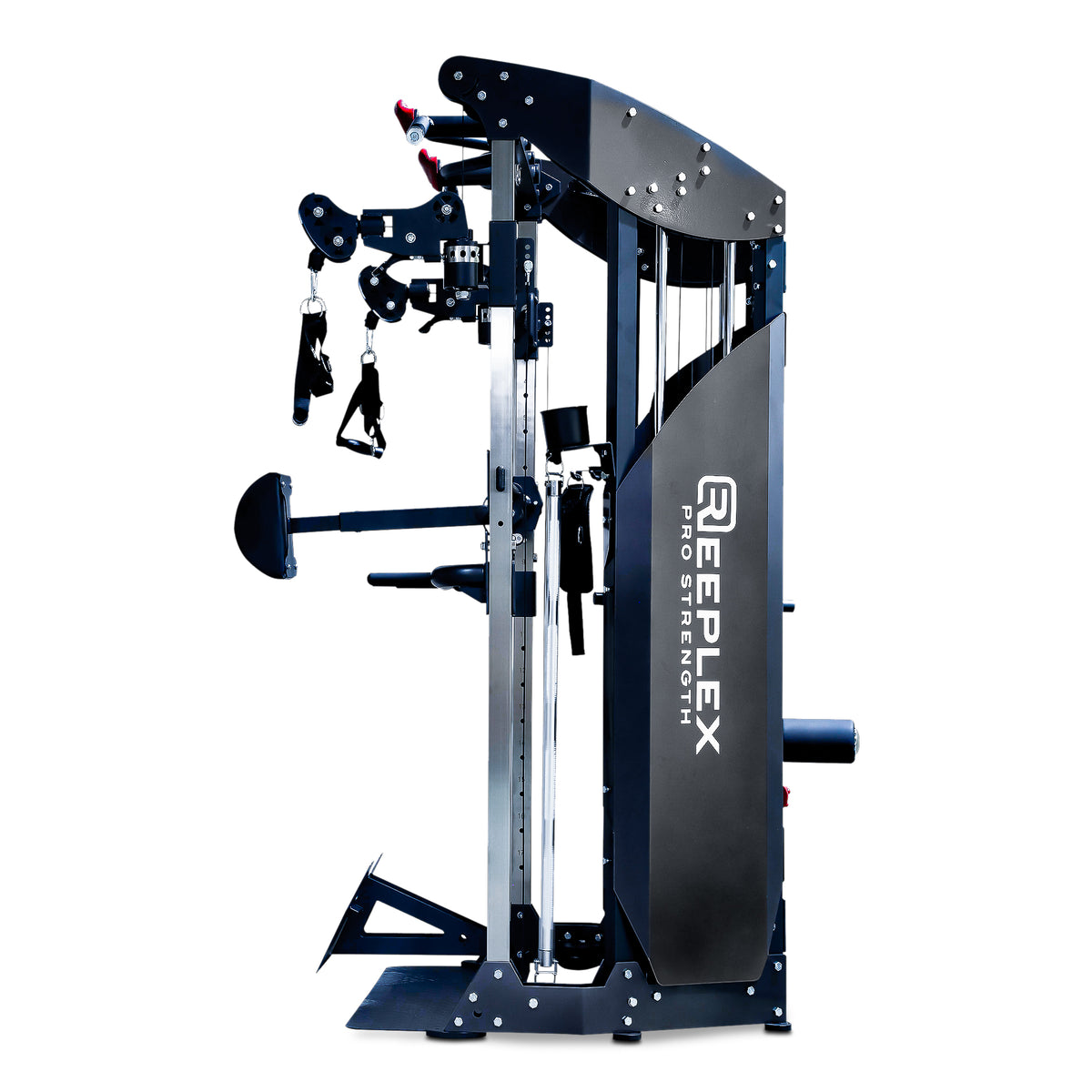
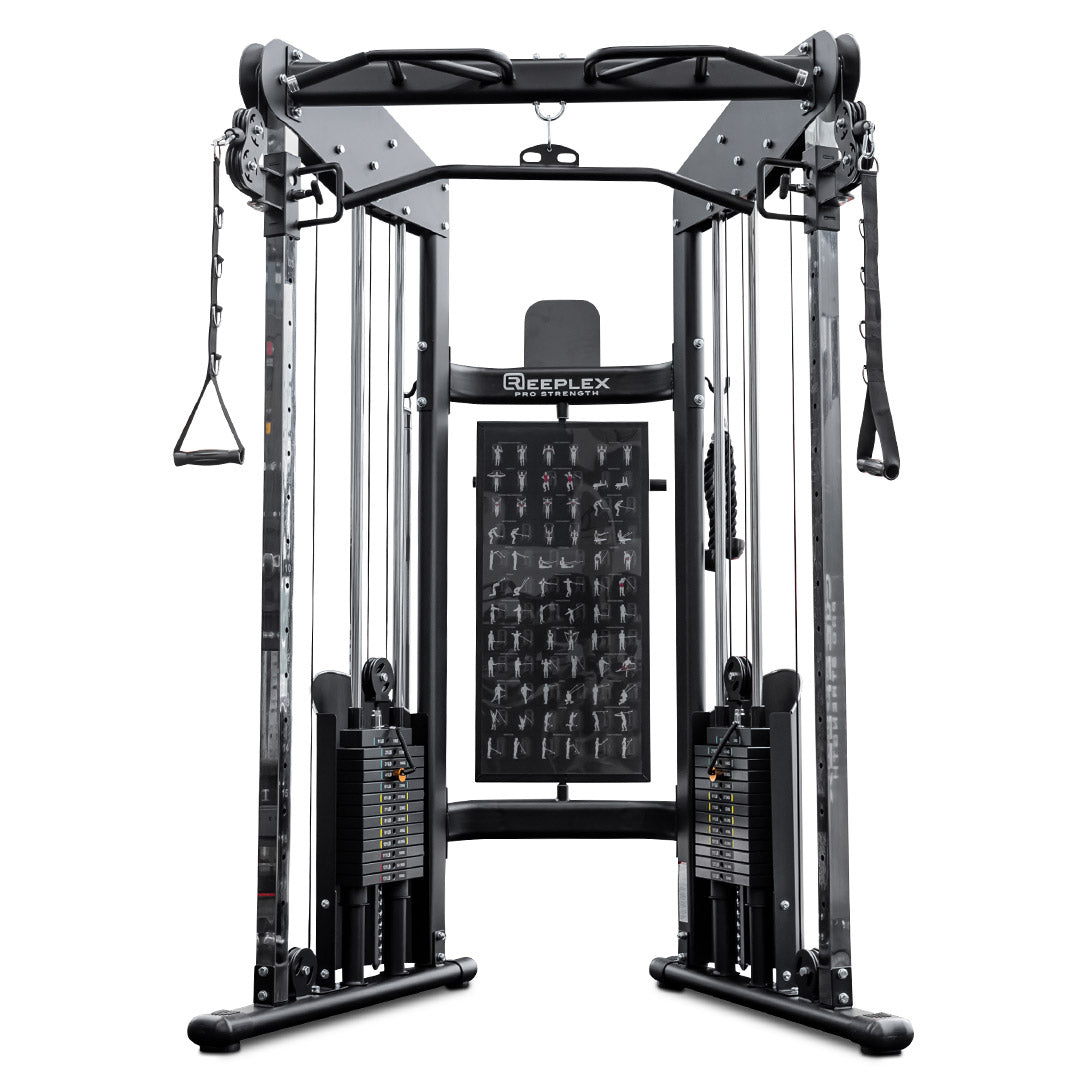
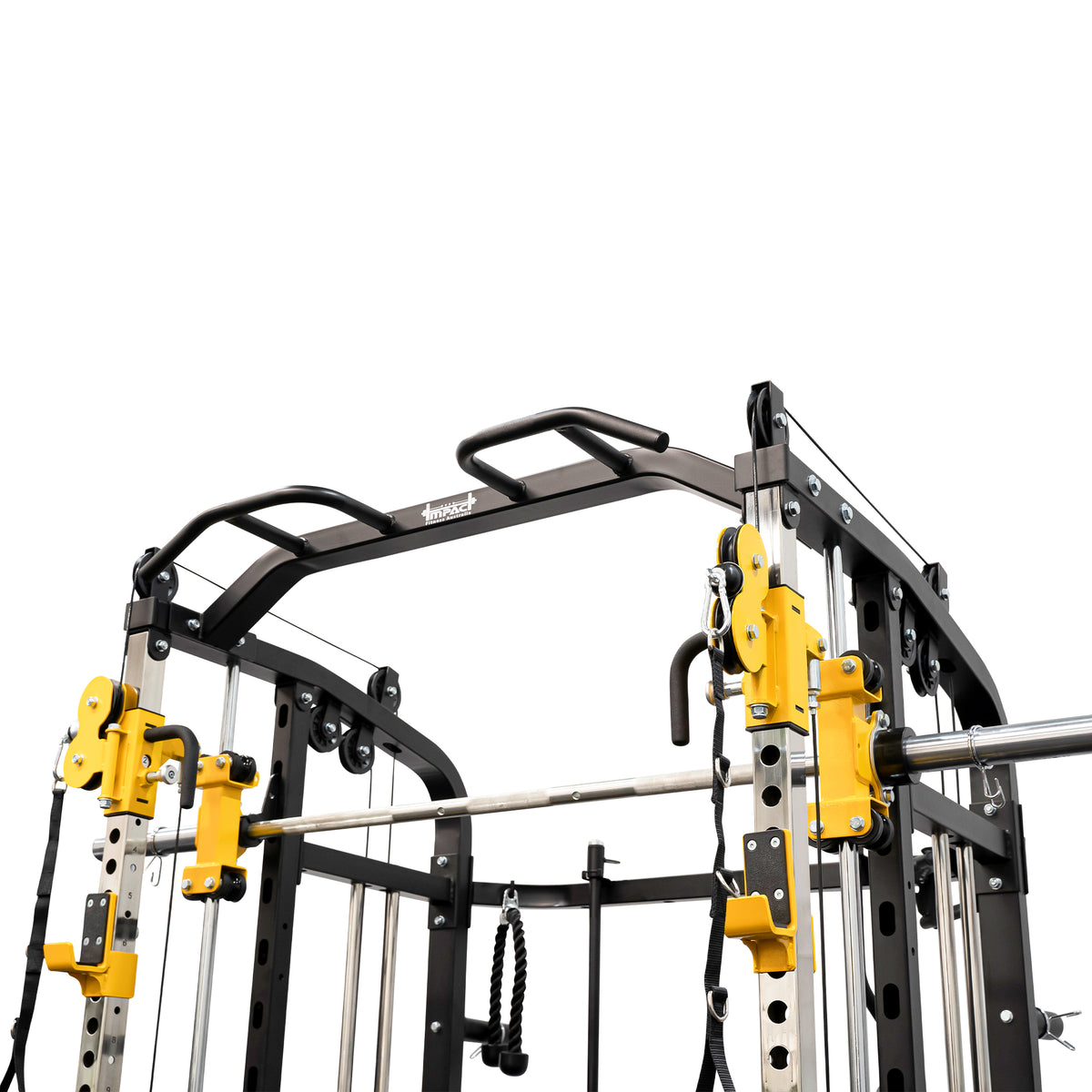
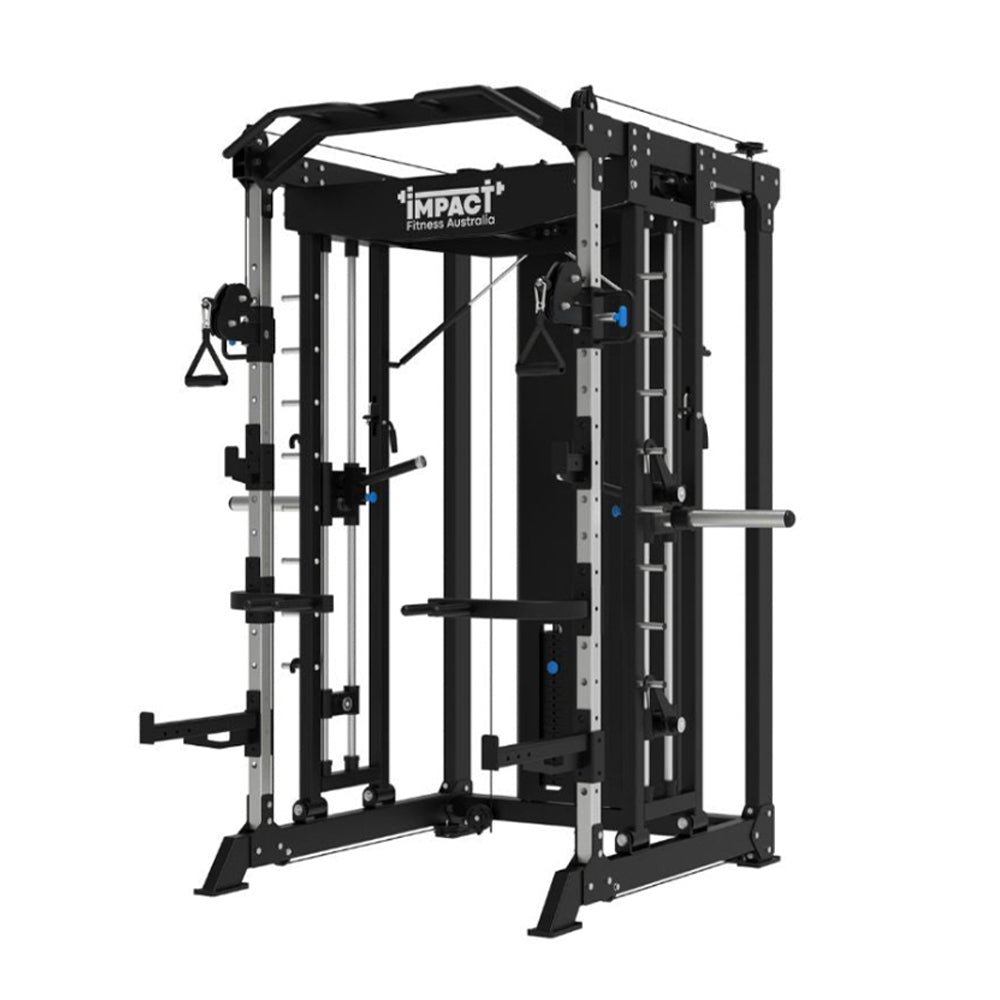
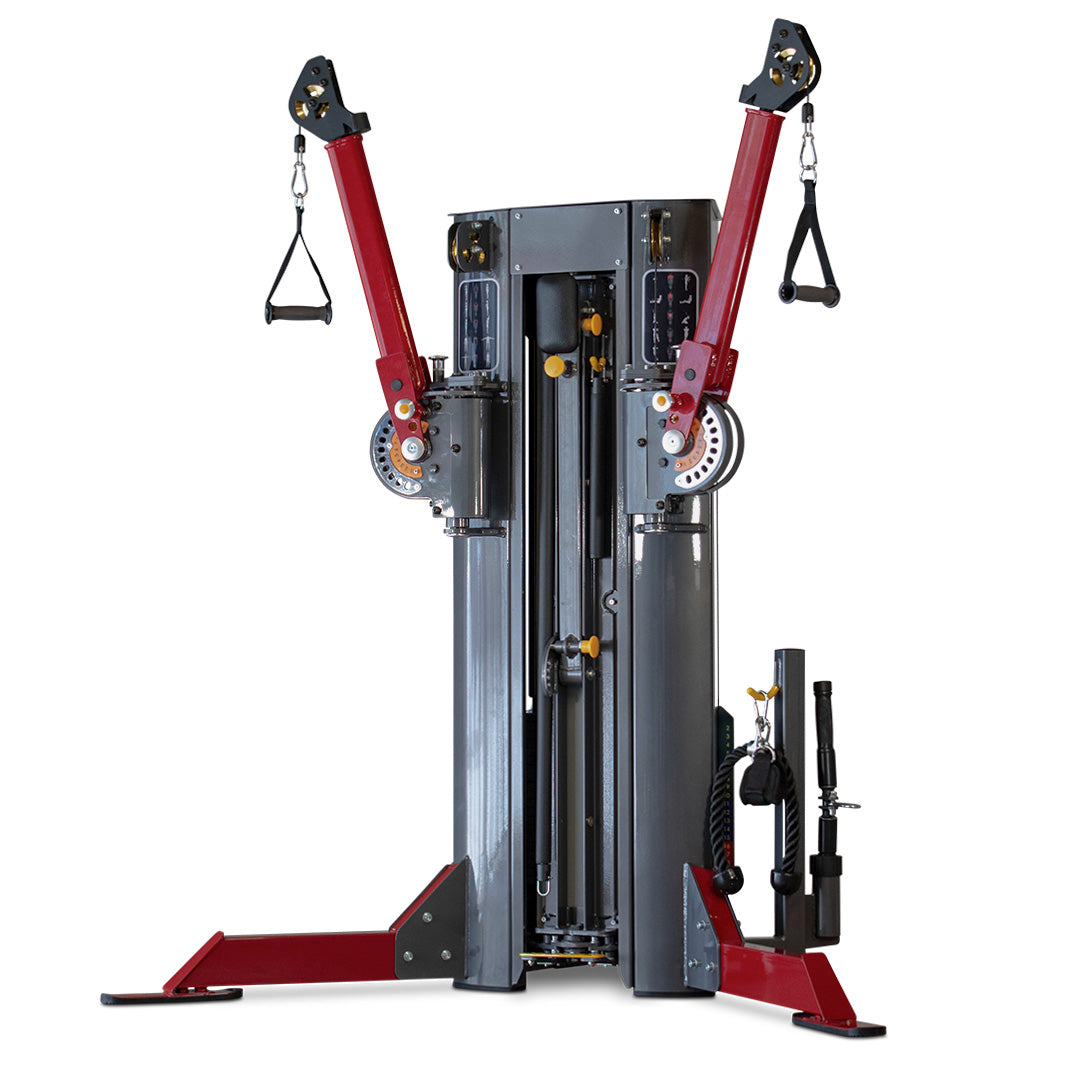
A functional trainer is an adjustable cable machine built around a pulley system that lets you set the cable attachment at any point along a vertical column, from floor level to overhead. Most home gym models feature two independent weight stacks with separate cable runs, which means you can work both sides of the body simultaneously using different attachments, or use both cables together for exercises like cable crossovers.
The key feature that sets a functional trainer apart from other cable machines is the full-height adjustability. A lat pulldown machine is fixed overhead. A low row machine is fixed at floor level. A functional trainer covers every height in between, which is why it can replicate so many different exercises in a single unit.
The cable runs through a pulley at the top of the column and attaches to a carabiner where you clip your chosen accessory. The pulley ratio determines how the weight stack translates to the load you feel at your hands. A 2:1 ratio means 50kg on the stack feels like 25kg at the cable. A 1:1 ratio gives you the full stack weight at the cable, making it more accurate for tracking loads as you progress.
Standard components of a functional trainer:
- Weight stacks (one or two) with numbered weight increments
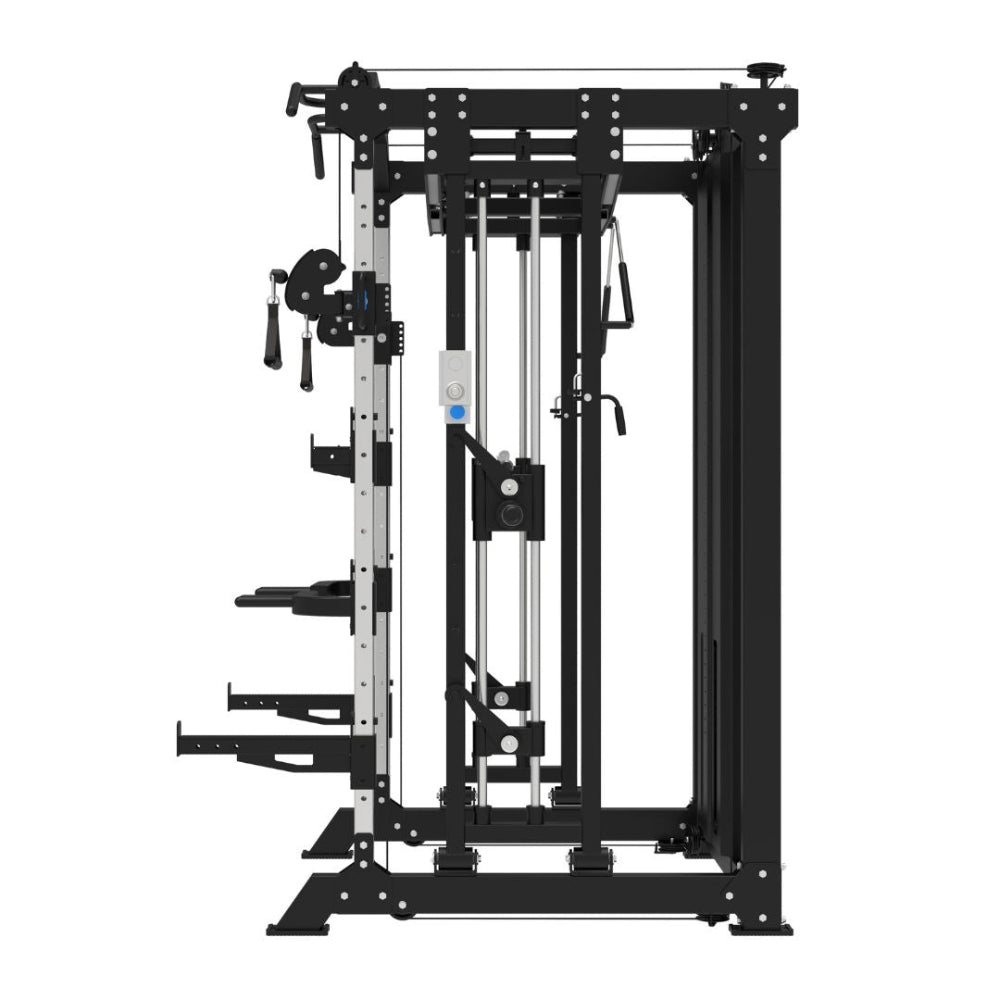
- Adjustable pulley columns (typically 16 to 24 positions)
- Swivel carabiner attachment points at each cable end
- Included attachments: rope, straight bar, and single handles as standard
- Optional upgrade attachments: lat bar, ankle strap, tricep bar, stirrup handles
Functional Trainer: Key Benefits for Strength + Conditioning
1. Replaces multiple machines
A functional trainer covers the functionality of a lat pulldown, cable row, cable crossover, tricep pushdown, bicep curl station, and face pull machine all in one footprint. That's five or six machines replaced by one.
2. Constant cable tension
Unlike free weights where tension varies through the movement arc, cables maintain consistent resistance from start to finish. This increases time under tension and improves muscle stimulus per rep.
3. Three-dimensional movement
By adjusting the cable height and angle, you can train through diagonal, rotational, and overhead movement planes that aren't possible with barbells or dumbbells. This builds more complete, functional strength.
4. Suitable for all fitness levels
Fine weight increments on the stack make it easy to start light and progress gradually. Beginners and experienced athletes use the same machine, just at different loads.
5. Low injury risk
Cable resistance is smoother and more controlled than free weights. The guided resistance path reduces the risk of form breakdown under load, making it a safer option for solo home training.
6. Unilateral training
Dual cable systems let you train one side at a time, which identifies and corrects strength imbalances that compound movements can mask. Single-arm cable presses, rows, and curls are some of the most effective exercises for balanced development.
7. Core engagement on every exercise
Because you're controlling a free-moving cable, your core stabilizers are working on every rep, even during upper body and lower body exercises. You get core conditioning built into your training without needing dedicated core sessions.
8. Excellent long-term value
A quality functional trainer is a one-time purchase that covers your training for years without needing consumables, pads, or replacement parts beyond basic maintenance.
Functional Trainer vs the Alternatives
Trying to decide between a functional trainer and other strength equipment? Here's how it stacks up against the most common alternatives for a home gym setup.
| Feature | Functional Trainer | Smith Machine | Power Rack + Barbell | Dumbbell Set |
|---|---|---|---|---|
| Exercise variety | Very high (cable angles) | Moderate (fixed path) | High (free bar) | High |
| Cable resistance | Yes (constant tension) | No | No | No |
| Solo training safety | High | Very high | Moderate (needs spotter) | High |
| Isolation exercises | Excellent | Good | Limited | Good |
| Max load potential | Moderate (cable ratio) | Very high | Very high | Moderate |
| Cardio/conditioning | Good (circuits) | Poor | Poor | Moderate |
| Floor space | Medium | Large | Large | Small to medium |
| Price range | $1,500 to $5,000+ | $1,500 to $6,000+ | $800 to $3,500+ | $200 to $2,000+ |
| Best for | Versatility, isolation, conditioning | Barbell work, safety, beginners | Max strength, powerlifting | Supplementary, targeted work |
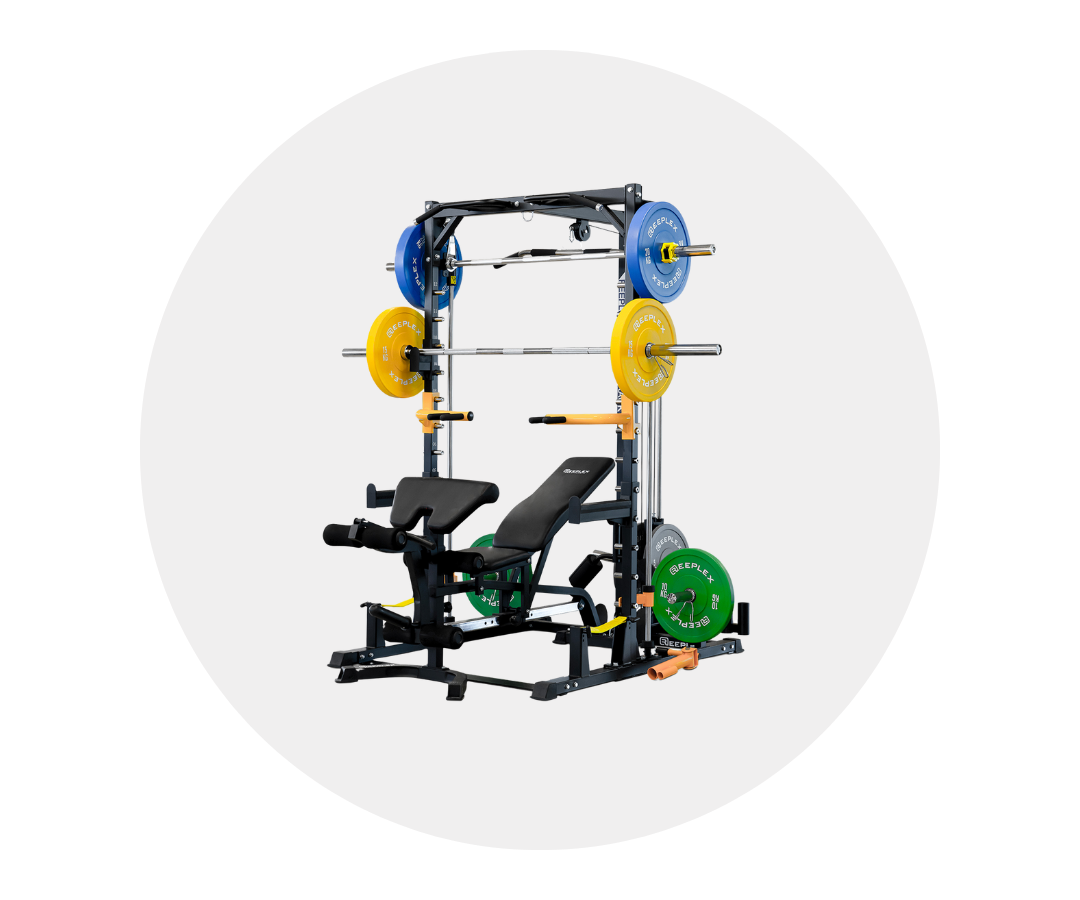
A smith machine is the closest alternative to a functional trainer in terms of guided resistance, but it's limited to a fixed vertical bar path. A functional trainer's adjustable cable angles give you far more exercise variety, particularly for upper body isolation and rotational work. If you're choosing between the two for a home gym, consider whether you primarily want barbell pressing movements (smith machine) or a broader exercise library with cable resistance (functional trainer).
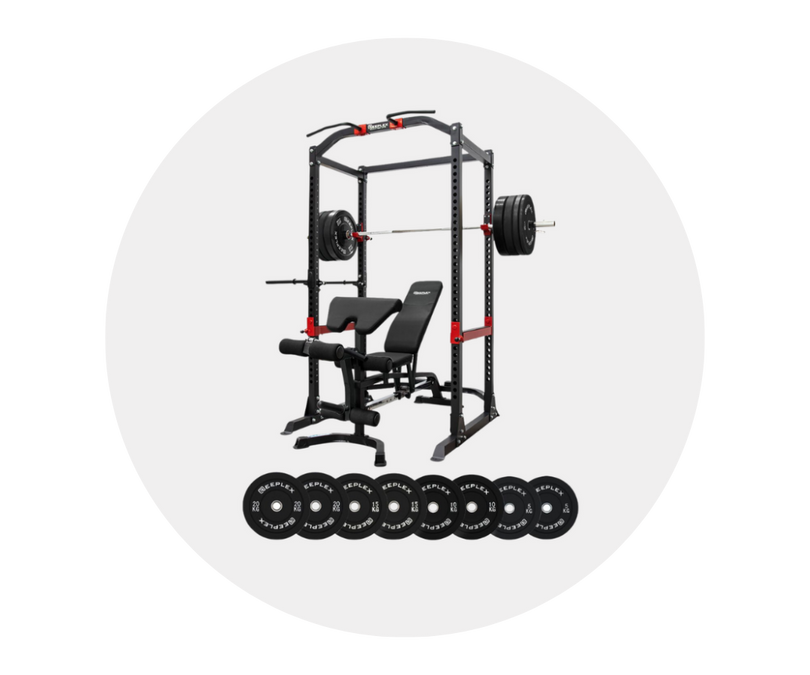
If heavy barbell strength work is your main goal, a power rack paired with a barbell and plates is a better primary investment. Many serious home gym setups combine both: a power rack for heavy compound lifting and a functional trainer for cable work, isolation, and conditioning circuits. The two genuinely complement each other rather than overlap.
Types of Functional Trainers
The right type of functional trainer depends on your training goals, available space, and budget. Here's how the main options break down.
Dual Cable Functional Trainer
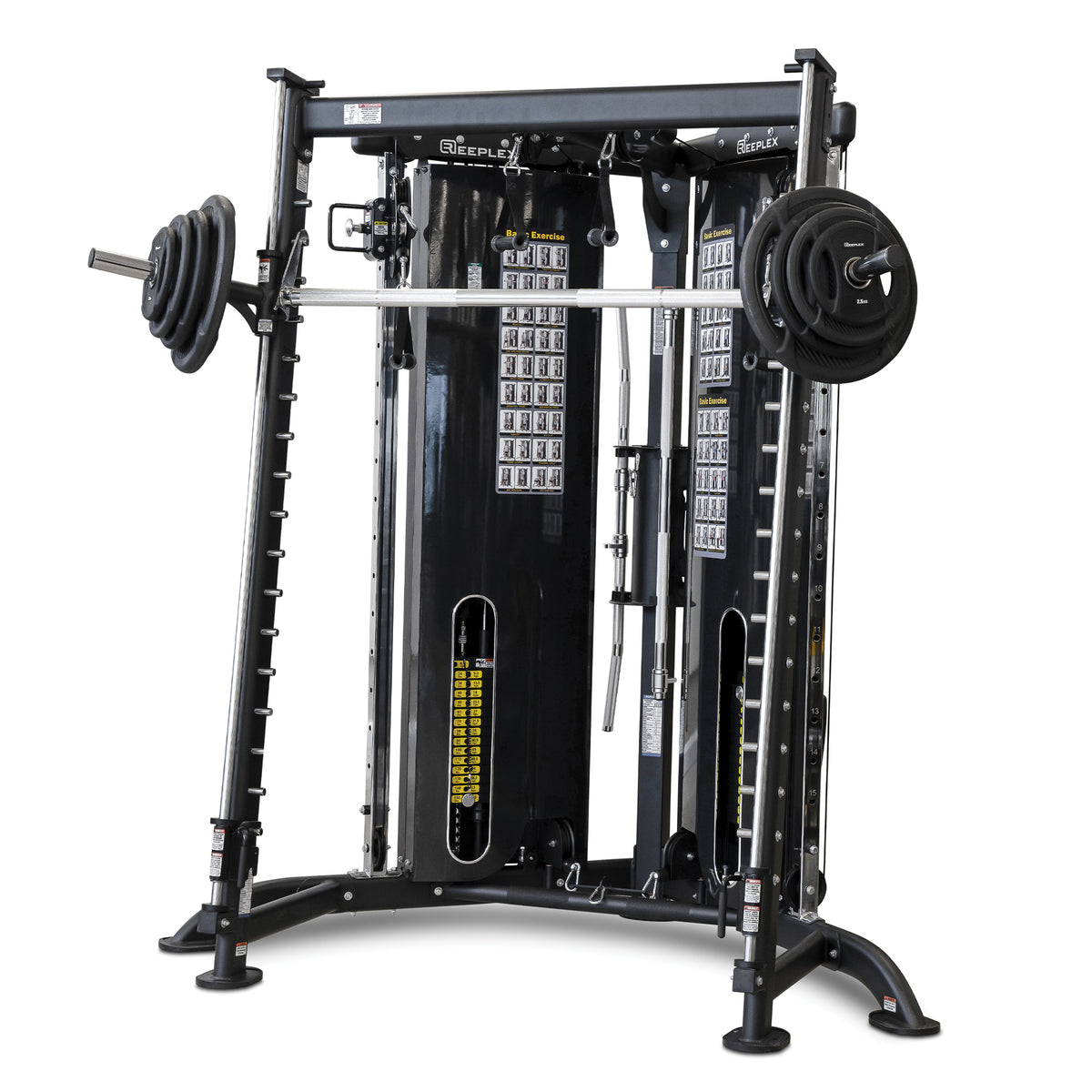
The dual cable model is the most versatile and the most popular choice for home gyms. Two independent weight stacks feed separate cable runs on each side of the machine, giving you complete control over both cables simultaneously. This allows cable crossovers, bilateral pressing, and independent unilateral training where each side is loaded differently.
Best for:
- Home gym users who want the most complete exercise library from one machine
- Cable crossover exercises that require simultaneous bilateral cable resistance
- Unilateral training where each arm or leg works independently
- Anyone building a primary training station rather than a supplementary one
Single Cable Functional Trainer
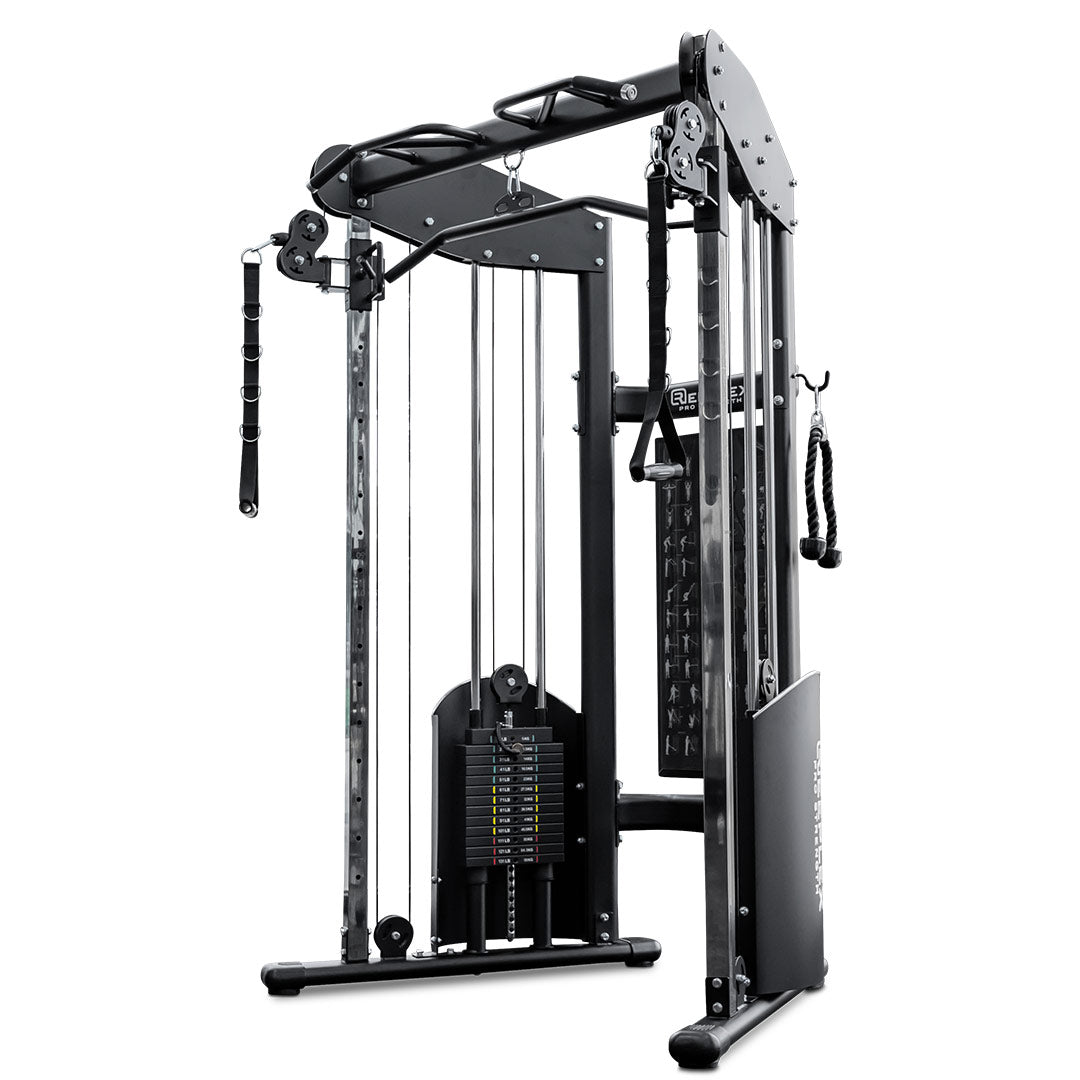
A single cable model has one weight stack and one cable column. It's more compact and more affordable than a dual system, which makes it a practical option for space-limited home gyms or as a complementary machine alongside free weights. You can still perform the majority of functional trainer exercises with a single cable; you just can't do bilateral cable crossovers that require two independent cables simultaneously.
Best for:
- Smaller home gyms where floor space is limited
- Users who already have free weights and want cable capability as a supplement
- Anyone on a tighter budget who wants genuine cable training functionality
Plate-Loaded Functional Trainer
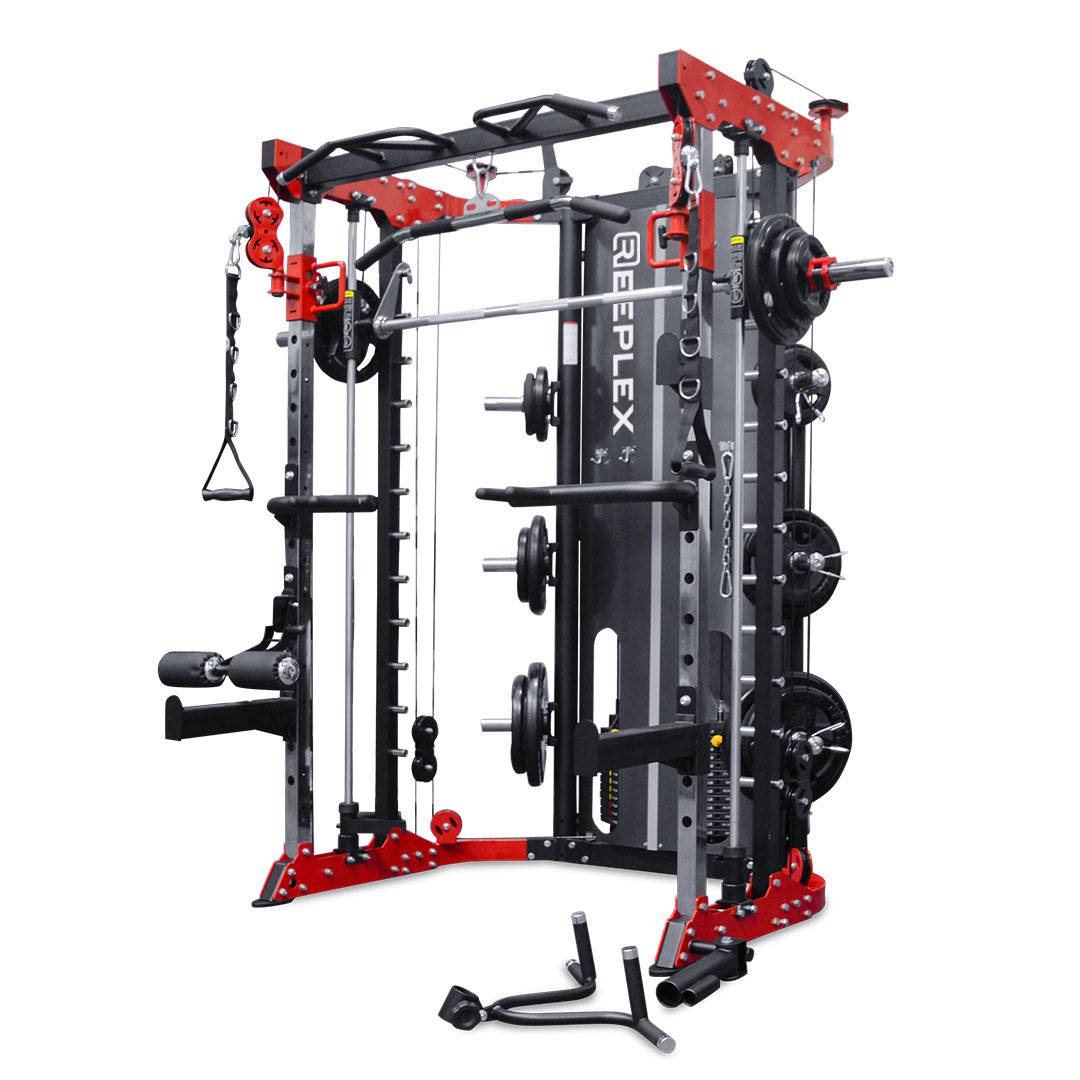
Instead of a fixed weight stack, plate-loaded functional trainers use standard Olympic weight plates loaded directly onto a pin or peg. This makes them more affordable to buy (you may already own plates), allows heavier loading potential for stronger users, and removes the size limitation of a fixed stack. The trade-off is that changing loads takes longer than sliding a pin on a weight stack.
Best for:
- Home gym users who already own Olympic plates and want to maximize their use
- Stronger users who need loads heavier than a standard 70 to 100kg weight stack
- Budget-conscious setups where the machine cost is the priority
Functional Trainer Combo Units
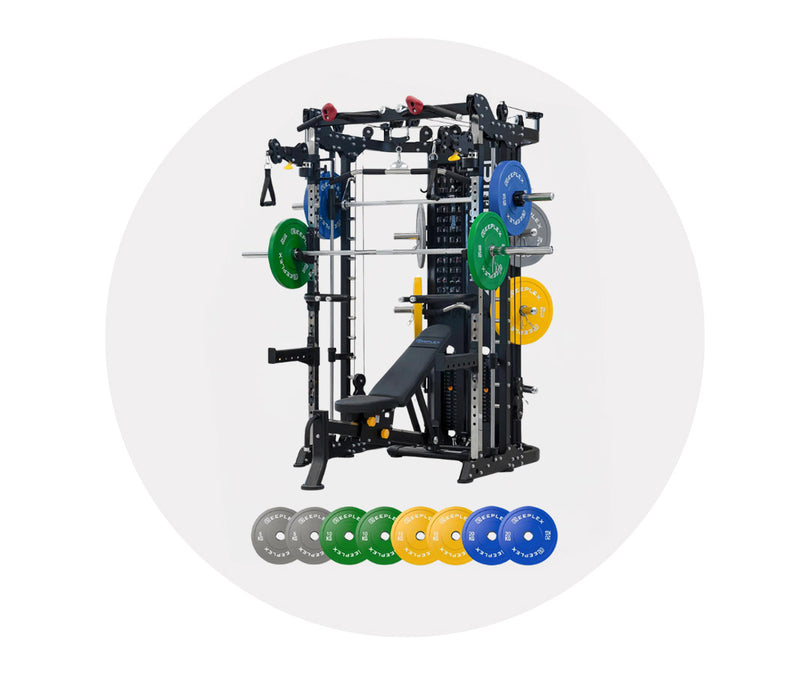
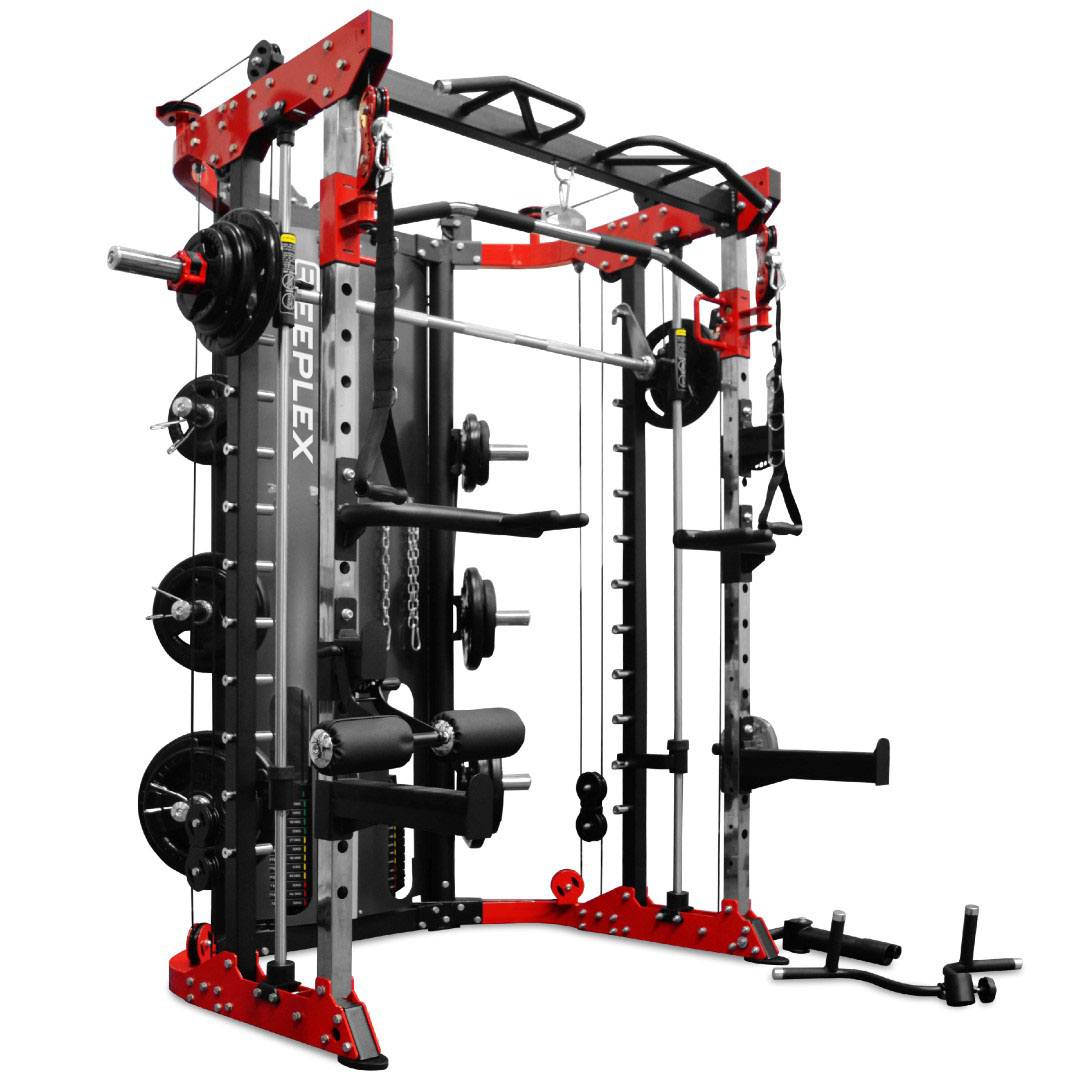
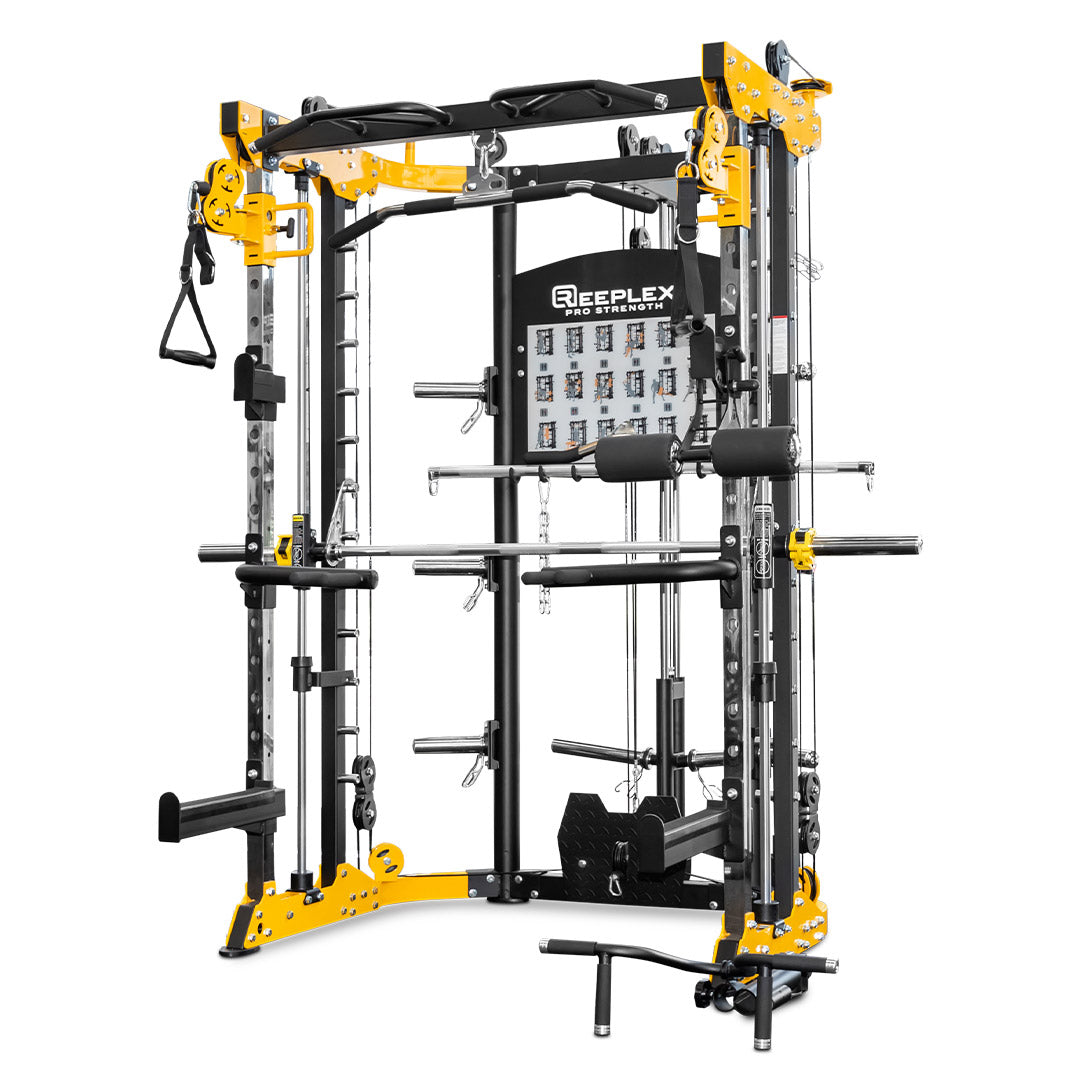
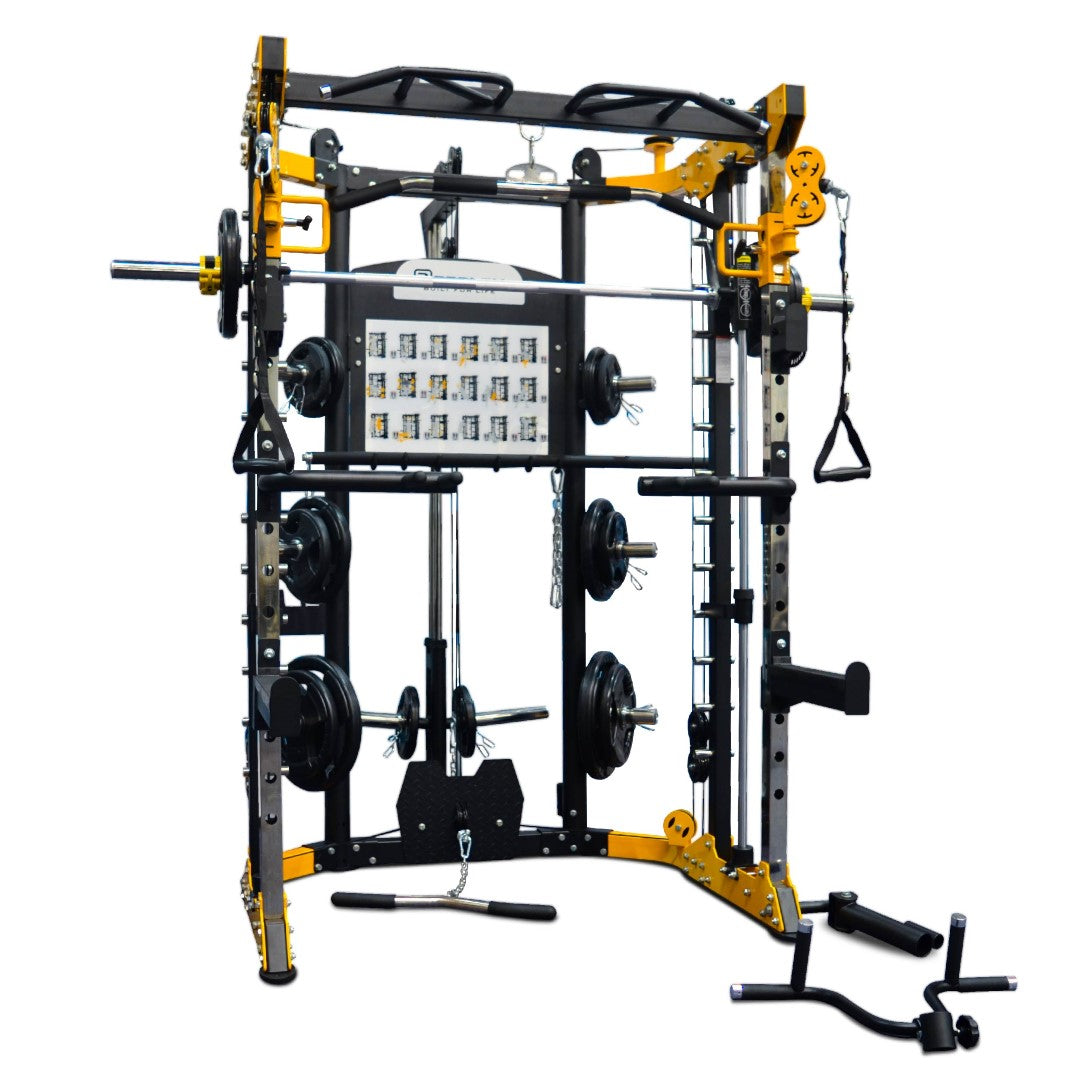
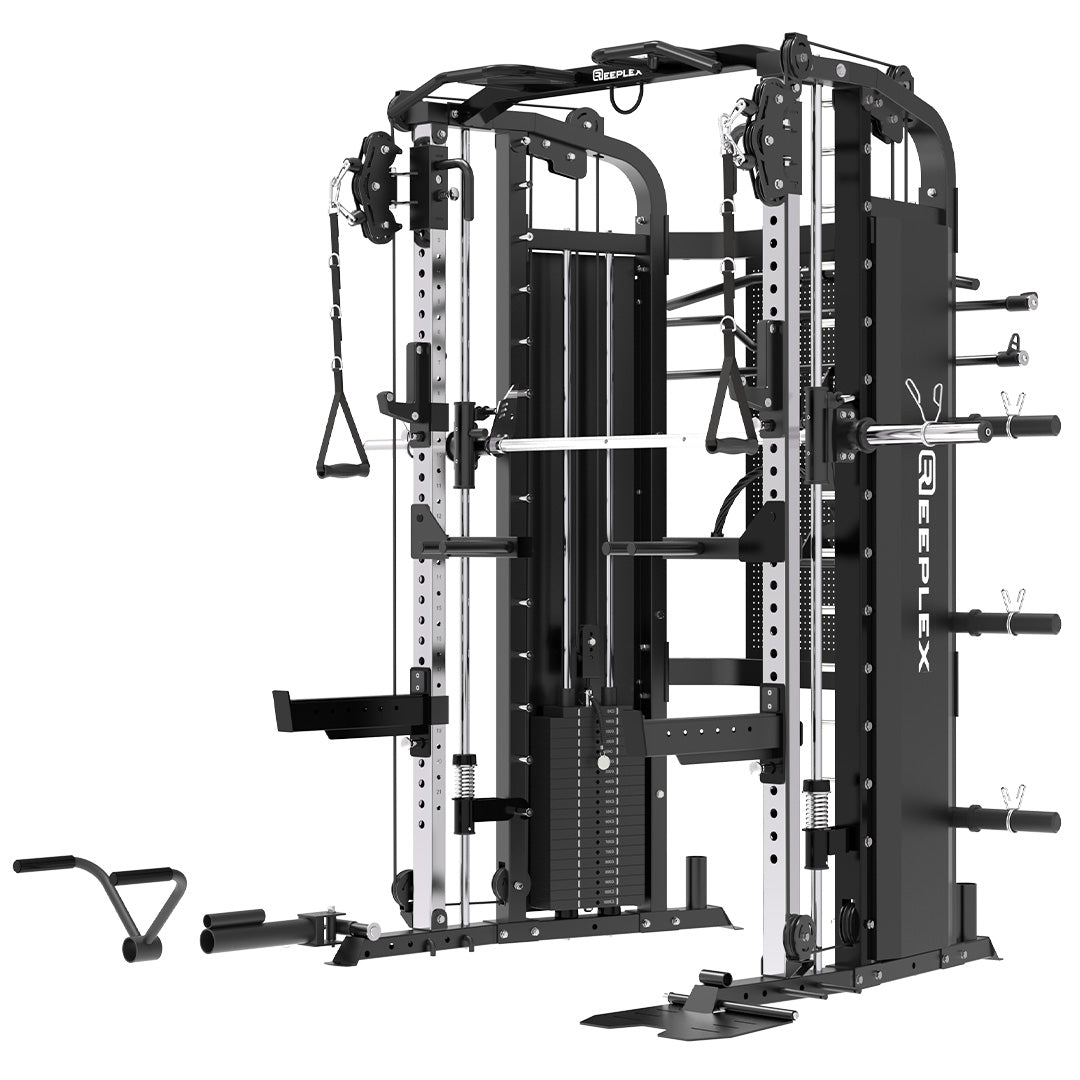
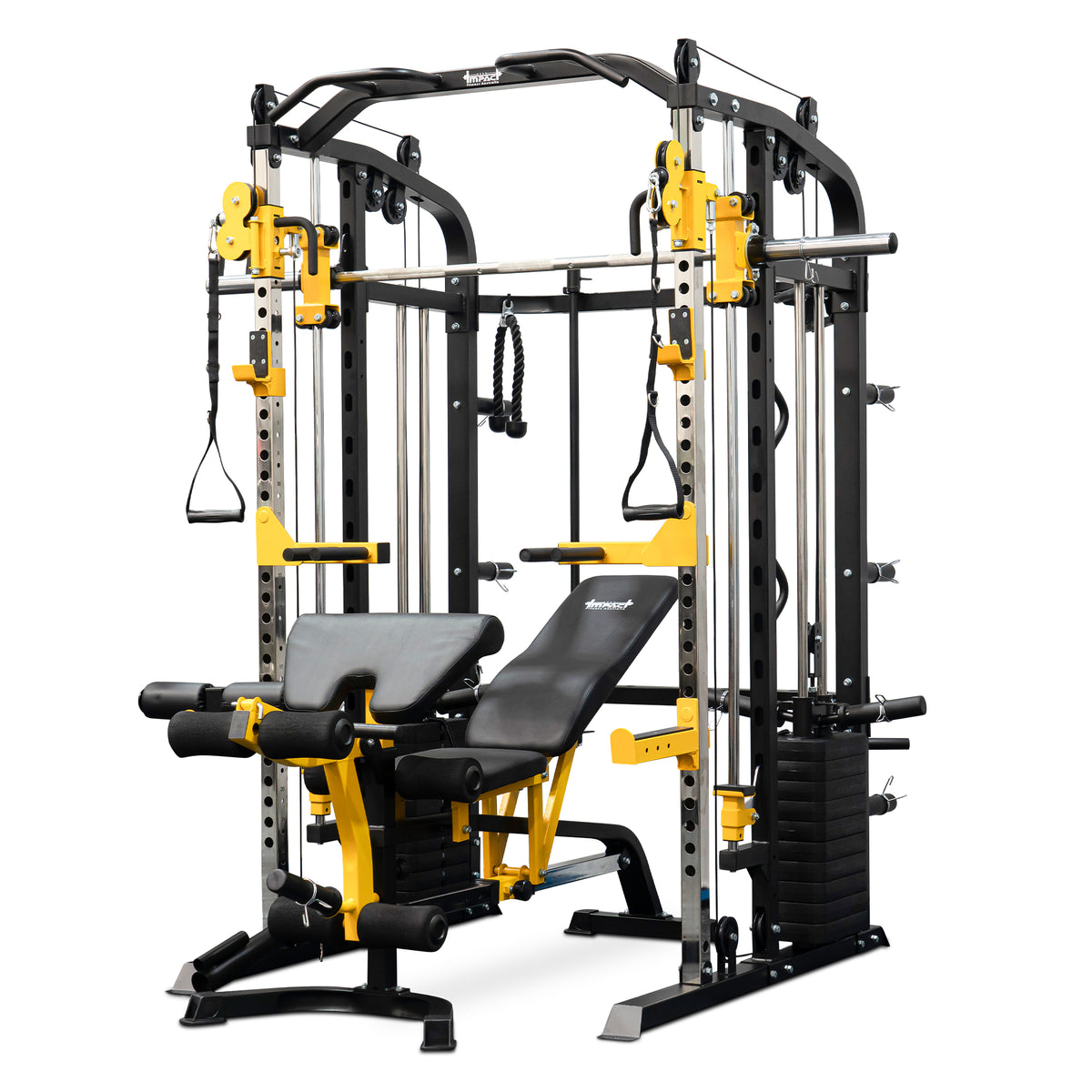
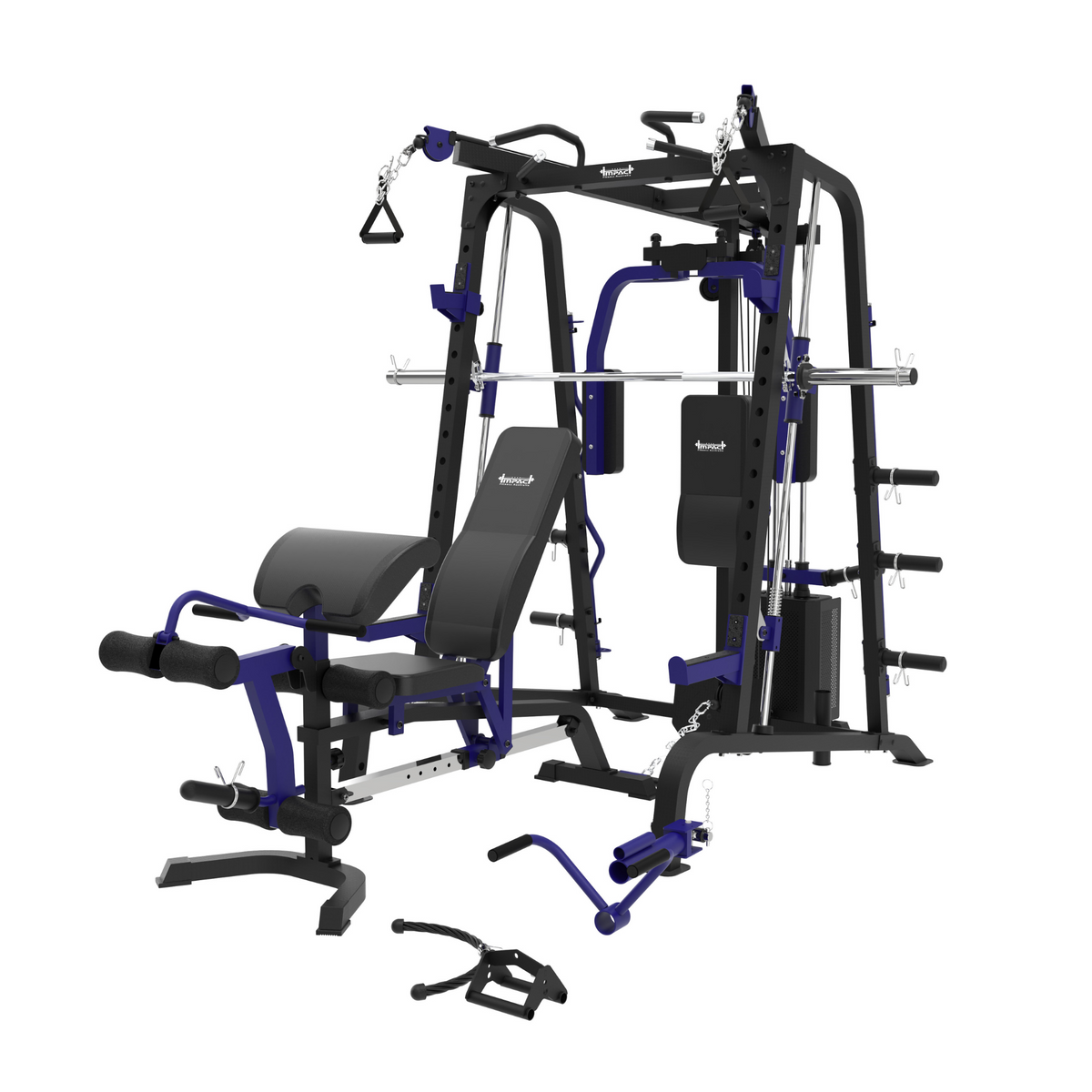
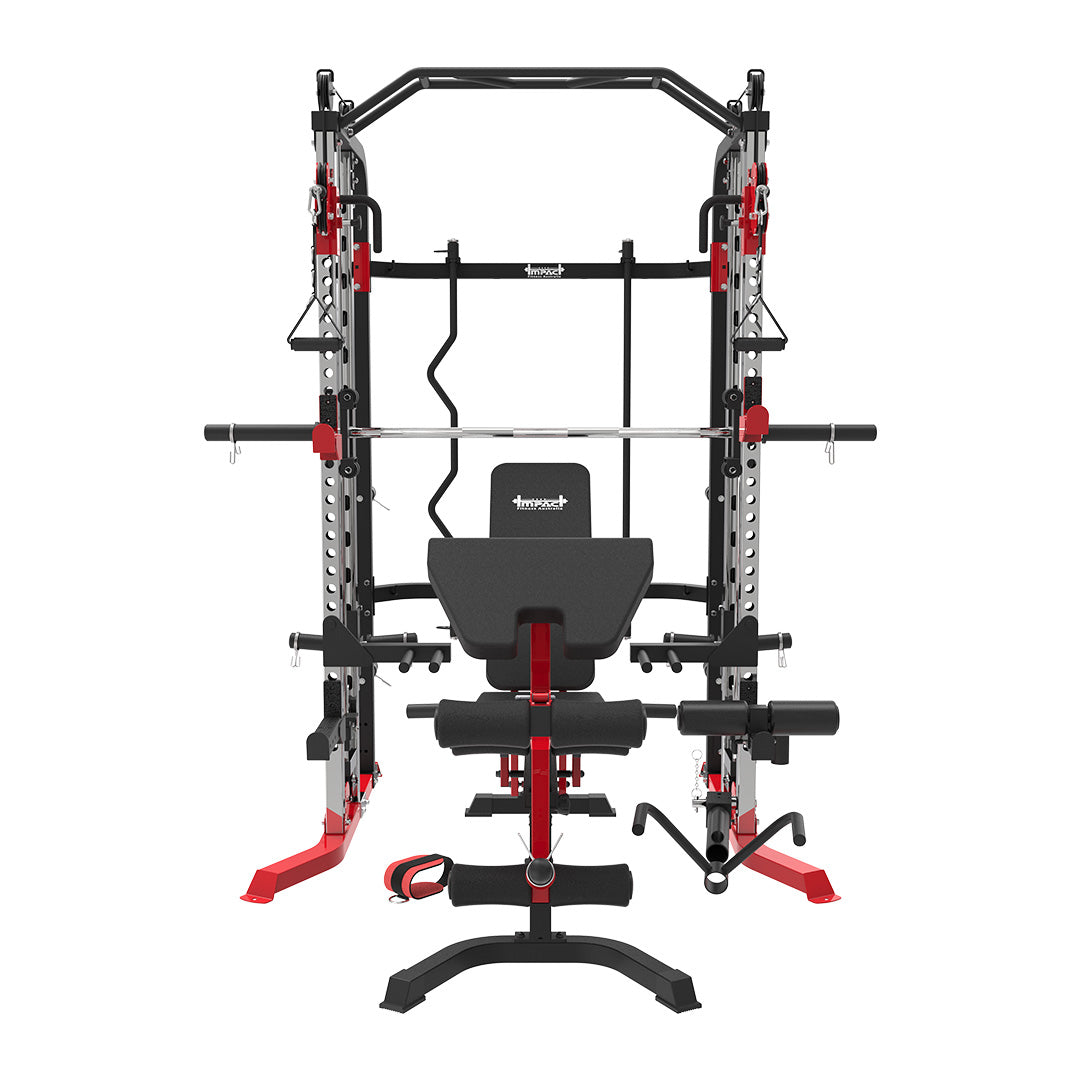
Combo units integrate a functional trainer with additional training stations, most commonly a lat pulldown and low row, or a smith machine and cable system. These all-in-one designs deliver maximum functionality from a single purchase and a relatively compact combined footprint, making them one of the most popular choices for home gyms where space is valuable but training variety is non-negotiable.
Best for:
- Home gym users who want a complete multi-function station from one machine
- Setups where floor space limits the number of separate pieces of equipment
- Anyone who wants lat pulldown and cable row capability built in as standard
Functional Trainers: Key Features
Not all functional trainers are built to the same standard. These are the specs that matter most when you're comparing models.
Weight Stack Size
The weight stack determines how heavy you can go on each cable. Most home gym functional trainers offer 70 to 100kg per side on dual cable models. This is more than sufficient for the majority of cable exercises, where technique and cable tension matter more than absolute load. If you're an advanced lifter who is already pressing or rowing very heavy loads, look for models at the upper end of the weight stack range or consider a plate-loaded option for unrestricted loading.
Cable Ratio
The cable ratio is the mechanical advantage built into the pulley system. A 2:1 ratio means you feel half the weight stack load at the cable. A 1:1 ratio means you feel the full load. Most home gym functional trainers use a 2:1 ratio, which makes lighter incremental adjustments more comfortable and reduces wear on the cable. A 1:1 ratio gives you more accurate load tracking and a heavier feel, which some advanced users prefer for pressing and rowing movements.
Adjustment Points + Range
The number of height positions on the pulley column determines how precisely you can set the cable for different exercises. Sixteen positions is the minimum you want. Quality models offer 20 to 24 positions, which covers the difference between subtle angle changes that shift the muscle emphasis on chest flys or shoulder raises. Look for models where each position locks firmly and doesn't slip under load.
Key height positions:
- Floor: ankle straps for hip abduction, low cable squats, deadlift variations
- Low (knee height): low cable row, bicep curls, woodchops starting low
- Mid (hip height): standard row position, cable crossover mid, pallof press
- High (shoulder to overhead): lat pulldown, face pulls, cable flys from high, overhead tricep extensions
Frame Construction + Weight Capacity
Frame quality is the difference between a rack that feels solid through years of heavy use and one that wobbles or creaks after a few months. Look for heavy-gauge steel frames with clean welds at all load-bearing connection points. The machine's total weight capacity (not just the stack) matters too: heavier, well-built machines stay stable during pulling movements that create significant lateral force on the uprights.
Included Attachments
The attachments that come with the machine determine which exercises you can do from day one. A good starter kit includes a rope attachment for tricep pushdowns and face pulls, a straight bar for rows and pushdowns, and a pair of single handles for unilateral movements. If a model only comes with one or two attachments, factor in the cost of purchasing extras before comparing prices.
Most useful attachments to have:
- Rope: tricep pushdowns, face pulls, hammer curls
- Straight bar: lat pulldown, cable row, bicep curls
- Lat pulldown bar: wide-grip lat pulldowns, bent-over rows
- Single handles (pair): cable flys, unilateral press and row, woodchops
- Ankle strap: cable hip extension, abduction, leg curl
- Stirrup handles: alternative grip for rows and curls
Full-Body Training with a Functional Trainer
One of the genuine selling points of a functional trainer is that it can train every major muscle group through a cable-based movement. Here's a breakdown by body part with the key exercises for each.
Chest
- Cable crossover: classic chest isolation through a wide fly arc at mid-cable height
- Low cable fly: cable set at floor height, pulling upward and together for lower chest emphasis
- High cable fly: cable set overhead, pulling downward and together for upper chest focus
- Single-arm cable press: unilateral pressing movement that also challenges core anti-rotation
Back
- Lat pulldown: cable set overhead with lat bar, pulling to upper chest for lat width
- Seated cable row: cable at hip height, pulling to the abdomen for mid-back thickness
- Single-arm cable row: unilateral version that allows greater range of motion
- Face pull: cable at upper chest height with rope, pulling to the face for rear deltoids and rotator cuff
- Straight-arm pulldown: cable overhead, pulling straight down for lat isolation without elbow bend
Shoulders
- Cable lateral raise: cable at floor height, raising arm to shoulder height for side deltoids
- Cable rear fly: cable set high, pulling across the body for rear deltoid isolation
- Cable front raise: cable at floor, raising straight forward for anterior deltoid
- Cable upright row: cable at floor, pulling to chin height for traps and deltoids
Arms
- Cable bicep curl: cable at floor with straight bar or handles, superior constant tension to dumbbell curls
- Hammer curl with rope: neutral grip curl targeting the brachialis and brachioradialis
- Overhead tricep extension: cable set low, extending overhead with rope for long tricep head
- Tricep pushdown: cable set high with rope or bar, pressing down to lockout
Core
- Pallof press: cable at chest height, pressing straight out while resisting rotation for anti-rotation core strength
- Woodchop: diagonal pull from high to low (or low to high) for oblique and rotational power
- Cable crunch: cable set overhead, kneeling crunch for rectus abdominis
- Standing cable rotation: cable at hip height, rotating through the torso for obliques
Lower Body
- Cable squat: cable at mid height, holding handle at chest while performing goblet-style squat
- Cable hip extension: ankle strap at floor, extending leg rearward for glutes and hamstrings
- Cable hip abduction: ankle strap at floor, raising leg to the side for glute medius
- Cable Romanian deadlift: cable at floor, hinging at hips for posterior chain
- Cable lunge: holding cable handle while performing forward or reverse lunges
Functional Trainer Packages
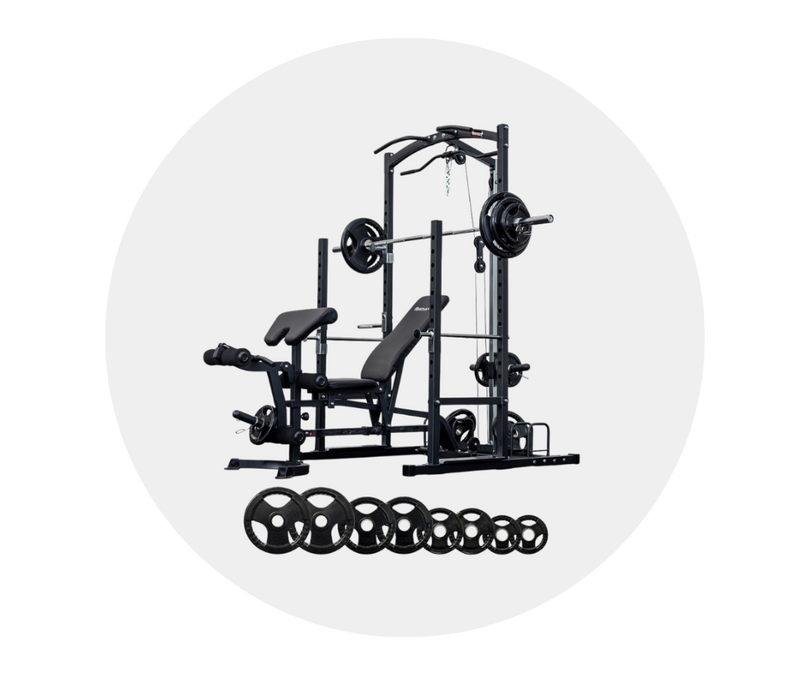
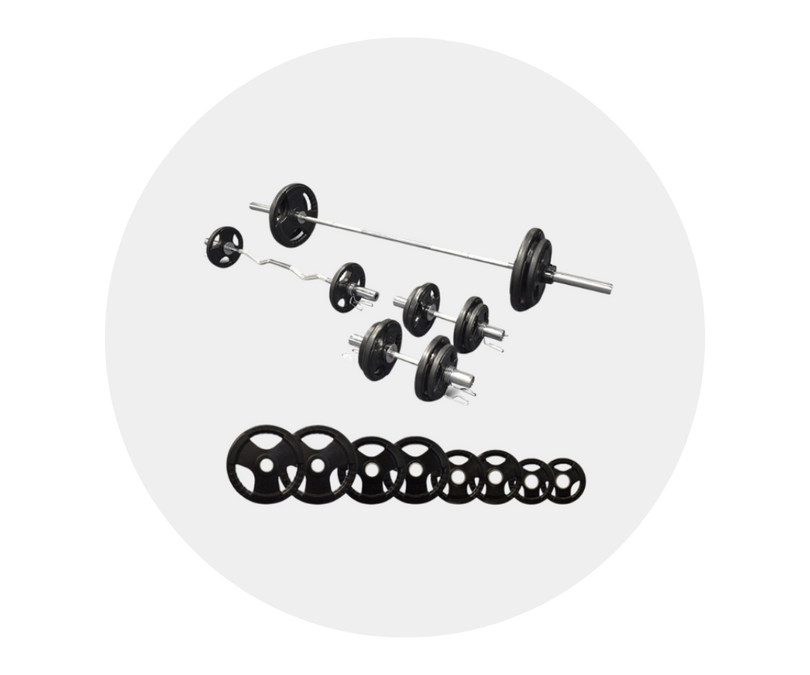
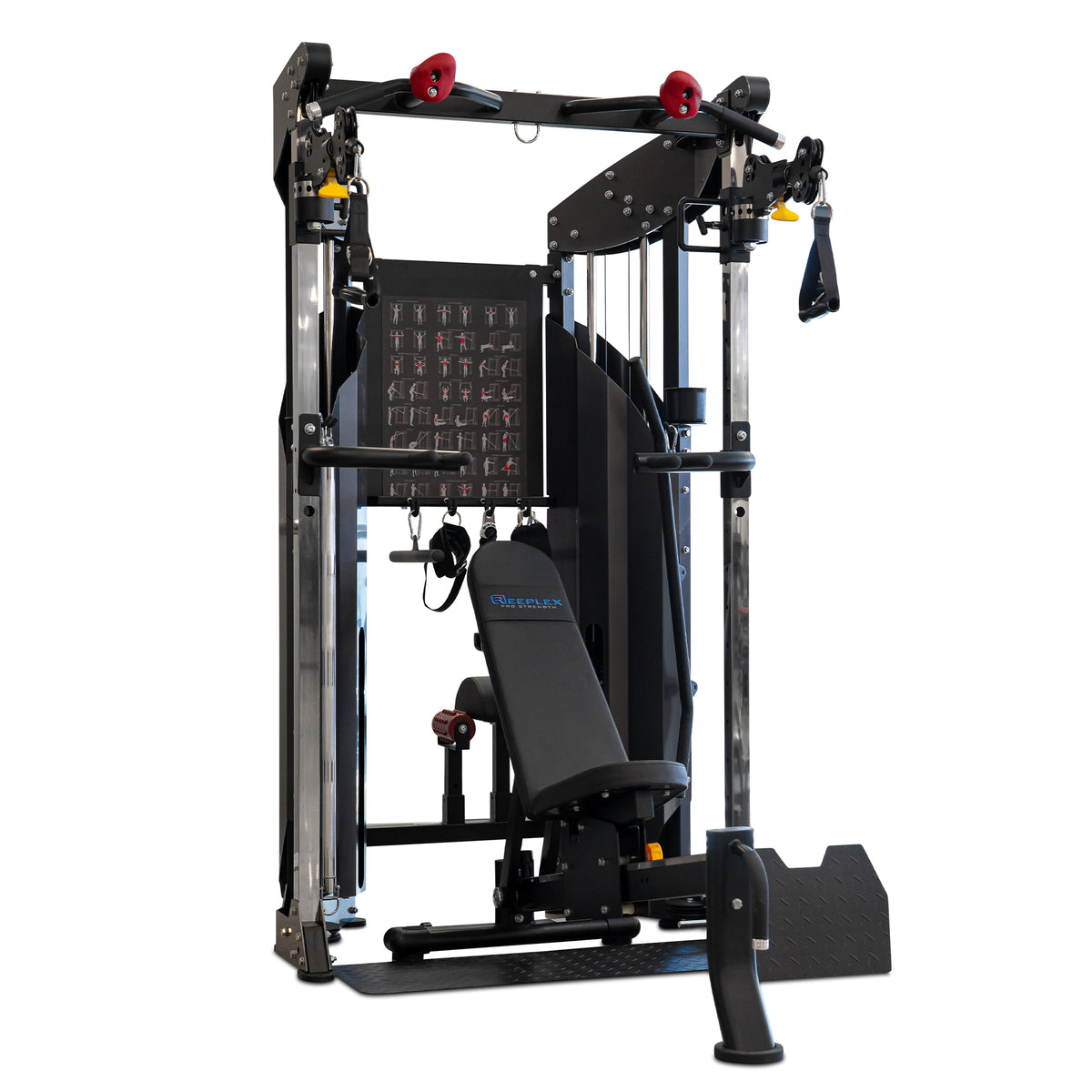
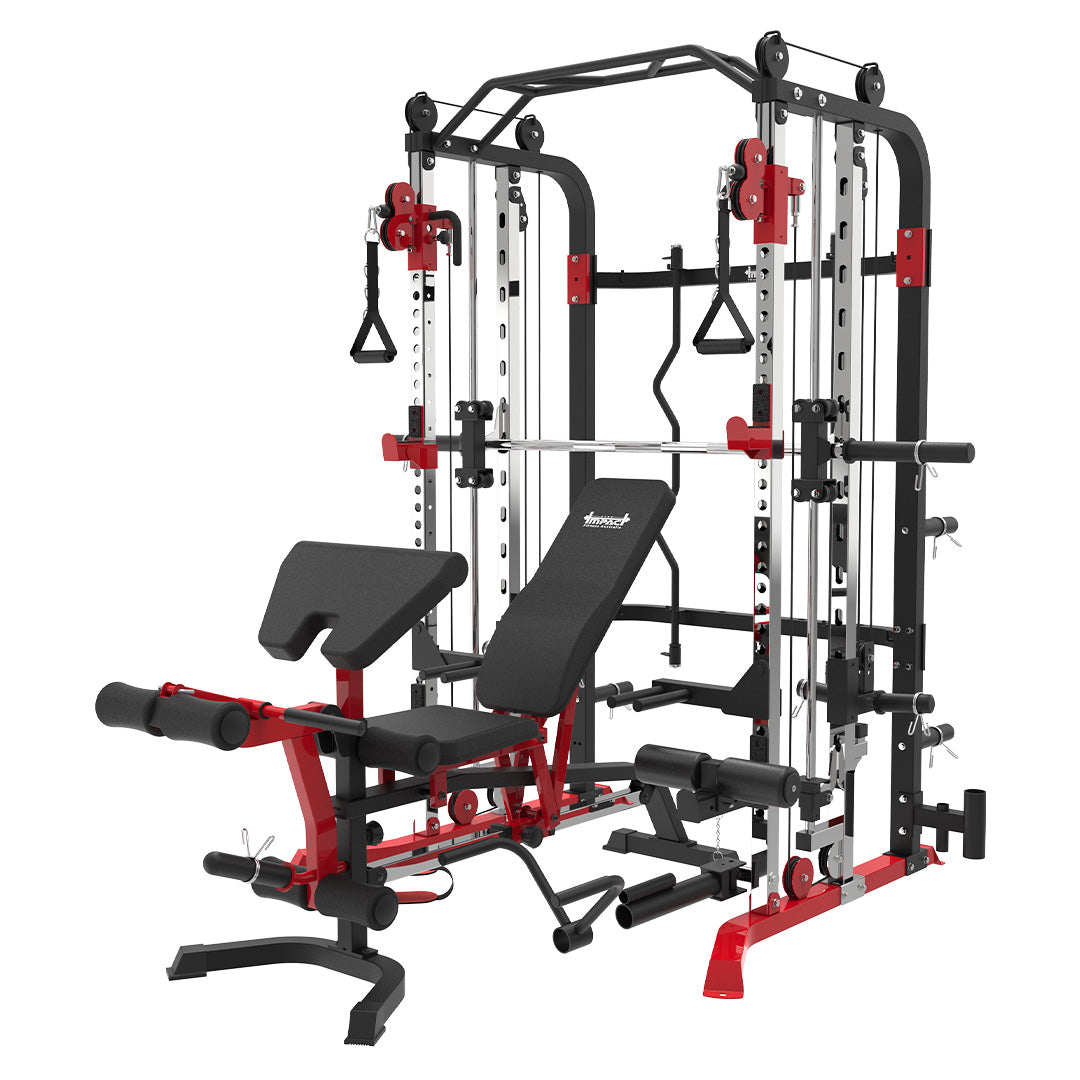
Functional trainer packages bundle the machine with the key accessories you need to get started immediately. Most packages include a weight bench, a pair of single handles, and a rope attachment at minimum. Higher-spec packages add a lat bar, straight bar, ankle strap, and sometimes a barbell and plate set.
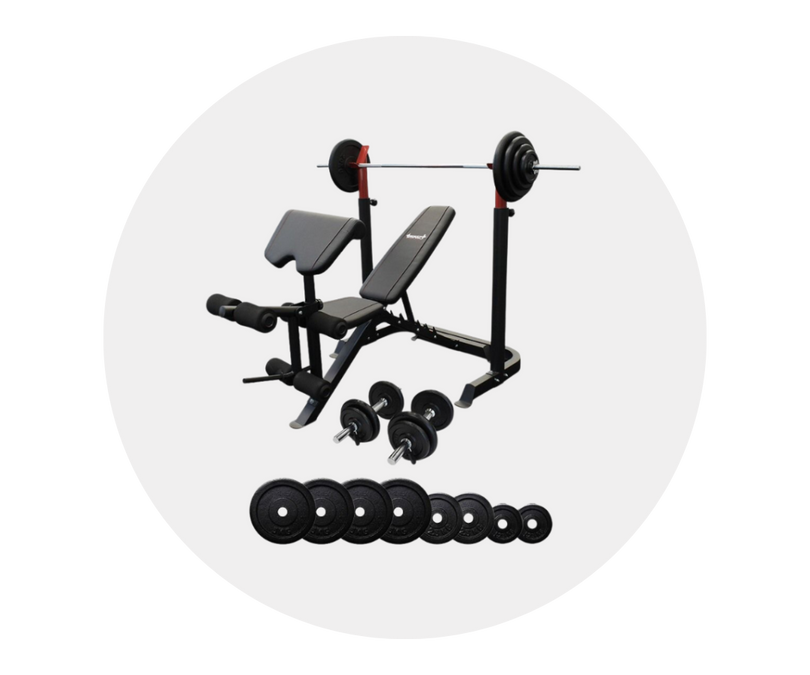
The bench is what transforms a standalone cable machine into a complete upper body training station. With a bench inside or adjacent to the functional trainer, you can perform cable-assisted pressing, incline rows, and seated pulldowns without needing a separate barbell and rack. If you're also considering a dedicated barbell pressing setup, check our bench press sets which pair well with a functional trainer for a complete strength training setup.
What to look for in a package:
- Adjustable bench: FID (flat, incline, decline) is better than fixed-angle for cable work
- Minimum four attachments: rope, lat bar, straight bar, and single handles
- Ankle strap: essential for lower body cable work and often omitted from entry-level packages
- Plate storage pegs: keep the area around the machine organized
- Warranty: look for at least 12 months on parts and 2 years on the frame as standard
Setting Up Your Functional Trainer
A functional trainer is a significant piece of equipment and setting it up correctly from day one protects your investment and your training environment.
Space Requirements
Most home gym functional trainers measure 120 to 160cm wide and 100 to 140cm deep. The machine itself is the starting point: you also need clearance around it for cable movements. Cable flys at mid-height require you to step back from the machine, and exercises like cable lunges need forward clearance from the front. A minimum working area of 300 x 300cm is recommended for comfortable use across the full exercise library.
Space planning checklist:
- Machine footprint: 120 to 160cm wide by 100 to 140cm deep
- Side clearance: at least 100cm on each side for fly movements and lateral exercises
- Front clearance: at least 150cm for forward-stepping exercises and cable lunges
- Ceiling height: minimum 220cm; 240cm or higher recommended for overhead cable work
Gym Flooring
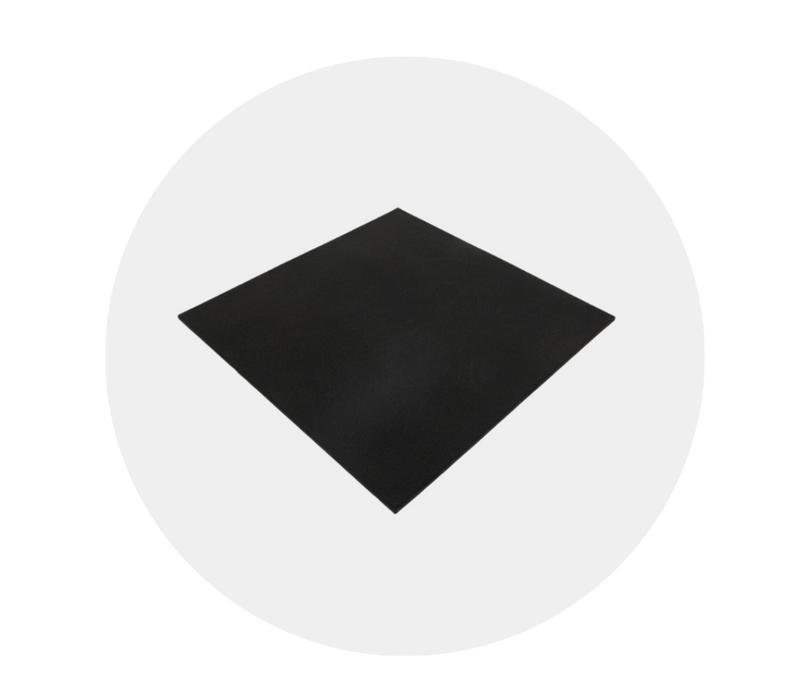
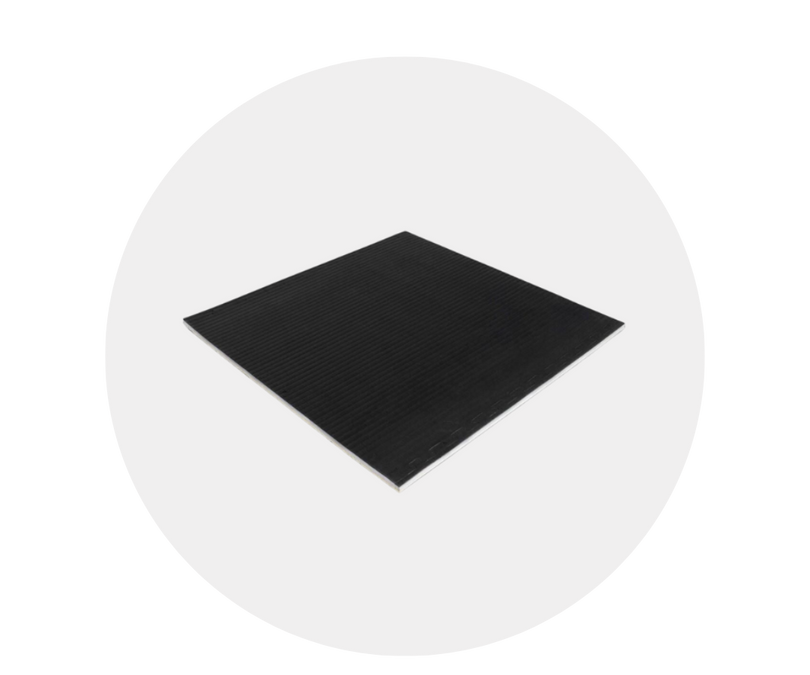
Quality gym flooring under your functional trainer protects the floor from the machine's feet and from any dropped attachments. Rubber tiles in 15 to 20mm thickness are the standard choice for home gyms. Extend the flooring at least 100cm on all working sides of the machine, not just directly underneath it. This protects your floor during stepping exercises, anchors your feet during pulling movements, and reduces noise from attachment handling.
Anchoring
Most functional trainers are heavy enough (80 to 150kg assembled) to stay stable through most exercises without floor anchoring. However, if you're performing heavy lat pulldowns or cable rows with the full weight stack, anchoring bolts through the base feet to a concrete floor provides additional security and eliminates any flex or movement in the uprights. Check the manufacturer's guidance for your specific model.
Pairing with Other Equipment
A functional trainer pairs naturally with a barbell setup. If you're planning to squat and bench press with a free barbell, adding a squat rack alongside your functional trainer gives you both cable-based isolation and heavy compound barbell work in the same space. The two genuinely complement each other: the rack handles max-strength barbell movements while the functional trainer covers everything else.
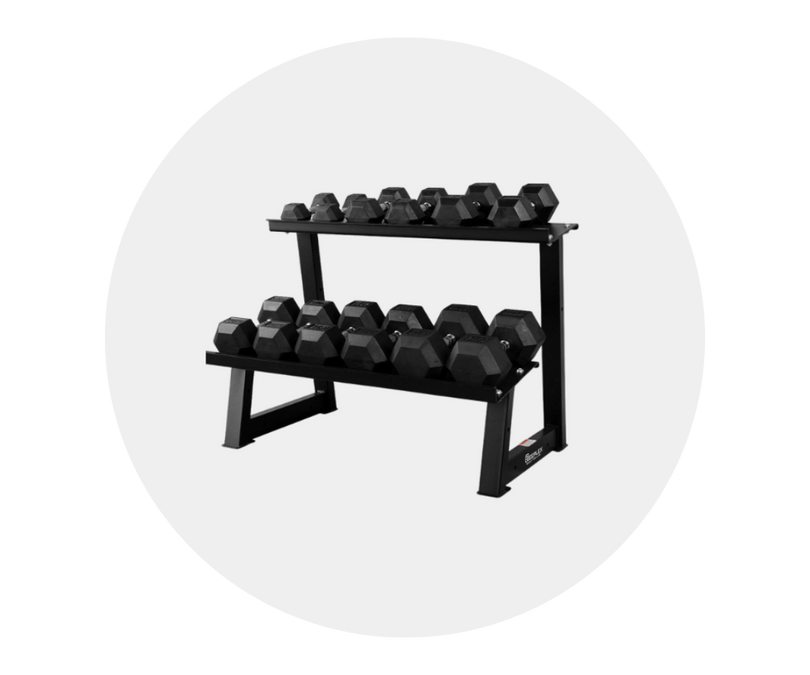
For a compact and highly versatile supporting free weight option, adjustable dumbbells take up almost no floor space and cover the exercises where dumbbells have a natural advantage over cables, particularly dumbbell pressing on a bench, lateral raises with the natural arc, and single-leg work. The combination of a functional trainer and adjustable dumbbells covers the vast majority of what most home gym users need.
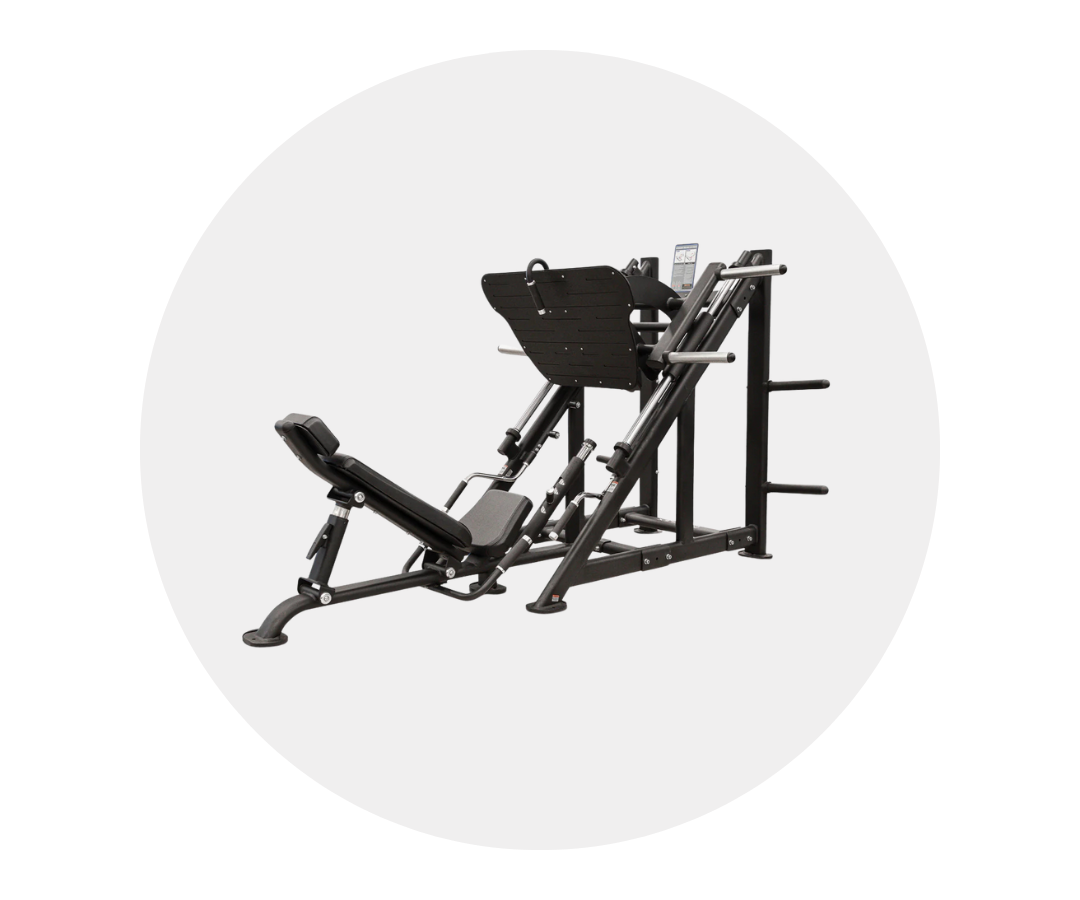
If heavy quad loading is a training priority and you want dedicated machine-based leg work beyond what cable exercises provide, a leg press machine is a natural complement to the functional trainer. The leg press handles high-load bilateral quad and glute work, while the functional trainer covers hip extension, abduction, and single-leg cable movements.
Safety Essentials for Home Gym Cable Training
1. Inspect the cable before every session
Run your hand along the cable to check for fraying, kinking, or any roughness that indicates wear. A compromised cable under heavy load is a safety risk. Replace immediately if you find any damage.
2. Check all attachments are secure
Clips and carabiners should lock positively with no movement. An attachment that disengages mid-set can cause the cable to whip back with significant force.
3. Set the weight selector pin properly
On weight stack models, the pin must go through the plate cleanly. A partially inserted pin can slip out when the stack drops, which can damage the machine and create a hazardous situation.
4. Never stand directly below a loaded overhead cable
Position yourself beside or in front of the cable path rather than directly below the pulley when loading or adjusting the weight.
5. Start lighter than you think
Cable resistance feels different from free weight resistance, particularly on movements you've only done with barbells or dumbbells. Reduce the load significantly when trying a new cable exercise until you're comfortable with the movement pattern.
6. Leave clearance around the machine
Ensure there's always clear space on all sides of the functional trainer. A tangled cable or restricted movement path during a working set creates injury risk.
Build the Home Gym That Works for You
A functional trainer is the kind of purchase that changes how you think about home gym training. Once you've got one, you realize how much you can do without ever leaving the house. Cable crossovers at 6am, face pulls before dinner, a full upper body circuit on a Sunday morning: the machine doesn't care when or how you train. It just works.
At Dynamo Fitness, we stock functional trainers for every budget and every home gym setup, from compact single-cable units through to premium dual-stack systems with all the attachments. Whatever your goals, we've got the right machine for you.
- Fast, Australia-wide delivery available
- Buy Now, Pay Later options at checkout so you can start training without the full upfront cost.
- Expert team available in-store and online seven days a week.
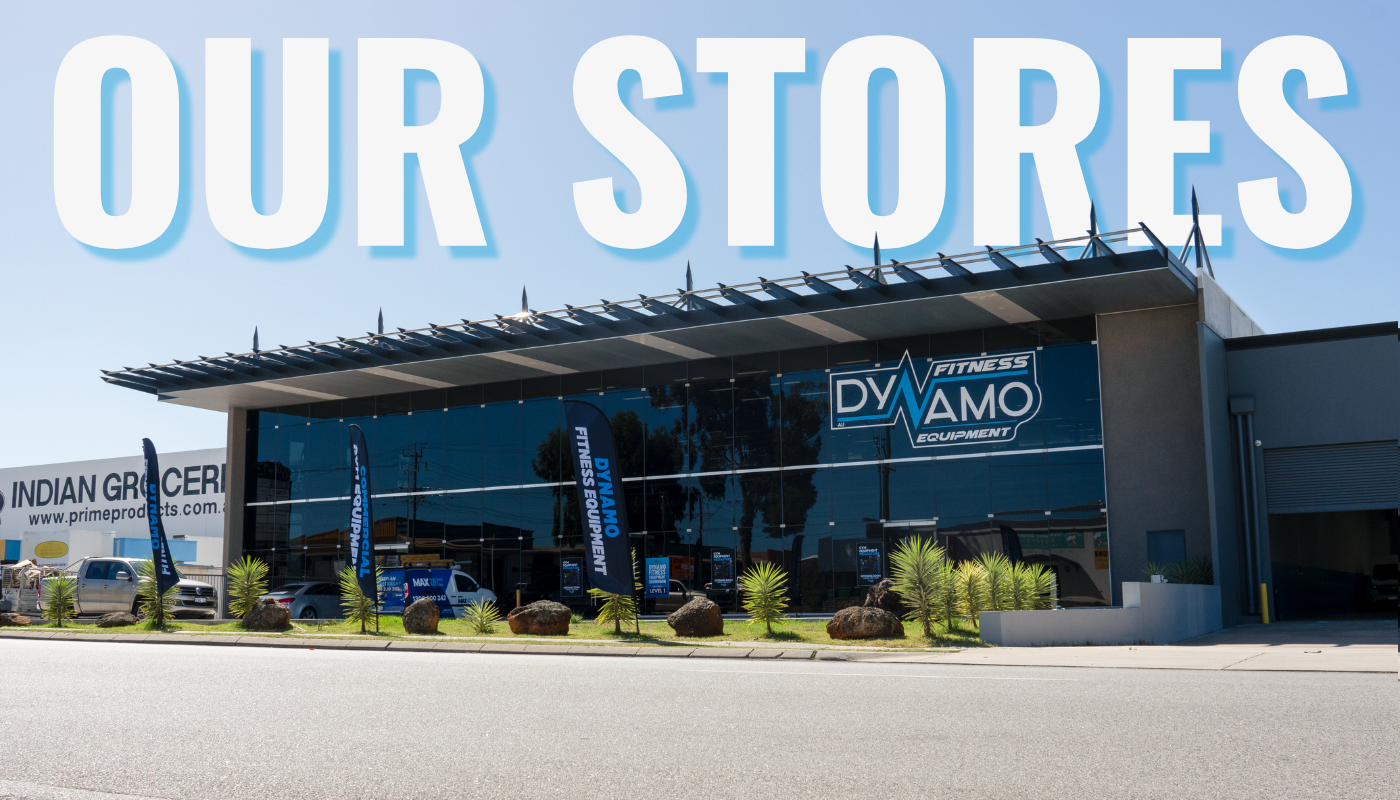
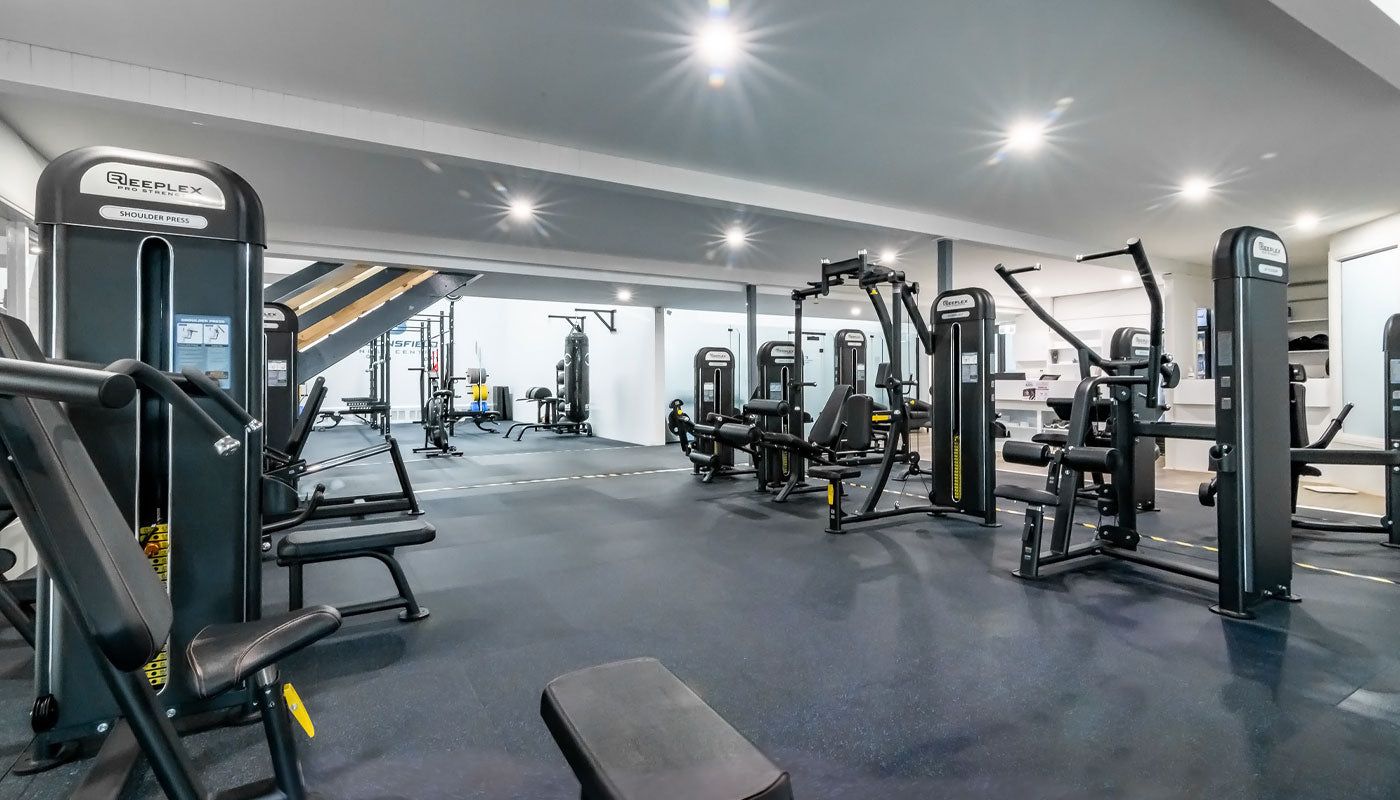
- Showrooms in Perth, Sydney, Melbourne, Brisbane, Adelaide and Gold Coast where you can see and test the machines in person before you buy.
- Complete multi-function trainer packages available with everything you need to start training from day one.
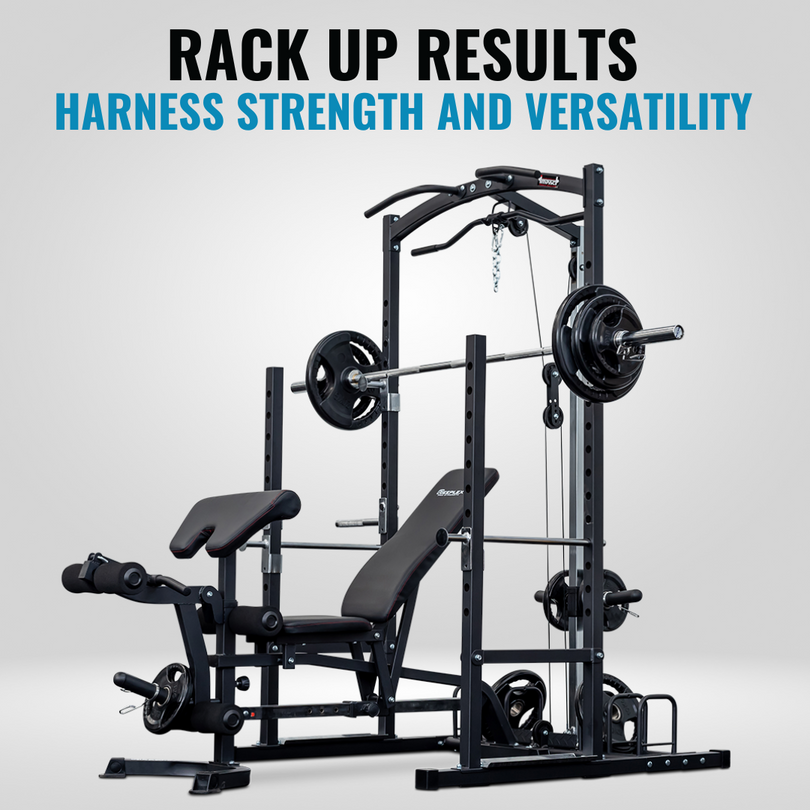
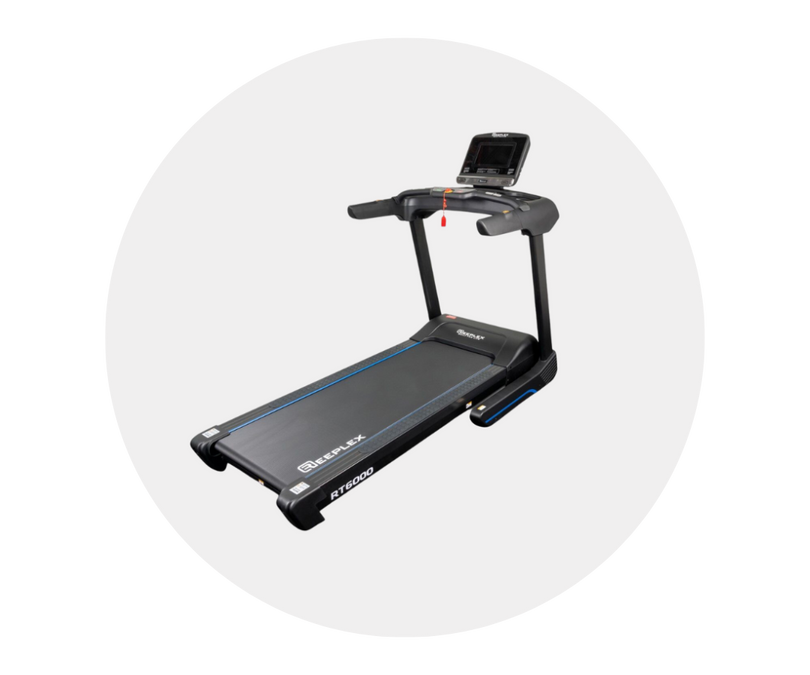
Looking to build out a complete home gym around your functional trainer? Pair it with a treadmill or a cross trainer for cardio coverage, and add dumbbell sets for pressing and isolation work.
Between those three, you've got a genuinely complete training setup.
Shop our full range of functional trainers or visit your nearest Dynamo Fitness showroom today.
Functional Trainers - FAQs
The terms are often used interchangeably, and in most cases they describe the same thing. A cable crossover machine typically refers specifically to a dual-cable setup designed for chest fly and crossover exercises. A functional trainer is a broader term that describes any adjustable-height cable machine designed for multi-directional training across the full exercise library. Modern functional trainers do everything a cable crossover machine does and significantly more. If a machine is described as a cable crossover, check whether the cables are fully height-adjustable before purchasing: fixed-height cables limit your exercise options.
The machine itself typically measures 120 to 160cm wide and 100 to 140cm deep, but that's just the footprint. You need clearance on all working sides for the exercises you plan to perform. Fly movements require you to step back from the machine, rotational exercises need lateral space, and cable lunges require forward clearance. A minimum clear area of 300 x 300cm gives you comfortable working space for the full exercise library. Ceiling height of at least 220cm is required, with 240cm recommended for exercises where you step back and raise the cable overhead.
Yes, if training variety and cable resistance are priorities for you. A functional trainer replaces multiple machines, provides constant cable tension that free weights can't replicate, and covers the full body from a single footprint. The upfront cost is significant, but spread over years of consistent use it compares favorably to gym membership costs, particularly when you factor in the time and convenience of training at home. If your training is primarily heavy barbell work, a power rack is a better primary investment. If you want a comprehensive training station that covers isolation, conditioning, and functional strength in one machine, a functional trainer is the right call.
The cable ratio describes the mechanical advantage built into the pulley system. A 2:1 ratio means the load you feel at the cable is half the weight on the stack. A 1:1 ratio means you feel the full stack weight. Most home gym functional trainers use a 2:1 ratio, which makes small weight adjustments feel smoother and reduces stress on the cable. The practical implication is that if you're used to rowing 60kg on a plate-loaded machine, you'd need to set a 2:1 ratio functional trainer to 120kg on the stack to feel the same load. Always check the cable ratio when comparing models so you're comparing load capacities accurately.
Absolutely. The constant cable tension that a functional trainer provides is actually superior to free weights for hypertrophy in many exercises. Because the cable maintains resistance through the full range of motion, including the top of a fly or the lockout of a curl, your muscles are under tension for longer per rep. Research on resistance training for hypertrophy consistently shows that time under tension is a key driver of muscle growth. Functional trainer exercises like cable flys, pulldowns, cable rows, and tricep pushdowns are staples in bodybuilding training for exactly this reason.
A rope, a straight bar, and a pair of single handles covers the vast majority of functional trainer exercises. The rope is used for face pulls, tricep pushdowns, hammer curls, and cable crunches. The straight bar covers lat pulldowns, cable rows, and bicep curls. The single handles unlock all unilateral exercises: single-arm cable press, single-arm row, cable fly, woodchop, and more. An ankle strap is the next most useful addition, enabling hip extension, abduction, and cable leg curl movements. Most quality functional trainer packages include these attachments as standard.
A functional trainer and free weights serve genuinely different purposes, and the best home gyms use both. Dumbbells and barbells are better for maximum load, natural pressing mechanics, and exercises where momentum and stabilization form part of the training stimulus. A functional trainer is better for constant-tension isolation work, rotational and diagonal training, unilateral cable exercises, and conditioning circuits. If you have to choose one, a functional trainer offers a broader exercise variety for most home gym users. If budget allows, combining a functional trainer with a
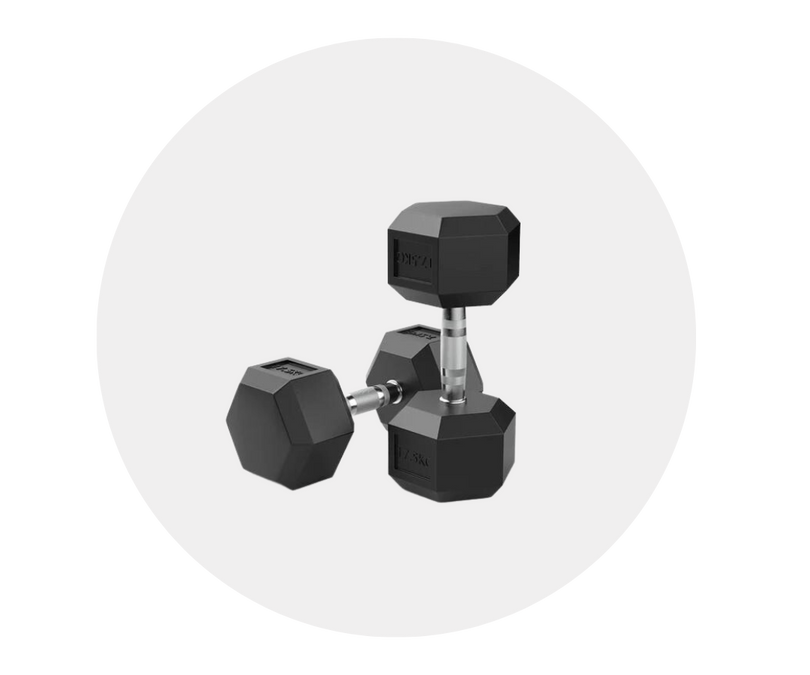
set of hex dumbbells gives you both cable-based and free weight training from a practical combined footprint.
Regular maintenance keeps your functional trainer running smoothly and extends its working life. Wipe down the weight stack, cables, and frame with a dry cloth after each session to remove sweat and chalk residue. Inspect the cable weekly for fraying, kinking, or any signs of wear, and replace it at the first sign of damage. Lubricate the cable and pulley wheels every three to six months using a cable lubricant or dry silicone spray. Check and tighten all bolts monthly as vibration from regular use gradually loosens fasteners. Keep the weight stack mechanism clean and dry, and apply a light machine oil to the selector pin to prevent binding. With basic maintenance habits, a quality functional trainer should provide years of reliable service.